Options For The Future Of Lifeline Corran Ferry Service To Go Before Highland Council

12th October 2020

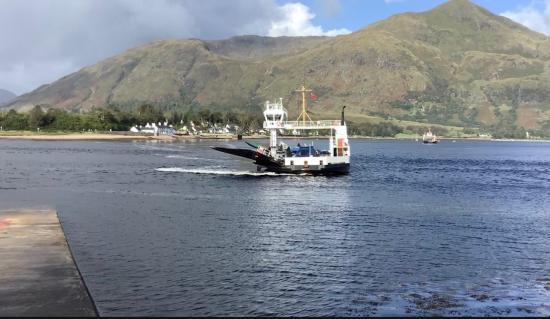
Photograph of Options For The Future Of Lifeline Corran Ferry Service To Go Before Highland Council

Highland Council is currently looking at options to secure the future of the lifeline ferry service at Corran Ferry, Lochaber.

The local authority is responsible for operating the Corran Ferry service, which is the busiest single vessel route in Scotland. It carries over 260,000 cars each year and delivers over 30,000 sailings, early morning to late at night, 365 days of the year.

The ferry vessels are at the end of their life and are in need of replacement. Large capital spending will be required to future proof the sustainability and viability of the service.

At a meeting this week of the Corran ferry Steering Group, community representatives were advised that as part of an ongoing outline business case, Highland Council has reviewed again the vessel/infrastructure options to fully understand what will generate the largest benefits whilst considering each of the options in terms of their affordability.

As a result of this, recommendations will be put forward for the Council to consider the option of two new smaller hybrid Roll-on/roll-off vessels (2 x 25 car) which will enable faster loading and will result in the service being compliant and running to the published timetable (instead of shuttling).

The alternative option was for one new larger (50 car) Roll-on/roll-off vessel, with refit / relief / second vessel secured from elsewhere (CMAL fleet). It was agreed that a one vessel operation would result in short-term service outages (No Service) in the event of a breakdown while a backup vessel was mobilised.

Councillor Andrew Baxter, who chairs the Steering group, said from a "political, economic and social point of view, this would be unacceptable".

Two smaller vessels will deliver guaranteed vessel availability all year round and will provide the required reliability, resilience and sustainability for a lifeline socio-economic dependent service over a 30-year period and should therefore be the preferred option.

The upfront capital costs of the new hybrid vessels will be balanced by savings in operating costs, with improvements in efficiency and fuel consumption that will also contribute to reduced carbon emissions.

An anticipated increase in revenue due the larger capacity of the new vessels and increasing passenger numbers will also help off-set the initial cost. The preferred option will now be considered by the Council's Harbours Management Board later this month.

The Steering Group also supported the commissioning of an up-dated socio-economic study to be undertaken to reflect the benefits that the Corran Ferry brings to Ardnamurchan, Morvern, Lochaber, Mull and tourism across the West Highlands.

The next step in the outline business case will be to undertake cost modelling on the operational costs and income opportunities. Highland Council does not have a committed capital programme for replacement vessels/slipways and will look to explore sources of funding for the required capital spending. (£45m)

The findings of the 2-vessel option will be taken back to the Councils Economy and Infrastructure Committee seeking approval early next year.
 

Related Businesses


Related Articles

Today : Local Authority

Secret HQ Move: Is Highland Council Chasing Savings or Just Shuffling the Deck?

A storm is brewing behind closed doors at Glenurquhart Road.  Recent private discussions have revealed plans for Highland Council to potentially abandon its historic headquarters and relocate to Great Glen House, the current £13 million base of NatureScot.  

Yesterday : Local Authority

Committee to consider 1 April 2027 start date for Short-Term Let Control Areas

Members of The Highland Council’s Economy and Infrastructure Committee will be asked to agree that Short Term Let Control Areas (STLCAs) for Inverness City and Highland Rural come into effect from 1 April 2027.   The recommendation to the Committee follows the decision by Scottish Government Ministers on 26 October 2026 to approve designation of the STLCAs, which are an important tool to manage future loss of housing stock, support sustainable communities and balance housing needs with the visitor economy.  Chair of the Council’s Economy and Infrastructure Committee, Cllr Ken Gowans, said: “Following Scottish Government approval, the Council can now move forward with implementing these STLCAs, which will help us strike a better balance between supporting tourism growth and protecting much-needed housing for local people.  

Today : Local Authority

Key decisions made to improve Highland Bereavement Services

Members of the Communities and Place Committee have made key decisions that will improve affordability and choice within Highland bereavement services at Inverness Crematorium; and introduce stronger governance and transparency for charitable funding applications through the crematorium metal recycling scheme.   Members also approved the adoption of a standardised burial management plan across Highland which will ensure compliance with new national burial management legislation.  

Today : Local Authority

Council-owned D&E Coaches delivers £700k profit while supporting Highland transport

D&E Coaches has recorded a £700,000 profit after tax in its first full year under Highland Council ownership.   The Council purchased the coach and bus operator in March 2025 to support the ongoing provision of sustainable and reliable transport services across the Highlands.  

Today : Local Authority

Abandoned Vehicles Policy approved by Highland Councillors

Members of The Highland Council’s Communities and Place Committee have approved a new Policy on Abandoned Vehicles that will provide a framework for investigating, assessing and enforcement against abandoned vehicles across the region.   Chair of Communities and Place, Cllr Graham MacKenzie said: “I welcome this new policy which will help to make a difference in communities where the nuisance of abandoned vehicles arises.  

Today : Local Authority

Funding success builds on Highland Council’s commitment to warmer, energy efficient homes

Climate Change Committee Members have welcomed news that The Highland Council has successfully secured external funding in the region of £5.4 million for 2026/27.  This grant funding will support retrofit and decarbonisation programmes for eligible owner occupier, private rented and Council owned houses across the Highlands.  

Today : Local Authority

Council to commission independent review of licensing

Members of The Highland Council have today approved the commissioning of an independent external review of the Council’s licensing arrangements following a Council motion approved on 17 September 2026.   The review will consider governance, decision-making processes and opportunities for improvement.  

Yesterday : Local Authority

Additional school in-service days agreed - Helping teachers prepare for major curriculum changes

Local councils will be able to request up to two extra in-service days this academic year, so that teachers can prepare for the most significant curriculum changes in more than a decade.   The Scottish Negotiating Committee for Teachers (SNCT) which brings together the Scottish Government, local authority body COSLA, and teaching unions has agreed up to two additional in-service days, which will form part of multi-year support for implementation of the updated curriculum.  

Yesterday : Local Authority

The Payday Heist: Why Your Payroll System Might Be a Fraudster’s Easiest Target

Imagine a dedicated employee logs into their bank account on payday, only to find it completely empty.  When they contact HR, the records show their salary was successfully processed but sent to an entirely different bank account.  

Yesterday : Local Authority

Paper Targets vs. Human Crises: The Reality of the Highland Housing Strategy

The Highland Council’s newly unveiled Strategic Housing Investment Plan (SHIP) 2027–2032 paints a glossy, optimistic picture of the region's future.   It promises a steady pipeline of 700 affordable homes a year, framed alongside a booming £10–£16 billion "Growth Deal" linked to green freeports and renewable energy expansion.