Planning application submitted for Materials Recovery Facility
12th February 2019

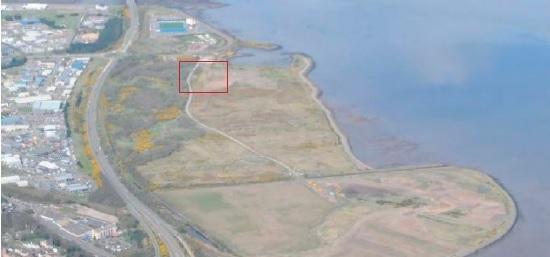
A planning application has been submitted to construct a new centralised waste management facility (Materials Recovery Facility) to recover recyclates and produce Refuse Derived Fuel, as the Council's preferred interim arrangements for meeting the requirements of the ban on landfilling which commences in January 2021. The site is located at the Longman, Inverness (previously the landfill site).
Around 140,000 tonnes of waste are produced per annum by Highland households and Highland Council Business Waste Customers. At present, 43% of this material is recycled. The remaining 57% of Highland refuse is sent to landfill at a cost of approximately £11 million each year.
Once constructed, the facility is expected to annually process up to 83,000 tonnes of residual waste generated within the Highlands. The Materials Recovery Facility will remove any items which can be recycled such as cans, bottles and plastic pots and tubs; it will then gather and package the remaining waste material to prepare it for transportation to Energy-from-Waste plants elsewhere in the UK.
Councillor Allan Henderson Chair of the Council's Environment, Development and Infrastructure Committee said: "The national legislation changes coming in on 1 January 2021 mean, like all other councils, we will not be allowed to landfill our biodegradable municipal waste. The aims of this ban are to promote waste being regarded as a commodity or resource, maximise reuse and recycling, and stimulate a circular economy. The landfill ban will also reduce the amount of methane being produced by landfill sites."
The application will be assessed over the coming weeks before it is presented to the South Area Planning Committee for a decision.
The application can be viewed at https://wam.highland.gov.uk/wam/ using the reference number 19/00503/FUL.
What is a Materials Recovery Facility (MRF)? These can fall into two main categories, those that are designed to process large volumes of mixed recyclables (e.g. from the blue bins) into their individual material streams and prepare them for sale in the commodity markets; or, as in this case, others that deal with mixed residual waste and look to recover value from the material by removing small amounts of recyclable streams such as metals and plastics, but in the main, producing a refuse derived fuel in readiness for sending to Energy from Waste facilities.
Currently almost all residual waste is landfilled with around 32,000 tonnes being bulked and transported out of the Highlands for landfill disposal in Aberdeenshire under a contract with SUEZ until September 2019. The remainder is landfilled at Council sites at Seater in Caithness, Granish in Aviemore, or Duisky landfill site in Lochaber.
Related Businesses
Related Articles
The Highland Council welcomes moves by the Scottish Government to introduce greater flexibility on how it could design a Visitor Levy Scheme for consultation. The Visitor Levy (Scotland) Act 2024 currently provides local authorities with discretionary powers to implement percentage-based levies following statutory consultation.
As it looks to set out its forthcoming priorities, the council is seeking involvement from members of the public, including businesses, community groups, parents, and young people. All their opinions are going to be crucial in deciding how Highland Council will take on its budget challenge for 2026-2027.
Thurso is to benefit from £100m investment in education and community facilities and are rolling out the first phase of public consultations on 9 and 10 December 2025. The Highland Council is inviting people that live, work, or study in Thurso, to come along to the public consultation events to have their say; this is an opportunity to help shape the future of Thurso, to gather views and ideas.
A new online portal has been launched to bring empty homeowners together with prospective buyers or developers with the aim of facilitating more properties to be used as homes again. Covering the whole of Scotland, this builds on the success of local pilots, referred to as "matchmaker schemes".
Steps towards introducing a short term let control area have been considered by Highland Council's Isle of Skye and Raasay area committee. On Monday (1 December 2025) the committee heard evidence to justify the grounds for the introduction of a Short Term Let Control Area covering all or part of Skye and Raasay.
EMPLOYERS and educators from across the Highlands have gathered to hear how a new initiative is aiming to transform the region's economy. Workforce North - A Call to Action brought together business leaders and teachers from primary and secondary schools from across the Highland Council area with a wide range of partners geared towards education, learning and skills development at Strathpeffer Pavillion.
The Highland Council continues to call for meaningful engagement from the Home Office over its plans to temporarily accommodate up to 300 adult male asylum seekers at Cameron Barracks, Inverness. It follows an email on Monday from Alex Norris MP, Minister for Border Security and Asylum, to Council Leader, Raymond Bremner, which failed to answer questions raised by the Council or address community concerns.
SSEN Transmission has become the first company to sign up to the Highland Social Value Charter (HSVC), marking a significant milestone in delivering long-term socio-economic benefits for communities across the Highlands. Investment commitments from the company include funding for roads, new homes, jobs, and work for local contractors in addition to a local and regional fund for communities to apply to.
The Highland Council continues to work through the procurement process for the provision of the Wick Public Service Obligation for the Highland Council. We have now entered the preferred bidder stage and have entered a standstill period.
Maps of the Council's gritting routes by priority and policy are available online at www.highland.gov.uk/gritting (external link) The information provided is a summary of reports from operational staff and is intended to give a general indication of typical conditions in each area at a point in time. It is not intended to imply that any individual route is entirely snow and ice free and drivers must be aware that conditions can change rapidly and make their own assessment of conditions for travelling.