Confirmed Cases Of Covid-19 Variants Identified In UK
21st August 2021
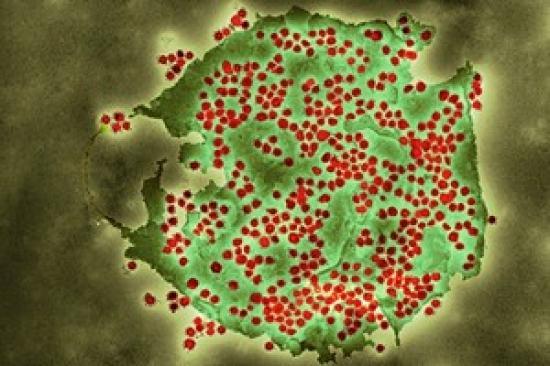
Latest updates on SARS-CoV-2 variants detected in UK.
Latest update
Public Health England (PHE) has published Variant Technical Briefing 21. See https://www.gov.uk/government/publications/investigation-of-novel-sars-cov-2-variant-variant-of-concern-20201201
PHE releases weekly updates on the number of confirmed new cases of variants of concern and variants under investigation identified in the UK.
Previous
Friday 6 August
Public Health England (PHE) releases weekly updates on the number of confirmed new cases of variants of concern and variants under investigation identified in the UK.
PHE has today published the latest Variant Technical Briefing. It shows that Delta is still overwhelmingly dominant across the UK, accounting for approximately 99% of cases. The briefing includes updated hospitalisation data for Delta, which shows that in the period since the last update on 19 July, 1,467 people were hospitalised with cases of Delta confirmed by sequencing or genotyping. Of these, 808 (55.1%) were unvaccinated, while 512 (34.9%) had received both doses of the vaccine. While vaccines provide high levels of protection, they are not 100% effective and will not stop everyone catching COVID-19. As more of the population gets vaccinated, we will see a higher relative percentage of vaccinated people in hospital.
The Technical Briefing also includes some initial findings which indicate that levels of virus in those who become infected with Delta but have already been vaccinated may be similar to levels found in unvaccinated people. This may have implications for people's infectiousness, whether they have been vaccinated or not. However, this is early exploratory analysis and further targeted studies are needed to confirm whether this is the case.
PHE has also published the risk assessment on VUI-21JUL-01, also known as B.1.621. VUI-21JUL-01 was designated a variant under investigation (VUI) on 21 July, based on apparent spread into multiple countries, as well as importation to the UK and mutations of concern, which include E484K, N501Y and K417N. These mutations have also been detected in other variants under investigation (VUIs) and variants of concern (VOCs). As of 4 August 2021, there were 37 confirmed VUI-21JUL-01 cases in England. Cases have been detected across 6 English regions, with most cases in London. Cases have also been reported in several other countries.
There is preliminary laboratory evidence to suggest that vaccination and previous infection may be less effective at preventing infection with VUI-21JUL-01. However, this data is very limited and more research is required. There is no evidence to suggest that VUI-21JUL-01 is more transmissible than the dominant Delta variant.
Dr Jenny Harries, Chief Executive of the UK Health Security Agency, said:
The latest hospitalisation figures show once again how important it is that we all come forward to receive both doses of the vaccine as soon as we are able to do so. Vaccination is the best tool we have in keeping ourselves and our loved ones safe from the serious disease risk COVID-19 can pose.
However, we must also remember that the vaccines do not eliminate all risk: it is still possible to become unwell with COVID-19 and infect others. It is still vital that we exercise caution, particularly while cases are high. Remember that meeting outdoors is safer than indoors, isolate if you are told to by NHS Test and Trace, and if you show symptoms stay home and get a PCR test as soon as possible. It is so important that we all continue to play our part.