Scotland Leading Uk On Investment According To Attractiveness Survey
31st May 2022
Foreign direct investment (FDI) results in Scotland strongly outperforming the UK as a whole.
Scotland has recorded a 14 per cent increase in Foreign Direct Investment (FDI) projects in 2021, according to Ernst & Young's (EY) latest Annual Attractiveness Survey results.
Figures published today show this significant level of investment is compared to an increase in FDI of 1.8 per cent across the UK and 5.4 per cent across Europe.
The latest survey results show Scotland's perceived attractiveness to investors now sits at a record high, with 15.8 per cent of investors rating it as the UK's most attractive FDI location, up from 15 per cent last year and more than doubling its rating from the pre-pandemic period (seven per cent in 2019).
Other key findings from the survey results include:
Three Scottish cities, Edinburgh, Glasgow and Aberdeen remain in the Top 10 locations outside of London for attracting inward investment projects. Edinburgh alongside Manchester is ranked equal first; Dundee and Livingston also make the Top 20.
Scotland performed strongly in high-value, high-growth industries like digital and utilities alongside a rebound in manufacturing FDI.
The four leading sectors were digital technology (33 projects), utility supply (18 projects), business and professional services (14 projects), and machinery and equipment (14 projects).
Digital projects in Scotland rose by 73.4 per cent, in contrast to a 7 per cent decline in Europe and 7 per cent growth in the UK overall. Scotland is now firmly established as the UK's number two location for digital projects behind London.
Trade Minister Ivan McKee said, "It is great to see these latest results, which show Scotland leading the UK when it comes to securing Foreign Direct Investment, in spite of the significant challenges posed by Brexit and the pandemic. That is testament to our skills base, and our highly qualified workforce.
"We have been the most successful nation or region in the UK, outside of London, for 9 of the last 11 years and for the 7th year running, in attracting FDI.
"These results indicate that our values-led approach to investment, set out in our Inward Investment Plan, is delivering and underline the important ongoing contribution of inward investment to the recently published National Strategy for Economic Transformation.
"It is critically important that we continue to work closely with inward investors by offering our unique Team Scotland approach to support an inclusive and wellbeing economy, as we strive to meet our goal of being net zero by 2045."
Foreign Direct Investment (FDI) or inward investment (which includes investment from the rest of the UK into Scotland) involves a company or institution headquartered outside of Scotland that establishes a base of operations within Scotland, creating jobs, economic opportunities and associated capital investment.
More
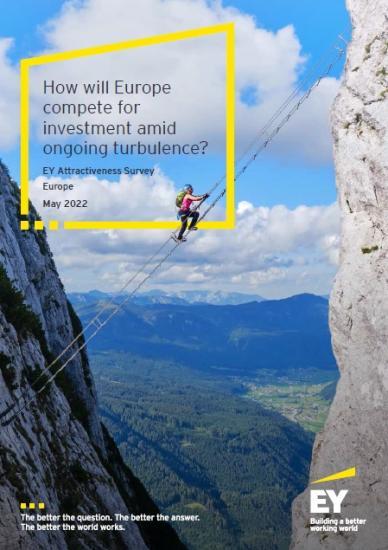
EY research shows that despite the compounding complexity, Europe remains an attractive foreign investment destination in the longer term.
Foreign direct investment (FDI) in Europe increased 5% in 2021 as businesses reignited their expansion plans, but investment levels are still below 2019.
Just 25% of businesses surveyed after 14 March plan to establish or expand operations in Europe during the next year, the lowest number in the past three years.
Governments should focus on Europe's digital, sustainability and fiscal competitiveness, and ensure that the recovery works for businesses of all sizes.
Complexity is compounding. Just as the worst of the COVID-19 pandemic seemed to be over and European economies began to recover, war has returned to European soil. The consequences for businesses with people and operations in Ukraine and Russia are monumental. But all businesses with a presence in Europe have felt the ripple effect, whether that be escalating costs of energy and commodities, sanctions of clients and partners, or more pronounced undercurrents of social tension.
Data for the 21st EY Europe Attractiveness survey was collected before and after the war in Ukraine commenced. Significantly fewer businesses who were surveyed when the full extent of the war was apparent plan to invest in Europe than those surveyed beforehand. More specifically, 79% of those surveyed before 1 March 2022 plan to establish or expand operations in Europe, compared with 67% surveyed between 1 March and 14 March and just 25% of those surveyed after 15 March.
And the ripple effects are likely to continue into the medium and long term, joining other long-term trends also at play. Businesses continue to adopt new technology at breakneck speed. Consumers, employees, investors and regulators put more and more pressure on business to address climate change and other societal challenges. And hybrid work is becoming the norm. It's no exaggeration to say that businesses face a more complex and rapidly evolving set of challenges than ever before.
Just like businesses, policymakers have competing priorities. In times of crisis, there is an obvious need to focus on the "now" rather than the "next". But this should not happen at the expense of fortifying Europe's long-term attractiveness to foreign investors. Why? Because foreign direct investment (FDI) creates jobs, rejuvenates communities, boosts innovation and stimulates economic growth everywhere.
In times of crisis, there is an obvious need to focus on the ‘now' rather than the ‘next'. But this should not happen at the expense of fortifying Europe's long-term attractiveness to foreign investors.
Read the full report HERE
Complexity is compounding. Just as the worst of the COVID-19 pandemic seemed to be over and European economies began to recover, war has returned to European soil. The consequences for businesses with people and operations in Ukraine and Russia are monumental. But all businesses with a presence in Europe have felt the ripple effect, whether that be escalating costs of energy and commodities, sanctions of clients and partners, or more pronounced undercurrents of social tension.
Data for the 21st EY Europe Attractiveness survey was collected before and after the war in Ukraine commenced. Significantly fewer businesses who were surveyed when the full extent of the war was apparent plan to invest in Europe than those surveyed beforehand. More specifically, 79% of those surveyed before 1 March 2022 plan to establish or expand operations in Europe, compared with 67% surveyed between 1 March and 14 March and just 25% of those surveyed after 15 March.
And the ripple effects are likely to continue into the medium and long term, joining other long-term trends also at play. Businesses continue to adopt new technology at breakneck speed. Consumers, employees, investors and regulators put more and more pressure on business to address climate change and other societal challenges. And hybrid work is becoming the norm. It's no exaggeration to say that businesses face a more complex and rapidly evolving set of challenges than ever before.
Just like businesses, policymakers have competing priorities. In times of crisis, there is an obvious need to focus on the "now" rather than the "next". But this should not happen at the expense of fortifying Europe’s long-term attractiveness to foreign investors. Why? Because foreign direct investment (FDI) creates jobs, rejuvenates communities, boosts innovation and stimulates economic growth everywhere.
In times of crisis, there is an obvious need to focus on the ‘now’ rather than the ‘next’. But this should not happen at the expense of fortifying Europe’s long-term attractiveness to foreign investors.
Read the full report HERE Pdf 52 pages.