Solar Farms A Blight On The Landscape? - Research Shows They Can Benefit Wildlife
14th October 2022
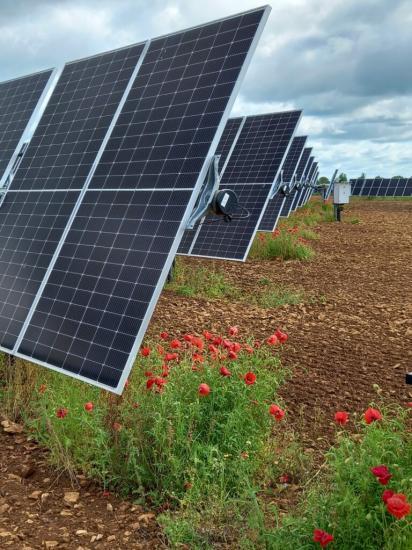
Liz Truss, the new UK prime minister, isn't a fan of solar farms. In 2014, when she was environment secretary, she described rows of panels arranged in a field to capture energy from the sun as a "blight on the landscape". Eight years later, as a candidate for the 2022 Conservative Party leadership election, she said they were a threat to UK food supplies. Now her government seems intent on banning new solar farms by redefining some of the most promising sites for building them as prime farmland.
Tackling the climate emergency demands urgent decarbonisation of electricity systems. And amid the ongoing war in Ukraine and volatile gas prices, there is further need for homegrown renewable energy. To meet its target of a clean electricity grid by 2035, the government expects to boost the deployment of solar power fivefold. This would only increase the land allocated to solar farms to 0.3%, roughly 0.5% of that used for agriculture.
Overhauling energy supply is certain to create conflict. But there is an opportunity to design energy plants that have multiple benefits. For instance, solar farms last for 25 to 40 years. These sites, where human disturbance is minimal, could offer shelter to embattled wildlife and regenerate the soil.
Though research is still in its infancy, the evidence so far suggests solar farms can address more than one of the crises bearing down on the world.
Biodiversity on solar farms
Britain has lost more of its biodiversity - the variety of life which exists from bacteria and viruses all the way up to large mammals, birds and fish - than almost anywhere else in western Europe. Massive habitat loss since the industrial revolution has afflicted many well-loved species, with hedgehogs and water voles among those whose populations are shrinking.
Butterflies and bees are thought to be worth around £400 million a year (US$443 million) to the UK economy as pollinators. Changes to how the land is used and the advent of intensive farming have swept away insect-rich wildflower meadows, which are at around 3% of their former extent. A full or partial switch from agricultural land to solar farms in some places would allow the land to recover.
In 2017, government adviser Natural England published a review of scientific evidence on the effect of solar farms on ecosystems, stating that not enough research had been done to definitively say whether solar farms benefit wildlife. This was especially true for birds and bats. But several studies have indicated that solar farms can increase the diversity of plant species growing at a site, and so encourage pollinating insects.
A 2016 paper found that solar farms tended to have more species of plant, insect and bird than equivalent farm fields. Earlier research from 2013 seemed to support this finding: when compared to the surrounding farmland, which the solar farm used to be a part of, greater numbers of butterflies and bees were found on the site.
More recently, a series of reports illustrated the benefits of solar farms for bumblebees, honeybees and pollinator populations more generally. Where solar farms are managed in a way that allows flowers to grow from April to early autumn, these insects have more places to forage and breed. It stands to reason that bigger insect populations would benefit species that feed on them, such as small mammals, bats and birds. Solar panels can provide some birds with a place to nest and perch while small mammals such as field voles can gain hiding places from birds of prey.
Solar panels also create their own microclimates by casting shade and changing the pattern of rainfall landing on the ground. Evidence from the UK indicates lower ground temperatures, light and moisture are found beneath panels compared with adjacent farm fields. While this could disadvantage some grassland species which prefer more direct sunlight, it presents an opportunity for their shade-tolerant counterparts.
The patterns of shading created by the panels offer a range of habitats for plants, with those in the shade often flowering later. Pollinators generally need flowers into October, so a range of flowering times helps to extend the time they can spend foraging. The potential to grow crops in the microclimates under panels, a system called agrivoltaics, is also being explored.
Biodiversity below ground and the soil may also benefit from solar farm installations. The switch from intensive agriculture to permanent grassland means less fertiliser, insecticide and herbicide, and less disturbance from ploughing. This could allow the health of the soil to improve, although more research is needed to confirm and quantify this effect.
An ongoing experiment
At Keele University, we recently installed a low-carbon energy generation park which consists of 12,500 solar panels, two wind turbines and a large battery for storing excess electricity, all connected to the campus via a smart network that can control energy demand in different buildings, allowing the university to maximise the use of its own renewable energy and reduce the use of grid electricity when it has higher carbon emissions. During the site's first year of operation, we began a study which will span several years researching the effect of the solar array on biodiversity and soil health.
Plants, pollinators, amphibians, badgers, birds, bats and small mammals are all being monitored, alongside various soil characteristics. While the construction will have disturbed the soil and wildlife, our monitoring shows that the area is recovering quickly. Large areas of the site have naturally established a grassland habitat, increasing the diversity of plant species compared with before when the site was a ploughed field. Foxes and predatory birds plus a wide variety of insects are among the visitors so far.
Clearly, there are multiple potential benefits from solar farms, a fact recognised by the industry itself. The climate crisis and the ecological crisis are inextricably linked and must be tackled together. Well-considered, designed and managed solar farms could offer this opportunity.
Note
This article is from The Conversation web site. To read it with many links to more information go HERE
More
UK's most advanced hybrid solar farm completed for Warrington council
GRIDSERVE has now completed the third of its UK-leading technically advanced hybrid solar farms for Warrington Borough Council
Cirencester is the first large-scale and most advanced DC-coupled solar farm in the UK
Project delivers secure, affordable and plentiful energy supporting the transition to net zero
The project continues the nationwide expansion of subsidy-free renewable power, to meet the UK's net zero carbon energy commitments.
At more than 88 acres, the equivalent to more than 50 football pitches, the 23 MWp Cirencester Hybrid Solar Farm is the first DC-coupled solar farm of this size in the UK and the most advanced to be completed in the UK since GRIDSERVE's York project in December 2019. Its pioneering commercial model uses battery storage and sophisticated technologies to maximise revenue and help balance the grid - both during the day with direct solar generation and at night with energy stored in the 51 MWh battery.
Located in Witpit Lane, Cirencester, the 23 MWp solar farm includes more than 43,000 bifacial solar panels on trackers, co-located with 51 MWh of DC-coupled energy storage. This is one of the world’s most technically advanced solar farms, which has achieved a significant design feat to avoid multiple conversion processes, increase efficiency, and help balance the grid. The site will produce enough energy to drive over 88 million miles1 every year in modern electric vehicles, or put another way, will produce enough energy to drive more than a hundred thousand electric cars from Land’s End to John o’ Groats.
The successful completion of Cirencester Hybrid Solar Farm demonstrates how local authorities can partner with GRIDSERVE to deliver projects which cut carbon, supply zero carbon clean electricity, and fund essential Council services. Electricity from Cirencester Hybrid Solar Farm will be used to help provide net zero energy for Warrington’s fleet of all-electric buses, coming next year, whilst a hybrid solar farm in York - handed over in December 2019 – is providing energy which can be sold into the grid. A third site in Hull is supplying all of the Council’s net zero energy needs, making Warrington Council the first local authority in the UK to produce all of its own electricity.
Toddington Harper, GRIDSERVE CEO, said, "It is our collective responsibility to tackle the climate change emergency. Projects like Cirencester Hybrid Solar Farm require no government subsidy and deliver secure, affordable and plentiful energy. They demonstrate that the UK can meet its net zero obligations, and in partnership with Warrington Borough Council, enable us to deliver radical carbon reductions to move the needle on climate change in the fastest possible timeframes, and at the lowest cost."
Warrington Borough Council’s cabinet member for sustainability and climate change, Cllr Janet Henshaw, said, "The completion of Cirencester Hybrid Solar Farm is great news for Warrington. It will provide a huge boost to our ongoing work to tackle the climate emergency, reduce greenhouse emissions, and tackle fuel poverty in our borough. It will also provide enough net zero carbon energy to charge our fleet of all-electric buses when they are rolled-out next year.
Investing in subsidy-free developments has been a landmark achievement for the Council. Each project has proven to be a solid strategic decision to ensure the borough’s future energy security. We look forward to working with GRIDSERVE to ensure Cirencester Hybrid Solar Farm continues to generate optimal financial and environmental returns."
GRIDSERVE has deployed a number of sophisticated technologies to maximise efficiency and revenue for Warrington. These include bifacial solar panels, which generate electricity on both sides, as well as trackers which enable panels to follow the sun, maximising generation as well as stabilising output over the whole day. Together, these enhancements increase solar generation by around 20% compared to comparable solar farms that don’t employ these technologies.
Cirencester Hybrid Solar Farm joins two other hybrid solar + battery farms. The first, in York, includes a 35 MWp solar array and 30 MWh of battery storage. The other, in Hull, includes a 26 MWp solar array and 23 MWh of battery storage. GRIDSERVE will operate and maintain all three projects over their lifetimes to maximise system performance and value for the council.
Information
1. A typical 1MWp UK solar farm will generate 1 million kWh’s of energy (=1GWh) every year, across 4 acres of land (2 football pitches). Therefore 1 acre of land can generate 250kWh of energy. A modern electric vehicle can drive 4 miles per kWh of energy, therefore 1 acre of land = 250kWh x 4 miles per kWh = 1 million miles. A football pitch is approximately 2 acres therefore from this area of land approximately 2 million miles of EV charging miles can be generated every year.
2. Image credit: Above, Solar and Data Analytics