Tick-borne Encephalitis Detection In England
5th April 2023
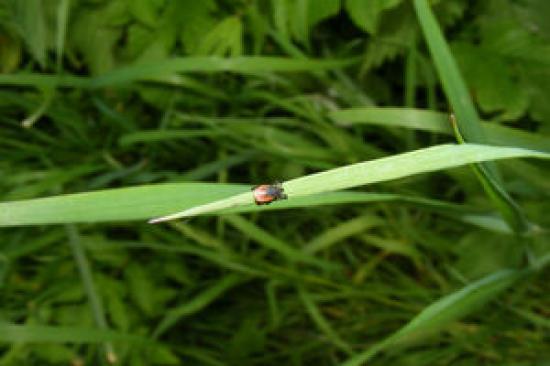
A new risk assessment, published by a multi-agency cross-government committee, reports that tick borne encephalitis is now likely to be present in England.
The risk assessment is based on both human cases and the detection of the virus in ticks in several areas of the country. The risk to the general public in the UK remains very low.
There have been 3 cases of probable or confirmed tick-borne encephalitis acquired in England since 2019, including one linked to the Yorkshire area in 2022. This case in 2022 is the first confirmed case in England. The virus has also been detected previously in the Hampshire and Dorset, and Norfolk and Suffolk border areas but may also be present elsewhere as the tick species that carries the virus is widespread in the UK.
The tick-borne encephalitis virus (TBEV) is a virus carried by ticks and is common in many parts of the world, including many countries in Europe. It causes a range of disease, from completely asymptomatic infection, to mild flu-like illness, to severe infection in the central nervous system such as meningitis or encephalitis. Symptoms of this are similar to other causes of meningitis, and can include a high fever with headache, neck stiffness, confusion or reduced consciousness.
Investigations into why the virus has been found in ticks more frequently in recent years are under way, but is likely due to a number of factors.
The risk to the general public in the UK remains very low from TBEV, but the UK Health Security Agency (UKHSA) has recommended changes to testing in hospitals so that any further cases can be detected promptly and will be enhancing surveillance - including asymptomatic surveillance in people in the areas where TBEV has been detected.
Ticks can carry other diseases such as Lyme disease Lyme disease - a bacterial infection which can be treated with antibiotics - so UKHSA is reminding the public to check themselves for ticks after they have been outdoors and remove them promptly and correctly if they are found.
Dr Meera Chand, Deputy Director at UKHSA, said, "Our surveillance suggests that tick-borne encephalitis virus is very uncommon in the UK and that the risk to the general population is very low. Ticks also carry various other infections, including Lyme disease, so take steps to reduce your chances of being bitten when outdoors in areas where ticks thrive, such as moorlands and woodlands, and remember to check for ticks and remove them promptly.
UKHSA carries out surveillance of vector-borne disease in the UK, closely monitoring sentinel animals, tick and mosquito species and their distribution, and the infections that they carry, to understand more about emerging infections in this country.
The public are reminded that they should seek GP advice if they are unwell after a tick bite, and should seek urgent medical attention if they or someone they know:
has symptoms of meningitis:
severe headache
stiff neck
pain looking at bright lights
develops neurological symptoms:
a fit (seizure), if not known to be epileptic
sudden confusion or change in behaviour
weakness or loss of movement in arms and legs
facial dropping, change in vision or slurred speech
What are the chances of getting Lyme disease from a tick Scotland?
The warmer, wetter weather of recent years has seen ticks flourish in Scotland. As a result there has been a significant increase in cases of Lyme disease. Around one in 20 ticks carry the bacteria which causes Lyme disease.
Where in Scotland do ticks carry Lyme disease?
They carry a number of diseases, the most well known of which is Lyme disease. They can be found all across Scotland and particularly in the wetter west, in woodlands, moorlands and long grass.
How many cases of Lyme disease are there in Scotland?
A study in 2019 concluded that the incidence rate in 2010-2012 combined was 37.3 per 100,000 persons per year in Scotland, which equates to 2023 cases per year.
When is the tick season in Scotland?
Ticks are most active between March and October.
What are the top 3 severe symptoms of Lyme disease?
These include fever, rash, facial paralysis, and arthritis. The appearance of the erythema migrans rash can vary widely. Erythema migrans (EM) rash (see photos): Occurs in approximately 70 to 80 percent of infected persons.
How soon after tick bite do you need antibiotics?
Prophylaxis can be started within 72 hours of tick removal. The patient has no contraindication to doxycycline.
What are the warning signs of Lyme disease?
Image result
Typical symptoms include fever, headache, fatigue, and a characteristic skin rash called erythema migrans. If left untreated, infection can spread to joints, the heart, and the nervous system. Lyme disease is diagnosed based on symptoms, physical findings (e.g., rash), and the possibility of exposure to infected ticks.
What happens if Lyme disease goes untreated for years?
If Lyme disease is not diagnosed and treated early, the spirochetes can spread and may go into hiding in different parts of the body. Weeks, months or even years later, patients may develop problems with the brain and nervous system, muscles and joints, heart and circulation, digestion, reproductive system, and skin.
How long do you have to remove a tick before you get Lyme disease?
In most cases, a tick must be attached for 36 to 48 hours or more before the Lyme disease bacterium can be transmitted. If you remove a tick quickly (within 24 hours), you can greatly reduce your chances of getting Lyme disease.