More Than 1 In 10 Addresses Used As Holiday Homes In Some Areas Of England And Wales
20th June 2023
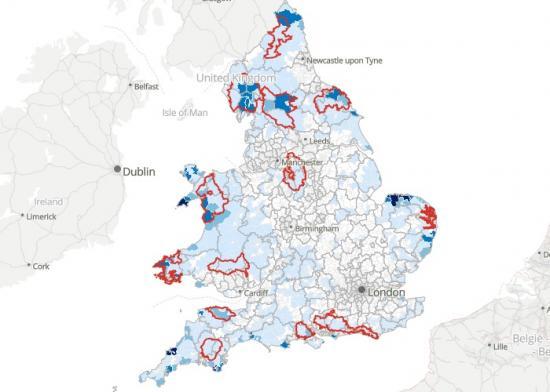
Our analysis of Census 2021 data reveals the hotspots where second addresses are used as holiday homes across England and Wales. Explore these locations, how many people use them and where they travel from.
Around 70,000 second addresses were used as holiday homes, visited by more than 200,000 people in England and Wales, according to Census 2021.
Holiday homes accounted for 4.1% of all second addresses and were mainly concentrated in coastal areas, Areas of Outstanding Natural Beauty or national parks, including the Lake District, Dartmoor and Eryri (Snowdonia).
Census 2021 data on second addresses only include people who usually reside in England and Wales who said they spend at least 30 days a year at the address. The total number of second addresses used as holiday homes, and people who use them, are likely to be higher.
There may have been an impact on these data from the coronavirus (COVID-19) pandemic, but these are difficult to measure.
The popular holiday destination of Cornwall had the highest numbers of holiday homes and people who use them, with 6,080 holiday homes and 14,230 holiday home users.
As a proportion of the local housing supply (all dwellings excluding communal establishments), South Hams on the coast of Devon and Gwynedd in North Wales had the highest proportions of holiday homes. In some smaller areas, more than 1 in 10 addresses were being used as holiday homes.
And when adjusting for the local population, Gwynedd and the Isle of Anglesey in North Wales saw the highest proportions of holiday home users travelling to their areas.
The South West of England and Wales are holiday home hotspots
The South West had the highest concentration of holiday homes compared with other English regions and Wales, at 7.5 for every 1,000 homes.
This was followed by Wales, with 6.9 holiday homes for every 1,000 homes. London had the lowest, at 0.6 per 1,000.
The figure was higher in local authority areas known as popular tourist destinations. In South Hams in Devon, there were 44.1 holiday homes for every 1,000 homes.
This was the highest rate of any local authority area in England and Wales excluding the Isles of Scilly, which has a particularly small resident population.
South Hams has a long coastline and is home to the southern part of Dartmoor National Park, as well as the South Devon Area of Outstanding Natural Beauty.
South Hams was followed by Gwynedd in North Wales (41.0 per 1,000 homes), which contains most of Eryri (Snowdonia) National Park, North Norfolk (38.7 per 1,000) and the Isle of Anglesey (32.9 per 1,000).
Within local authorities, there were some areas where the concentration of holiday homes was even higher.
The following areas are known as Middle layer Super Output Areas (MSOAs), which comprise of between 2,000 and 6,000 households. We use names for them created by the House of Commons Library.
In the Salcombe, Malborough and Thurlestone area of South Hams, there were 171.9 holiday homes for every 1,000 homes. In Abersoch and Aberdaron in Gwynedd, the figure was 153.3 per 1,000.
Holiday home hotspots
Overall, there were seven areas where more than 1 in 10 homes were used as holiday homes.
These also included:
Trebetherick and Whitecross (139.5 per 1,000 homes) and Padstow and St Issey (120.5 per 1,000) in Cornwall
Brancaster, Burnham Market and Docking (130.4 per 1,000 homes) and Hunstanton (103.8 per 1,000) in King's Lynn and West Norfolk
Wells and Blakeney (109.1 per 1,000 homes) in North Norfolk
Many of these locations with particularly high concentrations of holiday homes were in coastal areas, or near national parks.
Both the UK and Welsh parliaments have recently passed new laws to further regulate the ownership of second homes.
Last year, the UK Government changed the law so that second homeowners would pay council tax on properties that are not genuine holiday lets. Second homeowners must now prove holiday lets are rented out for a minimum of 70 days a year, and are available to rent for at least 140 days.
The Welsh Government recently increased its own letting requirements so properties must be rented out for at least 182 days a year, and available for at least 252 days. It has also raised the maximum council tax premium that councils can apply to second homes, to up to four times the standard rate.
Holidaying in the UK becoming more common
Almost half (48.5%) of those who used a second address as a holiday home travelled within the UK, up from 42.3% in the 2011 Census.
Around 4 in 10 (41.8%) of those who used holiday homes in the UK travelled less than 100 kilometres (km) from their usual address, as shown in our Characteristics of people in England and Wales with a second address: Census 2021 article.
And around 1 in every 50 (1.9%) people who used a holiday home stayed in the same local authority as their usual residence.
At a regional level, using holiday homes in the same area as a usual residence was most common in Yorkshire and the North of England.
Around two-thirds of holiday home users in these areas came from within the same region, 63.5% in Yorkshire and the Humber, 63.2% in the North East, and 61.7% in the North West.
Of the 93,650 Londoners who used second addresses as holiday homes, almost a quarter travelled within the South of England, with 14.4% going to the South East, and 10.0% to the South West.
Almost two-thirds (62.3%) of Londoners who used holiday homes travelled outside of the UK, the highest proportion of any region of England, or Wales. Only 0.7% stayed at addresses in London.
Holiday home users from London were least likely to go to the North East of England (0.3%) or Northern Ireland (0.2%).
Wales was the most common destination inside the UK for people from the:
West Midlands, where 22.4% of people who used a second address as a holiday home travelled to Wales.
North West, where 22.2% of all holiday home users travelled to Wales.
20,045 people from these areas travelled to Wales, accounting for more than half of the 36,370 people who used holiday homes in Wales.
Among all people from Wales who used a second address as a holiday home, more than half (53.8%) travelled to addresses within the country.
Slightly over a third (34.0%) travelled outside the UK, which was the lowest proportion of holiday home users who travelled abroad, compared with English regions.
Around 1 in 10 (11.3%) of Welsh holiday home users travelled to England. This was just under 2,000 people, more than half of whom used addresses in the South West.
Travelling in the other direction across the border between England and Wales, 26,940 people from England used second addresses in Wales as holiday homes. However, this was a lower proportion of all English holiday homes users travelling to Wales (6.3%) than the proportion of Welsh holiday home users travelling to England (11.3%).
Holiday home use increasing in North Wales hotspots
Wales was the area with the highest proportion of people using a second address as a holiday home, relative to the local population.
A total of 36,370 people were using holiday homes in Wales, equivalent to 11.7 holiday home users for every 1,000 local residents.
While more people said they used second addresses as holiday homes in the South West of England (48,075), this was equal to 8.4 people per 1,000 local residents.
The local authority with the highest proportion of holiday home users relative to its population was Gwynedd in North Wales.
For every 1,000 local residents, 79.0 people from other local authorities used a holiday home in the area (9,270 people in total).
More than three-quarters of people who used holiday homes in Gwynedd came from England's North West (43.3%) or West Midlands (32.1%).
There is a similar situation in the Isle of Anglesey, which was the second most popular holiday home destination in England and Wales.
A total of 63.3 people per 1,000 local residents (4,375 people) came to holiday homes in the area from another local authority.
Anglesey also saw the largest increase in the number of holiday home users of any local authority in England and Wales, up from 41.5 per 1,000 in 2011.
Read the full report HERE