Gotta Get Through - This Energy Bills This Winter
26th August 2023
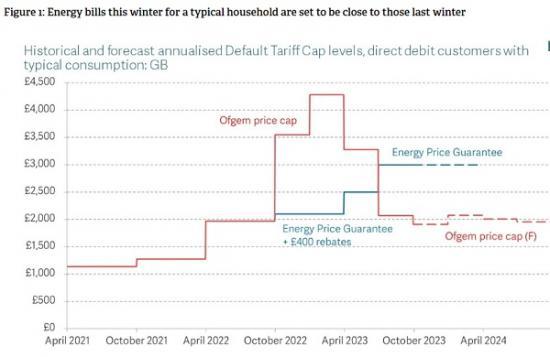
ritain's energy bill crisis is not over: Ofgem's imminent confirmation of the Q4 2023 price cap is expected to show that annualised typical energy bills will be above £1,900 from October, close to double those before Russia's invasion of Ukraine. This is only a little below the effective level of £2,100 from last winter that resulted from the combination of the Energy Price Guarantee and universal £400 payments through the Energy Bills Support Scheme.
However, this headline £200-a-year saving for a typical household masks a lot of variation, with the heaviest energy users in line for larger reductions in bills, and some households who use relatively little energy set to see bills rise this winter compared to last year.
In fact, any family with an energy consumption less than four-fifths of the average will see higher bills this winter than last, a situation that applies to around one-in-three (35 per cent) of households in England and close to half (47 per cent) of those in the lowest income decile.
For some, these extra costs will be substantial: 13 per cent of households (2.7 million families) face energy bills rising by more than £100 this winter, a figure that rises to one in four (24 per cent) for the poorest households.
And although the Government has increased its Cost of Living payments to £900 during 2023-24 (up from £650 in 2022-23), the rising costs of other essentials - most obviously food bills, which are up by £960 on average since 2019-20 - mean this is unlikely to prevent another difficult winter.
Progress on energy policy has also not lived up to the scale of the challenge. The Government is yet to take action to meet its goal of delivering ‘more targeted support' for energy costs before April 2024, instead seeming minded to rely on a reformed Warm Homes Discount scheme to support low-income households with energy costs, a move that would fall a long way short of a genuine social tariff scheme.
Perhaps a greater long-term failing is the lack of action to encourage home insulation, with rates in 2022 being 45 per cent down on the already-low levels seen in 2021. There are real-world impacts of this poor progress on efficiency, with those in an EPC E-rated home facing higher gas bills to the tune of £57 a month this winter, compared with an EPC C-rated home.
Political attention has shifted but, for many, energy bills will be higher this winter than last
The drumbeat of terrifying energy-bill forecasts from last summer has thankfully not been repeated this year, and the latest expectations for this winter point to price cap of £1,925 applying during Q4 2023 (not accounting for changes driven by changing demand levels in the price cap methodology). This is nearly half the level of the Ofgem price cap set this time last year, with the fall driven by lower wholesale gas prices, which drive both gas and electricity bills. However, bills were kept artificially low last winter with the combination of the Government's Energy Price Guarantee (EPG) and the universal £400 Energy Bill Support lowering the effective typical annualised bill paid by households to £2,100, as Figure 1 shows. This winter's bills, then, look set to be slightly lower than that, but close to double those seen before the energy crisis took hold, with little immediate prospect of returning to those levels.
The change in the typical overall bill is driven by three factors which affect bills in offsetting ways. First, according to latest forecasts, unit prices are forecast to fall from 33p/kWh for electricity and 10.4p/kWh for gas under the EPG to 27p/kWh (down 19 per cent) and 6.9p/kWh (down 33 per cent) respectively. Second, standing charges, which are charged daily regardless of energy use, are set to rise to recoup the costs associated with the wave of supplier failures, consumer defaults, and additional support to shore up energy companies’ finances.
Third, the removal of the flat £400 Energy Bill Support scheme, which was paid out in monthly instalments over winter 2022 to all households, regardless of income or energy consumption, is in effect putting upward pressure on every household’s bill this winter.
The interplay between these changes means that not every household will see energy bills fall. Whether a household faces a lower bill this winter depends on whether the lower per-unit prices provide savings that outweigh the higher standing charges and removal of the £400 support.
Households consuming large amounts of energy - and therefore gaining the biggest benefits from lower per-unit prices - are more likely to see lower bills this winter than last winter. At the other end, households that consume less than 79 per cent of the typical gas and electricity consumption are likely to see higher bills this winter than last.
Read the full report HERE