Nations And AI Experts Convene For Day One Of First Global AI Safety Summit
1st November 2023
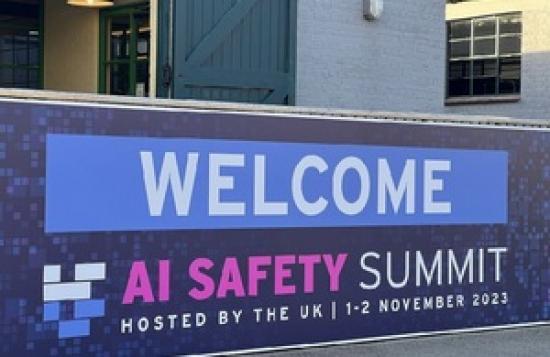
Leading AI nations, organisations and experts meet at Bletchley Park today to discuss the global future of AI and work towards a shared understanding of risks.
The US, France, Singapore, Italy, Japan and China among nations confirmed to attend Bletchley Park Summit.
historic venue will play host to crucial talks around risks and opportunities posed by rapid advances in frontier AI
Secretary of State Michelle Donelan to call for international collaboration to mitigate risks of AI.
Leading AI nations, businesses, civil society and AI experts will convene at Bletchley Park today (Wednesday 1 November) for the first ever AI Safety Summit where they'll discuss the global future of AI and work towards a shared understanding of its risks.
Technology Secretary Michelle Donelan will open the event by welcoming an expert cast list before setting out the UK government's vision for safety and security to be at the heart of advances in AI, in order to enable the enormous opportunities it will bring.
She will look to make progress on the talks which will pave the way for a safer world by identifying risks, opportunities and the need for international collaboration, before highlighting consensus on the scale, importance and urgency for AI opportunities and the necessity for mitigating frontier AI risks to unlock them.
The historic venue will play host to the landmark 2-day summit, which will see a small, but focused group comprising of AI companies, civil society and independent experts gather around the table to kickstart urgent talks on the risks and opportunities posed by rapid advances in frontier AI - especially ahead of new models launching next year, whose capabilities may not be fully understood.
The US, France, Germany, Italy, Japan and China are among nations confirmed as attendees at the AI Safety Summit. Representatives from The Alan Turing Institute, The Organisation for Economic Cooperation and Development (OECD) and the Ada Lovelace Institute are also among the groups confirmed to attend, highlighting the depth of expertise of the delegates who are expected to take part in crucial talks.
As set out by Prime Minister Rishi Sunak last week, the summit will focus on understanding the risks such as potential threats to national security right through to the dangers a loss of control of the technology could bring. Discussions around issues likely to impact society, such as election disruption and erosion of social trust are also set to take place.
The UK already employs over 50,000 people in the AI sector and contributes £3.7 billion to our economy annually. Additionally, the UK is home to twice as many AI companies as any other European country, and hundreds more AI companies start up in the UK every year, growing our economy and creating more jobs.
As such, day one of the summit will also host several roundtable discussions dedicated to improving frontier AI safety with key UK based developers such as Open-AI, Anthropic and UK based Deepmind. Delegates will consider how risk thresholds, effective safety assessments, and robust governance and accountability mechanisms can be defined to enable the safe scaling of frontier AI by developers.
Secretary of State for Technology, Michelle Donelan MP said, "AI is already an extraordinary force for good in our society, with limitless opportunity to grow the global economy, deliver better public services and tackle some of the world's biggest challenges.
But the risks posed by frontier AI are serious and substantive and it is critical that we work together, both across sectors and countries to recognise these risks.
This summit provides an opportunity for us to ensure we have the right people with the right expertise gathered around the table to discuss how we can mitigate these risks moving forward. Only then will we be able to truly reap the benefits of this transformative technology in a responsible manner.
Discussions are expected to centre around the risks emerging from rapid advances in AI, before exploring the transformative opportunities the technology has to offer - including in education and areas for international research collaborations.
The Secretary of State will be joined by members of the UK's Frontier AI Taskforce - including its Chair, Ian Hogarth - which was launched earlier this year to evaluate the risks of frontier AI models, and by representatives from nations at the cutting-edge of AI development.
They will also look at what national policymakers, the international community, and scientists and researchers can do to manage the risks and harness the opportunities of AI to deliver economic and social benefits around the world.
Day one will conclude with a panel discussion on the transformative opportunities of AI for public good now and in the long-term, with a focus on how it can be used by teachers and students to revolutionise education.
Technology Secretary Michelle Donelan will also take to the podium to deliver closing remarks to delegates, before the curtain falls on what is hoped will be an historic first day of the first ever global AI Safety Summit.
UK and partners to fund safe and responsible AI projects for development around the world, beginning in Africa, with £80m collaboration announced at AI Safety Summit
Funding will support home-grown AI expertise and computing power in Africa and help the continent’s AI innovators boost growth and support the continent’s long-term development.
The UK AI for Development Programme will contribute £38m to the collaboration which shows UK investing in partnerships which are using cutting-edge technology to solve global challenges. A new global partnership to use AI to solve some of the developing world’s most pressing challenges will be unveiled in the UK today at the AI Safety Summit.
Along with Canada, the Bill and Melinda Gates Foundation, the USA and partners in Africa, the UK is helping to fund a £80m ($100m) boost in AI programming to combat inequality and boost prosperity on the continent.
The goals of the UK Government’s AI for Development programme include:
Unlocking the benefits of AI to the 700 million people who speak 46 African languages.
Making 5 or more African countries globally influential in the worldwide conversation on AI including in using AI to help achieve the Sustainable Development Goals.
Creating or scaling up at least 8 responsible AI research labs at African universities
Helping at least 10 countries create sound regulatory frameworks for responsible, equitable and safe AI.
Help bring down the barriers to entry for African AI innovators with the private sector.
The initiative will initially focus on sub-Saharan Africa ensuring that this ground-breaking technology will be accessible to all.
AI could have a transformative impact on a range of challenges, including speeding up drug discovery, helping people who are deaf or blind to access education, and improving access to clean energy.
Over the next five years, the UK’s collaboration with global partners will:
Fund post-graduate training and fellowships in AI in African universities.
Invest in innovators building models with data that accurately represents the African continent, using home-grown skills and computing power.
Foster responsible AI governance to help African countries mitigate the risks of AI and adapt their economies to technological change.
Help sub-Sahara African countries have a bigger voice in influencing how AI is used to further the UN’s Sustainable Development Goals, a series of targets to make the world a healthier, fairer and more prosperous place by 2030.
This collaboration is part of a wider UK commitment to harness the opportunities of AI and ensure its use as a force for good, as the UK hosts the first ever AI Safety Summit in Bletchley Park this week.
James Cleverly, the UK Foreign Secretary, said:
The transformative power of AI should have a global benefit. AI can change lives for the better around the world, including helping to develop new treatments for diseases and to tackle food insecurity.
The AI for Development programme, alongside the AI Safety Summit hosted in Britain this week, are a testament to how we and our partners will use cutting-edge technology to create a more equitable and prosperous future.
Eliud Owallo, Kenya’s Cabinet Secretary for Information Communications and Digital Economy said:
Through this broad coalition of partners, AI potential benefits will open opportunities and the risks preparedness broadened. This partnership will benefit all countries and ensure that developing countries are not left behind in the AI revolution.
Paula Ingabire, Rwanda’s Minister of Information Communication Technology and Innovation said:
Africa has historically lagged behind in previous technological revolutions due to a lack of local production and value addition capacity. Rwanda is fully committed to harnessing the transformative power of AI to drive our nation’s and continent’s social and economic development agenda by becoming the proof of concept hub that Africans produce from, for the continent.
This collaborative initiative is of paramount importance as it empowers African countries to become producers, not just consumers, in the AI revolution, ensuring that we are at the forefront of shaping our own future and driving sustainable progress across the continent.
Mark Suzman, CEO of the Bill & Melinda Gates Foundation said:
From accelerating medical breakthroughs and expanding access to health care to boosting learning outcomes and increasing agricultural production, AI has the potential to help solve some of the world’s most pressing challenges.
But impact is only possible if the benefits of the technology are relevant, affordable, and accessible to everyone. The commitments announced today underscore the importance of supporting locally-led innovation to ensure AI can be used by communities around the world as a powerful and equitable tool for good.
François-Philippe Champagne, Canada’s Minister of Science, Innovation and Industry, said:
International collaboration is essential to ensure AI is used safely and responsibly around the world. Our government makes a point of working with like-minded partners and innovators to harness the potential of AI for sustainable economic development, aligned with global efforts to develop and use AI safely and responsibly.
Christopher Burns, USAID Chief Digital Development Officer and Director for Technology, said:
As development practitioners and donors, we have a moral obligation to ensure AI is designed and deployed in a responsible and ethical manner to the benefit of all, particularly underserved communities. USAID looks forward to working alongside our partners to advance this vision.
James Manyika, Senior Vice President, Research, Technology & Society, Google said:
Getting AI right - that is, harnessing its potential to benefit society while addressing the complexities and risks - requires approaching it in a way that involves and benefits everyone. That means mobilising regional expertise, expanding infrastructure, supporting nonprofit innovators using AI, and making sure individuals can develop needed skills. Google has been supporting innovation and growth in Africa since 2005 when we made a big bet on the Seacom Cable, and we look forward to working with this consortium, the African Union, and other key stakeholders across the continent to unlock the promise of AI for all.
Justin Spelhaug, Vice-President, Tech for Social Impact, Microsoft said:
We at Microsoft are proud to partner with the UK Government and other international development organisations in the launch of the joint AI for Development initiative. This initiative aligns with our own vision for digital development and our commitment to using technology to drive social impact. We look forward to being an active partner in this collaboration and to working with African countries to realise the opportunities of AI for development and social impact. By leveraging our Digital Development Program and working together, we can coordinate our efforts for maximum impact on the Sustainable Development Goals.
In supporting all aspects of AI ecosystems in Africa, the programme will include investment in post-graduate AI research skills and inclusive and locally focused datasets in Nigeria, and it will support innovation and scaling in Kenya to accelerate impact on the SDGs.