£1.5bn Headache For The Deputy First Minister On Tuesday 19th At The Scottish Budget
17th December 2023
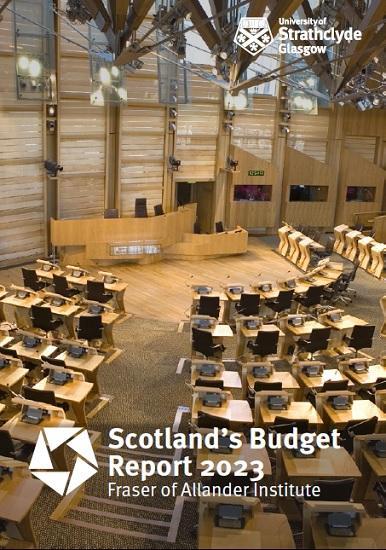
The Scottish Government faces a £1.5bn shortfall in funding for next year due to increased spending pressures and new announcements, according to the Fraser of Allander Institute. This represents one of the most challenging fiscal backdrops in the history of Scottish devolution.
The Institute's annual Budget Report, which includes an assessment of the funding position for next year in advance of the Scottish Budget being presented in Parliament, is published today.
In May, the Deputy First Minister set out an extremely challenging situation for 2024-25, with a projected £1 billion funding gap on resource spending, rising to £1.5 billion when capital commitments are included.
Since this announcement, there have been improvements from better-than-expected income tax revenues, and more funding from the UK Government. However, spending on pay awards has been much higher than was budgeted for in May.
Fully funding local authorities for the freeze in council tax will most likely cost over £300m, with another £100m committed to cutting NHS waiting lists. In addition, £325m of spending has been moved from this financial year into 2024-25 in order to balance the budget.
Put together with the initial funding gap, the University of Strathclyde economists expect the shortfall to be back to around £1.5bn, of which £800m is on day-to-day spending and £700m is on capital investment.
Mairi Spowage, Director of the Institute, said: "This large funding gap will mean difficult choices for the Scottish Government on what to prioritise. In a devolved context, this gap cannot be allowed to manifest in practice, so steps will need to be taken to address it.
"Of course, the DFM may choose to use powers over income tax to raise more revenue to plug this gap, but it is unlikely that this would be sufficient in isolation.
"Significant spending cuts are also likely to be required - the DFM has the unenviable task of choosing where the axe will fall."
The report also looks at the spending trends on areas such as the NHS and social security, and analyses how much might be raised by a series of income tax measures.
João Sousa, Deputy Director of the Institute, said: "There has been a huge amount of speculation on whether new income tax bands will be introduced to help with the government's funding position.
"In our report, we analyse many of the options that have been discussed. It is important - always - to remember how much these measures will raise when likely behavioural responses are taken into account.
"For example, a new 44p rate above £75,000 will raise around £40m - not insignificant of course, but nowhere near sufficient to balance the books."
https://fraserofallander.org/podcast-scotlands-budget-report-2023/
FAI economist Dr Hannah Randolph is joined by our director Professor Mairi Spowage and deputy director João Sousa to discuss our newly published Budget Report. The panel talk about the challenges surrounding the Scottish Budget, the likely funding gap that will need to be addressed by Deputy First Minister Shona Robison, the difficulties in planning for the long-term in the Scottish context and how Scottish Income Tax could be reformed.
Participants:
Dr Hannah Randolph, Economist, Fraser of Allander Institute, University of Strathclyde
Professor Mairi Spowage, Director, Fraser of Allander Institute, University of Strathclyde
João Sousa, Deputy Director, Fraser of Allander Institute, University of Strathclyde
Timestamps:
(00:25) The challenging backdrop to the Scottish Budget
(05:28) The impact of the Autumn Statement on the Scottish Budget
(08:33) Spending commitments from the Scottish Government since the Medium-Term Financial Strategy
(13:55) Options for reforming Scottish Income Tax
(22:51) The Scottish Government's constraints on borrowing
(26:49) Main areas to look out for on Budget Day
Read the full report HERE
Pdf 63 Pages