Lock Up Those Credit Cards - Borrowing Costs Reach Record High On Credit Cards
19th December 2023
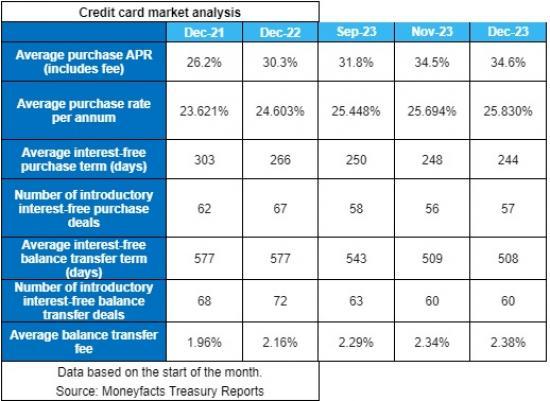
Moneyfacts Unsecured Lending Trends Treasury Report data, which studies the UK personal finance market (Credit Cards, Personal Loans and Overdrafts), reveals the cost to borrow on credit cards hit a record high during Q4 2023. The average length of 0% introductory balance transfer terms contracted to the lowest recorded in over eight years. On unsecured personal loans, the average rate on the £5,000 loan tier stands at its highest point in over 10 years.
Between the start of September and the start of December 2023 (Q4 2023), the average purchase APR (which includes card fees) rose to an all-time high of 34.6% APR, according to our records, which go back to June 2006. A combination of card withdrawals, interest rate rises, fee rises and the size of fees on new cards launched all contributed to this rise. The average purchase PA rate rose to 25.830%, a record high.
The average interest-free balance transfer term on credit cards fell to 508 days, from 543 days in September, the lowest recorded in over eight years (April 2015 - 491). There are fewer options for borrowers to choose from than a year ago, down from 72 offers to 60; outside of 2023, this is the lowest figure recorded in over two years (July 2021 - 60).
The average interest-free purchase term on credit cards fell to 244 days, down from 250 days in September, with terms also down year-on-year. There are fewer options for borrowers to choose from than a year ago, down from 67 offers to 57.
Balance transfer fees have risen to 2.38% on average, up from 2.29% in September and up from 2.16% a year ago, now the highest since June 2020 (2.55%).
Average unsecured personal loan rates for £5,000 over three years, £7,500 over five years and £10,000 over five years are up compared to the beginning of September 2023. The average rate on the £5,000 loan tier stands at its highest point in over 10 years (June 2013 - 11.2%).
Rachel Springall, Finance Expert at Moneyfacts, said, "Borrowers looking to spread the cost of their purchases or to move their existing credit card debt to an interest-free balance transfer deal may be disappointed to see a fall in both the number of deals and terms on offer. Since the start of September, balance transfer offers have dwindled, and the average term someone will have to pay off their debts is the shortest length recorded in over eight years. Those borrowers who have debts incurring interest will find the average credit card purchase APR now sits at a record high of 34.6%. Over the past quarter the average APR has been fuelled by a mix of interest rate rises, card fee rises, withdrawals and the size of fees on new cards launched. Interest rate rises should encourage borrowers to compare and switch deals, such as with a 0% balance transfer offer, but consumers must watch out for upfront balance transfer fees.
"The average interest rates charged on unsecured personal loans rose across various tiers during Q4 2023, which will be disheartening to borrowers looking to utilise a loan to consolidate their debts. Indeed, someone looking for a loan of £5,000 would find well-known providers made rate rises over the past three months, such as Halifax, HSBC and Santander, so shopping around is essential. Borrowers comparing loans will need to think carefully on whether these are the right choices for their circumstances, particularly as rates are on the rise. An unsecured personal loan can provide a structured repayment plan, but a credit card will offer much more flexibility. The average rate on a loan of £5,000 with a repayment term of three years has risen by over 4% since December 2021, so a loan now costs over £300 more in interest over a three-year term.
"As a new year approaches it's wise for borrowers to take some time to review their debts and any interest that is being incurred. Consumers looking to apply for a new deal should also check their credit score and fix any errors. Those borrowers who are struggling with their debts should speak to their provider immediately and seek debt advice if they are worried about missing any repayments."
For more information go to moneyfactsgroup.co.uk