U.S./China Tariff Shock - What It Means for UK Business
12th October 2025
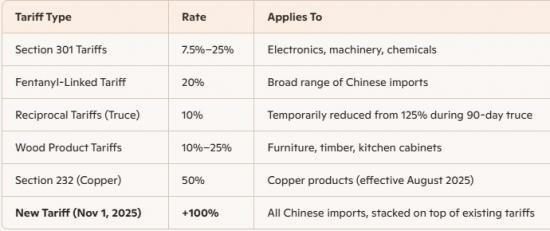
The United States has fired a fresh salvo in its economic standoff with China, announcing a sweeping 100% tariff on all Chinese imports effective from 1 November 2025.
Framed as a national security measure, the move is poised to reshape global supply chains, rattle markets, and send ripple effects across the Atlantic with UK businesses caught in the crosscurrents.
This new tariff stacks atop existing duties, some already reaching 25% or more. In certain categories, total levies could exceed 150%, creating a cost shock for U.S. importers and their global suppliers.
The tariff surge is a direct response to China's tightening of rare earth exports — materials critical to semiconductors, electric vehicles, and defense systems. U.S. officials accuse Beijing of "weaponizing supply chains," while China is expected to retaliate with further export controls and regulatory pressure on American firms.
Markets have responded with volatility. U.S. tech and industrial stocks dipped sharply, and analysts warn of a 0.2 to 0.4% bump in inflation over the next two quarters. Supply chains are already shifting toward Vietnam, Mexico, and India, but retooling global logistics is neither fast nor cheap.
UK Businesses: Caught in the Crossfire
While the UK is not a direct party to the tariff war, its businesses are far from immune. Here's how the fallout could unfold:
Supply Chain Disruption
UK manufacturers supplying components to U.S. firms especially in electronics, automotive, and renewables may face reduced demand as American buyers scale back or seek non-Chinese alternatives.
Export Headwinds
Higher U.S. consumer prices could dampen appetite for UK exports particularly in discretionary sectors like fashion, luxury goods, and consumer tech.
E-Commerce Strain
British retailers selling Chinese-made goods to U.S. customers via platforms like Amazon or Shopify will see margins squeezed by higher landed costs and tighter customs enforcement.
Administrative Complexity
UK exporters may need to navigate more intricate customs classifications and origin rules to avoid unintended tariff exposure. The removal of the U.S. de-minimis rule for low-value imports adds further friction.
Strategic Moves for UK Firms
To stay competitive, UK businesses should consider:
Diversifying supply chains away from China
Reassessing U.S. market exposure and demand forecasts
Investing in customs and compliance expertise
Exploring nearshoring to EU or Commonwealth partners
The Bottom Line
The 100% tariff marks a turning point in U.S. China economic relations. This could accelerate global decoupling in strategic sectors. For UK firms, the challenge is not just to react, but to reposition.
Building resilience, deepening regional ties, and staying agile in a world where trade is increasingly weaponized.
The de minimus rule
U.S. Rule Change: Starting 1 November 2025, the U.S. will eliminate the $800 duty-free threshold (known as the de minimis exemption) only for goods originating from China. This means Chinese sellers shipping directly to U.S. consumers will now face full tariffs and customs procedures, even for low-value items.
UK Goods Still Eligible: UK-origin goods shipped to U.S. customers under $800 in value will still qualify for duty-free treatment under the de minimis rule — unless future changes are made.
So if you're a UK-based e-commerce seller or exporter, this change gives you a competitive edge over Chinese sellers in the U.S. market for low-cost goods.