June Agricultural Census 2025 Scotland
31st October 2025
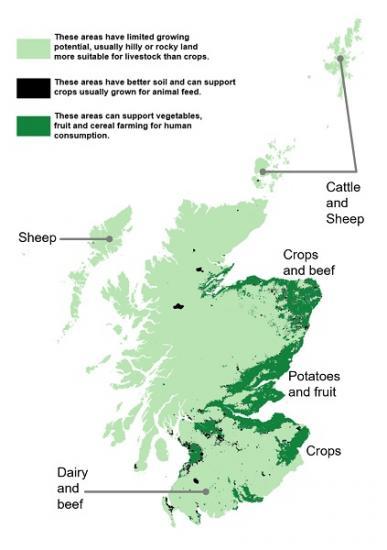
Results from the June Agricultural Census 2025 were published today and show the continued long-term trend in declining cattle numbers in Scotland. In 2025, there were 1.65 million cattle, a decrease of 2.6% when compared with the five-year average (2020 to 2024). The decrease was mainly due to fewer female beef cattle, while the number of female dairy cows increased.
Other livestock results show that there were 6.54 million sheep in 2025. This was 2.2% less than the five-year average, but 1.1% more than in 2024. The total number of poultry increased to 12.42 million. The number of pigs fell to 312,300, which was 7.3% less than the five-year average.
The area used to grow wheat increased by 5.4%, while the area for oats decreased by 2.0% when compared with the five-year average. Overall, the area used to grow winter crops (wheat, winter barley and winter oats) increased by 3.6%, while spring planted crops (spring barley and spring oats) decreased by 0.5% when compared with the five-year average.
The agricultural census also found that 66,800 people worked on agricultural holdings in Scotland in 2025 compared with 67,400 in the previous year.
The June Agricultural Census provides an annual update on trends in agricultural activity across the country. It covers all main types of farming and the number of people working on agricultural holdings in Scotland. The 2025 census also included questions on irrigation practices, and drought and flood management strategies.
In 2025, Scotland's total agricultural area was 5.02 million hectares, accounting for 64% of the total land area.
The area used to grow winter crops increased by 3.6% compared with the five-year average (2020, 2021, 2022, 2023 and 2024), while spring crops decreased by 0.5%.
The total area used to grow cereals and oilseeds was 473,700 hectares, an increase of 0.5% when compared with the five year average.
The planted potato area reached its highest level since 2011 at 30,400 hectares.
The area used to grow vegetables for human consumption increased by 5.4% compared with the five-year average. Crops grown for stockfeed saw a 3.5% increase.
The total soft fruit growing area decreased by 6.7% compared with the five-year average.
The long-term trend in declining cattle numbers continued with a 2.6% decrease to 1.65 million when compared with the five-year average.
A 5.3% decrease in the total number of female beef cattle contributed to this decline, while total female dairy cattle increased by 2.6% (when compared with the five-year average).
The total number of calves decreased by 1.9% compared with the five-year average. When compared with the previous year, total number of calves increased by 1.1%.
Sheep numbers saw a 1.1% increase on the previous year to 6.54 million (a 2.2% decrease compared with the five-year average).
Total poultry reached 12.42 million, a 3.5% increase compared with 2024, mainly from an increase in the number of birds for meat production. The number of birds for egg production decreased by 0.7%.
The number of pigs decreased by 7.3% compared with the five-year average to 312,300.
The total agricultural workforce was 66,800 people compared with 67,400 in the previous year.
Among those who responded to this year's module, sprinkler systems were the most popular type of irrigation method. It was also common for holdings to employ measures to prevent or reduce flood damage.
The full statistical publication