New Government guarantee to strengthen UK critical minerals supply chains
24th November 2025
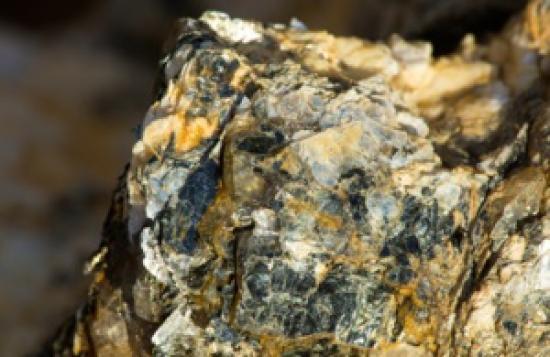
Financing guarantee by UK Export Finance is now available to bolster domestic critical minerals capabilities.
UK-based businesses supplying critical mineral products can now access high-value finance to secure long-term import contracts or invest in domestic capability.
New Critical Goods Export Development Guarantee will strengthen critical minerals supply chains.
Support covers minerals including beryllium, chromium, copper and uranium which are essential to the UK's high-growth exporting sectors.
Following the publication of the government's Critical Minerals Strategy, UK Export Finance (UKEF) - the UK's export credit agency - has announced a new guarantee to strengthen the UK's critical minerals supply chains. The Critical Goods Export Development Guarantee (Critical Goods EDG) is now available for UK-based businesses that supply critical mineral products to UK exporters.
The new support enables these suppliers to access high-value finance, helping them to secure long-term import contracts or invest in domestic capability, bolstering the UK’s supply chain resilience. UKEF can support the supply chains of minerals listed in the UK Criticality Assessment 2024 as well as growth minerals such as beryllium, chromium, copper and uranium (announced in the Critical Minerals Strategy).
Here is an example of how the Critical Goods EDG works:
A UK manufacturer supplies a metal alloy component containing critical minerals to the electric vehicle industry in the UK.
This UK manufacturer seeks a loan to build a large-scale production site. Although the manufacturer is not an exporter, UKEF provide support because the manufacturer’s clients export some of their electric vehicles.
UKEF provides an 80% guarantee, reducing the lender’s risk and enabling them to provide the loan to the UK manufacturer, supporting the company to deliver on their supply contracts to UK exporters in the automotive sector.
This example shows how the Critical Goods EDG can unlock financing for UK supply chains, enabling exports and helping to build national resilience in strategic sectors such as automotive, clean energy, and advanced manufacturing. This support is also available to new business operations establishing in the UK, provided they meet the eligibility criteria.
Tim Reid, CEO of UKEF, said:
The Critical Goods EDG marks a significant step forward in UKEF’s mission to support UK exporters and strengthen our economy. By backing UK-based companies who are vital to our export supply chains, we’re not just providing finance - we’re helping to build a more secure foundation for UK businesses to compete globally.
This new support demonstrates how UKEF can adapt to meet the evolving needs of UK exporters.
The Critical Goods EDG complements UKEF’s existing Critical Minerals Supply Finance, which provides finance for overseas companies that have agreements in place to supply critical minerals products to UK exporters.
Together, these products demonstrate UKEF’s comprehensive approach to supporting both domestic capabilities and international supply chains.
Kirsty Benham, CEO at Critical Minerals Association (UK), said:
The Critical Goods EDG will be a key pillar for securing the UK’s position in critical minerals supply chains. By supporting domestic capabilities alongside international partnerships, UKEF is helping to create a resilient infrastructure to compete effectively in global markets.
Critical minerals are fundamental to the UK’s transition to clean energy, and underpin high-growth sectors like advanced manufacturing and digital technology. UKEF’s new critical goods guarantee will be able to support companies to make the long-term investments needed to de-risk supply chains for critical minerals. We welcome the focus on domestic capability to create new jobs, boost industrial sector output, deliver the Industrial Strategy and economic growth.
The announcement of the Critical Goods EDG follows the government’s new Critical Minerals Strategy, demonstrating the government’s commitment to securing resilient supply chains for materials such as aluminium, lithium and rare earth elements, which are essential to the UK’s high-growth exporting sectors, including automotive, defence, advanced manufacturing and clean energy. The launch forms part of the government’s Industrial Strategy which commits to strengthen critical sectors that underpin the UK’s economic and national security.
Key Rare Earths Used by UK Manufacturers
Neodymium (Nd)
Widely used in Nd-Fe-B permanent magnets. These powerful magnets are critical for electric vehicle (EV) motors and wind turbine generators.
UK companies are working on recycling Nd from end-of-life magnets.
Praseodymium (Pr)
Often paired with neodymium (NdPr) in rare earth metal production. Less Common Metals (LCM) in the UK produces NdPr alloys.
Also used in permanent magnet production.
Dysprosium (Dy)
Used in high-temperature magnets, especially where strong magnetic performance is needed under heat stress (e.g., in certain motors).
LCM also produces Dy and dysprosium-iron (DyFe) alloys.
Terbium (Tb)
Produced by LCM.
Often used in specialized permanent magnets and in technologies requiring high-performance magnetic properties. (Permanent magnet demand is a key use.)
Lanthanum (La)
Used in certain alloys and master alloys: LCM produces a lanthanum-nickel master alloy.
Argus Media
Rare earths more broadly are used in catalysts, glass, and superalloys.
Yttrium (Y)
Used in some magnesium-rare-earth alloys: for example, "Elektron" magnesium alloys (produced in the UK) contain yttrium.
Also used in other high-tech / metallurgical applications.
Broader Uses of Rare Earths in UK Manufacturing
According to MineralsUK, rare earths in the UK are predominantly used in permanent magnets.
They’re also used in catalysts (e.g., in chemical manufacturing) and optical / glass applications.
Recycling is becoming increasingly important
UK projects like the University of Birmingham / HyProMag are building a circular supply chain for rare-earth magnets used in wind turbines.