Reflections from SEWF Rural: global lessons for the Highlands and Islands social impact economy
25th November 2025
As we mark 60 years since the region's economic and community development agency was established, it's timely to reflect on the global aspects of our work on shaping rural futures.
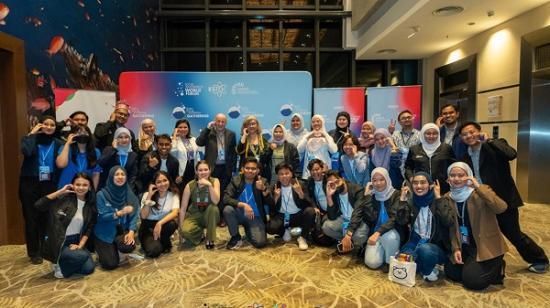
The recent Social Enterprise World Forum (SEWF) Rural Gathering in Sabah, Malaysia, welcomed changemakers from Australia, Ireland, India, Canada. The event was all about how rural communities are building resilience, creating opportunity, and shaping their own futures.
For us in the Highlands and Islands, the parallels were striking. Whether in the fishing villages of Sabah or the crofting communities of Scotland, the challenges are familiar: retaining young people, diversifying local economies, and ensuring prosperity is shared fairly.
Yet the solutions - rooted in community, culture, and natural capital - are inspiring and instructive.
Lessons from Sabah's blue economy
Sabah's economy is deeply tied to the ocean: fisheries, aquaculture, coastal tourism, and emerging marine energy. The state contributes over 59% of Malaysia’s mangrove cover, positioning it as a key player in blue carbon credits and marine conservation.
Malaysia’s broader economy grew by 3.3% in Q2 2025, with Sabah’s development strategy focusing on inclusive growth, rural infrastructure, and sustainable resource use. These priorities echo our own ambitions in the Highlands and Islands.
Rural realities in the Highlands and Islands
Back home, the Highlands and Islands is navigating a complex economy. The region has the potential to benefit from £100bn in transformational investment over the next 15 years, spanning offshore wind, hydrogen, marine biotechnology, and space.
Yet, our business survey (July 2025) shows that labour challenges, housing, and connectivity remain persistent barriers to growth. These are not unique to Scotland - they were echoed by rural leaders from every continent at SEWF.
And just as importantly, our strategy is underpinned by fair work principles and a commitment to equality, diversity and inclusion (EDI). These values ensure that the opportunities created by transformational investment are accessible, equitable, and reflect the diverse communities we serve.
The SEWF rural manifesto
The SEWF rural manifesto has been a journey in itself. Its spirit was drawn together in Australia, then launched two years later in Amsterdam, and finally published in 2024. In Sabah, participants at the rural gathering shared experiences and considered how best to continue working together to advance aspirations.
The manifesto sets out a vision for rural economies and social structures that are inclusive, resilient, and globally connected. It calls for:
knowledge sharing across borders to accelerate rural innovation;
policy frameworks that recognise rural distinctiveness; and
investment in ecosystems that balance economic, social, and environmental outcomes.
For HIE, these aspirations reinforce our commitment to ensuring rural Scotland is part of worldwide efforts to sustain fairer, greener economies. This means our social impact economy, strengthened by EDI and fair work, is not just a regional priority but a global contribution.
Global rural insights
Australia showcased indigenous-led enterprises blending heritage with innovation.
Ireland demonstrated how EU rural development funds can be channelled into impact-driven rural growth.
India highlighted cooperative models that scale grassroots innovation.
Canada shared frameworks for rural resilience, particularly in indigenous and northern contexts.
Each example reinforced the importance of inclusive governance, local ownership, and long-term investment - principles at the heart of our strategy for advancing the social impact economy.
What this means for the Highlands and Islands
Our region is rich in natural capital, cultural heritage, and entrepreneurial spirit. The SEWF rural gathering reminded us that these assets are not just local – they’re globally relevant. By connecting our communities to international networks, we can:
strengthen community capacity and leadership;
accelerate social impact innovation; and
embed the impact economy, guided by EDI and fair work, as the foundation of rural prosperity.
Conclusion
The Highlands and Islands is part of a global rural culture that values resilience, fairness, and sustainability. SEWF rural was a powerful reminder that our aspirations are shared.
As we celebrate 60 years as the economic and community development agency for the region, we continue to value working with our partners to advance both our national and global economies and cultures. The social impact economy will remain the lens through which we grow a greener, fairer, and more resilient future.
Author
Margaret McSporran, Head of Social Enterprise Development, HIE
Margaret McSporran
Head of community wealth building
Margaret (Mags) McSporran has worked for HIE since 1995 in several different senior roles. She works closely with stakeholders, clients and communities, supporting them to develop and expand their businesses, and manages complex projects which contribute to the growth of Scotland’s economy.
Currently head of community wealth building, Mags is focused on developing policy mechanisms to promote the growth of social businesses, and supporting third sector clients with complex and challenging issues in the Highlands and Islands region.
An experienced businessperson, with several years of working at board and executive level, Mags’ motivation and energy comes through driving improvements which lead to healthy businesses and strong communities across the region.
PHOTO
Delegates at the SEFW Rural Gathering - image by Ruang Poetri and supplied courtesy of SEWF and SCENIC
Related Businesses
Related Articles