What Trump's Approval Slump Teaches Labour About Winning Voters
5th December 2025
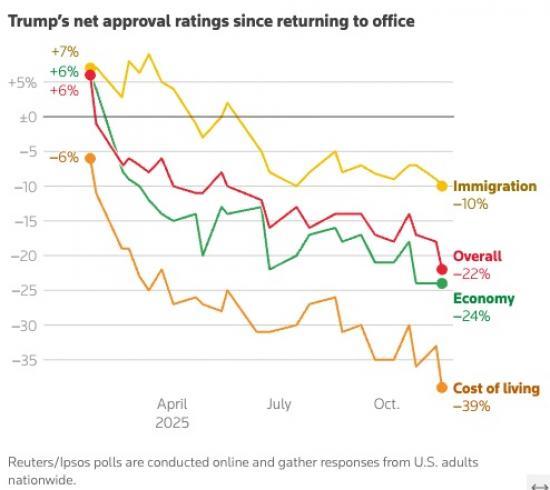
Donald Trump's approval rating in 2025 has been steadily declining, dipping into the mid-30s by late November. While the US and UK political systems are very different, there are some striking lessons for the UK Labour Party about leadership, voter expectations, and electoral strategy.
1. Early Wins Matter More Than You Think
Trump started his second term with an approval rating of about 47% — already lower than most presidents enjoy at the start of a new term. As months passed, voters watched closely to see whether his policies delivered on promises. When expectations weren't met, approval fell steadily.
Lesson for Labour: The honeymoon period after winning power is short. Early, tangible successes on economic management, public services, and living standards can build credibility. Delays or perceived failures can erode public confidence fast.
2. Economy and Cost-of-Living Are King
Much of Trump's decline stems from concerns about inflation, wages, and the rising cost of living. Even loyal supporters expressed unease over his handling of the economy.
Labour takeaway: Voters judge parties first on economic competence. Ambitious social or justice policies won't matter if people fear for their wallets. Labour needs clear, practical plans that reassure citizens they can manage the economy responsibly.
3. Swing Voters Decide Elections
Trump's base remained loyal, but losses among independents and moderate Republicans drove the drop in his overall approval.
Labour insight: Core supporters are essential, but general election success hinges on appealing to swing voters and centrists, especially in marginal constituencies. Over-polarization risks energizing opponents while leaving undecided voters cold.
4. Leadership Style Shapes Perception
Trump's aggressive, sometimes unpredictable communication alienated undecided voters and those prioritizing competence or stability.
Labour takeaway: Leadership style matters. Clear, consistent, and credible messaging can reassure voters that Labour can govern competently, even if policy debates are contentious.
5. Consistency and Delivery Are Critical
Mixed signals on Trump's policy outcomes — tariffs, healthcare, immigration — created a disconnect between promises and reality, hurting approval.
Labour lesson: Policies must be coherent and achievable. Confusing or conflicting messages can undermine trust and voter enthusiasm, even if ideas are popular.
6. Balance Passion with Broad Appeal
Trump's approval remained high among his base but limited outside of it.
Labour parallel - Labour must energize its left-wing base while appealing to centrist and soft-Conservative voters. Too much focus on polarization risks alienating the very swing voters that decide elections.
Trump's approval slump highlights the delicate balancing act of modern politics: deliver on promises, show economic competence, communicate clearly, and appeal beyond your base.
For Labour, the lesson is clear in that enthusiasm for change must be matched with credibility, competence, and careful attention to the broader electorate. Failure to do so risks a slow, steady decline in public support, even if your core supporters remain loyal.
What the polls say: Labour's slide since the 2024 election
In the final polls before the 2024 election, Labour was polling strongly. For example, in the final Ipsos poll (1-3 July 2024), Labour stood at about 37% voting intention.
Immediately after the election, support remained high — but over the months since, Labour's share has dropped substantially.
By early 2025 (e.g. March), a YouGov poll gave Labour around 26% — with competing parties (e.g. Reform UK, Conservatives) close behind.
By mid-2025, aggregated polling numbers saw Labour average around 24%, a drop of roughly 10 points from post‑election levels — the largest first‑year drop for a governing party since the 1990s, according to press analysis.
As of late 2025 (autumn), new polls reported even lower numbers: one recent survey put Labour at 20%, its lowest since the 2024 election.
The most recent tracking from Ipsos UK (fieldwork 30 Oct-5 Nov 2025) shows Labour at just 18% — reportedly the lowest vote‑intention share the pollster has ever recorded for Labour.
Ipsos
Labour has experienced a dramatic drop in poll support since the election in 2024 from high 30s to high teens/twenties.
What seems to be driving the decline (or what analysts say matters)
Multiple factors seem to be underpinning Labour's falling support
Voter fatigue / "honeymoon" effect waning: Immediately after winning power, many voters may give a new government the benefit of the doubt — but as months pass, unmet expectations and difficult decisions weigh heavily.
Disillusionment and shifting voter allegiances: Polling suggests that Labour is losing voters not just to the Conservatives, but significantly to smaller or newer parties (e.g. Reform UK, Liberal Democrats, Greens).
Satisfaction / leadership approval collapse: The personal favourability of Keir Starmer and the appeal of the government have suffered — a high proportion of respondents are dissatisfied with how the country is being run.
Fragmentation of traditional party loyalties: With trust in both Labour and the Conservatives eroding, more voters are open to alternatives — reducing the dominance of the two main parties and making switch‑overs more likely.
What this means — and what to watch out for
The size and speed of the drop is unusual. Analysts note that such a steep fall for a governing party early in a term is rare in modern UK politics.
Versatility of voter behaviour: with smaller parties (like Reform UK, Lib Dems, Greens) gaining ground, the battle for votes appears more fluid — meaning elections could be more unpredictable.
Risk of a weakened electoral base: if current trends continue, Labour may find re-building support difficult; loss of former supporters (to other parties or to abstention) could reshape the political map.
Importance of government performance & communication: given falling satisfaction with government and leadership, delivering a credible track-record on key issues (economy, cost-of-living, policy commitments) becomes more urgent if Labour is to stabilise support.
Gallup Shows Trump Is Failing
[url=https://news.gallup.com/poll/699311/economic-confidence-slips-holiday-spending-plans-plummet.aspx]What Gallup Says - Economic Confidence Slips; Holiday Spending Plans Plummet[/url]
A Bulwark substack writer Catherine Rampell in the latest edition of Receipts
"The word ‘affordability' is a con job by the Democrats," Trump declared during this week's cabinet meeting, in between snoozes. "The word ‘affordability’ is a Democrat scam," he insisted, adding that the word "doesn’t mean anything to anybody."