A Big Drop In Net Migration
6th December 2025
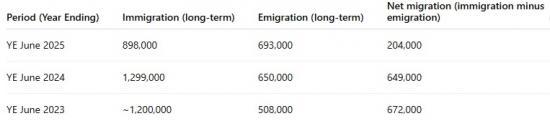
The Office for National Statistics reports that long-term net migration (people arriving to stay 12+ months minus those leaving) has fallen sharply — from 649,000 in the year ending June 2024 to 204,000 in the year ending June 2025.
This is the lowest net-migration level seen since 2021 (when post-pandemic restrictions ended and new immigration rules were introduced).
Why net migration is falling: fewer in, more out
Fewer arrivals from non-EU+ countries
The biggest factor: immigration of non-EU+ nationals dropped by around 394,000 (a 37% decline) over the 12 months to June 2025.
Much of that drop is among people arriving for work or study, including their dependants. The number of dependants arriving with work- and study-visas collapsed — from a peak of 374,000 in 2023 down to 98,000 now.
Rising emigration
At the same time, more people are leaving the UK. A large share of those leaving are non-EU+ nationals who originally came to study — particularly from countries such as India and China.
Although more students are now staying for longer after their courses, overall emigration remains elevated.
The ONS has changed the way it measures migration: moving away from survey-based estimates (like the survey done at airports) to using administrative data (Immigration/Borders data, tax/benefits data, etc.), which gives a more accurate picture.
As a result, for British and EU+ nationals the "net migration" numbers have also been revised. Net migration estimates for British nationals are now roughly 100,000 per year lower than previously thought; for EU+ nationals, net migration is slightly higher (though still negative).
In short — some of the apparent fall in net migration is due to better measurement, not solely changes in immigration or emigration behaviour.
What all that means
The dramatic drop in net migration seems to be mainly driven by fewer non-EU+ people entering on visas (work or study + dependants) and more people leaving — especially former international students.
The revisions in methodology mean that previous estimates likely overstated net migration of British nationals; the new approach paints a somewhat different picture for that group.
However — the picture remains provisional. The ONS notes that visa-application data, migration behaviours, economic and social factors, and government policy could all influence future trends.
Read the ONS article HERE