Why Oil Prices Are Sliding - What the Drop Below $60 Means for the Global Economy
17th December 2025
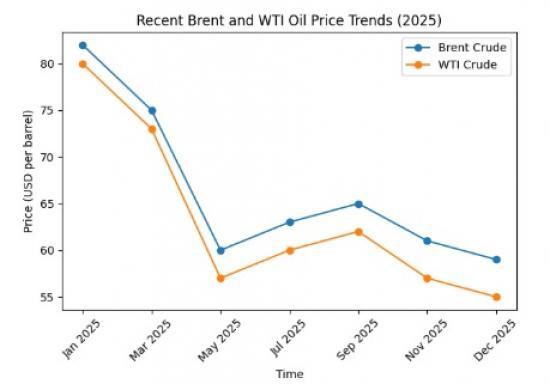
Oil prices have quietly crossed an important psychological threshold. In recent weeks, Brent crude has slipped below $60 a barrel, with US benchmark WTI trading even lower. While oil markets are always volatile, this decline reflects deeper structural forces shaping the global economy rather than a single short-term shock.
At the start of 2025, oil prices were relatively strong. Geopolitical tensions, supply discipline from OPEC+, and expectations of solid global growth kept Brent prices above $80 a barrel.
However, as the year progressed, those supports weakened. By spring, prices had fallen sharply, briefly dipping below $60, before staging a modest recovery during the summer months. That rebound proved short-lived, and by late 2025 prices had resumed their downward trend.
One of the main drivers of falling prices is oversupply. Global oil production has continued to rise faster than demand. US shale output has remained resilient despite lower prices, while several OPEC+ members have struggled to maintain strict production limits.
At the same time, the prospect of easing geopolitical constraints — including hopes of a negotiated settlement in Ukraine — has raised expectations that additional oil could return to global markets. When traders anticipate more supply than demand, prices adjust downward well before barrels actually arrive.
Demand growth, meanwhile, has disappointed. China's economic recovery has been uneven, with weaker-than-expected industrial activity and energy consumption.
In Europe, high interest rates and sluggish growth have dampened fuel demand, while efficiency gains and electrification are gradually reducing oil intensity in advanced economies.
Even in the United States, demand growth has softened compared with post-pandemic highs. Together, these trends point to a world that is still using more oil, but at a slower pace than producers once assumed.
Financial expectations also matter. Markets are increasingly pricing in a potential oil surplus in 2026, with inventories expected to build rather than tighten. This has encouraged investors to bet on lower prices, reinforcing the downward momentum. Once key levels such as $60 are broken, selling pressure often accelerates as traders adjust positions and reassess risk.
Lower oil prices carry mixed consequences. For consumers and oil-importing countries, they offer relief from inflationary pressures, easing costs for transport, heating and manufacturing. Central banks may find it easier to justify interest-rate cuts if energy prices remain subdued.
For oil-exporting nations, however, sustained prices below $60 can strain public finances, particularly in countries that rely heavily on oil revenues to fund government spending.
There are also implications for the energy transition. Cheaper oil can slow the shift toward renewables by making fossil fuels more competitive in the short term. At the same time, lower prices may discourage new investment in high-cost oil projects, which could tighten supply further down the line. As history shows, periods of low prices often sow the seeds of future volatility.
Looking ahead, the key question is not whether oil can dip below $60 — it already has — but whether it can stay there. That will depend on whether producers cut supply aggressively, whether global growth re-accelerates, and whether geopolitical risks flare up again.
In the absence of major shocks, the balance of forces suggests oil prices are likely to remain under pressure, hovering around current levels rather than rebounding sharply.
For now, the message from the oil market is clear: the era of persistently high prices is on pause. What replaces it may be a period of lower, more volatile prices that reflect a world adjusting to slower growth, shifting energy demand, and an uncertain geopolitical landscape.