Latest on Trump‑Class Battleships Announcement Dec 22-23, 2025 - Are They A Waste of Money As Drone Technology Develops
23rd December 2025
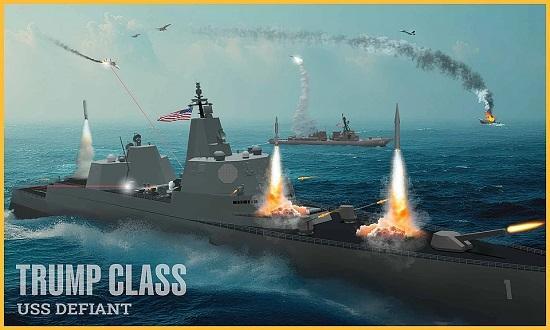
On December 22, 2025, President Donald Trump unveiled plans for a new class of U.S. Navy warships dubbed the "Trump-class," as part of what he calls the "Golden Fleet" initiative.
These ships are described as larger and more powerful than past surface combatants, with advanced weapons systems including lasers, hypersonic missiles, and other futuristic technologies.
Construction is to begin with two ships, potentially expanding to 20-25 vessels. Trump framed them as necessary to modernise the fleet and maintain U.S. naval supremacy.
Are These Ships "Old Technology"?
Battleships Have Been Obsolete for Decades
The classic battleship — a heavily armoured ship with large naval guns — was last used in combat by the U.S. Navy in the early 1990s and was formally retired in the 1990s.
Modern naval warfare has moved away from big gun platforms toward:
Aircraft carriers (for power projection),
Aegis-equipped destroyers and cruisers (networked air/missile defence),
Submarines, and
Smaller, stealthier frigates.
Modern Threats Hit Ships Differently
The war in Ukraine—and conflicts in the Middle East—have shown that:
cheap drones, loitering munitions, and anti-ship missiles can threaten even advanced surface ships if they lack layered defence.
Fixed, large targets (like big surface combatants) can be vulnerable without extensive defensive systems; this is true whether the ship is a destroyer or a so-called battleship.
In Ukraine, commercial drones and inexpensive loitering weapons have disabled or damaged equipment that would traditionally have been defended by layered air defence. Ukraine itself adapted by using small drones to strike Russian naval assets, showing that asymmetric threats matter against large platforms. (Note: this point describes widely reported open-source analysis of the conflict, not a specific web result.)
So, critics argue building something called a "battleship" could repeat the mistakes of the past — a shiny large target that might be vulnerable to drones, missiles, and mines unless given extremely robust defence systems.
Does This Make Strategic Sense?
Here are the main arguments for and against the new ships:
Arguments in Favour
Symbolic and industrial boost: The announcement emphasised revitalising U.S. shipbuilding capacity and national pride.
Advanced weapons integration: The proposed class may incorporate future tech (lasers, hypersonics), which could help counter drones and missile salvos
Deterrence posture: Presenting a powerful surface fleet can have deterrent value, especially in messaging toward adversaries.
Arguments Against
Obsolescence of the "battleship" concept: Traditional battleships were replaced for good reason: aircraft and missiles rendered big guns and heavy armour less decisive compared with flexibility and distributed lethality.
Cost vs risk: These vessels are likely to cost billions each, with development and procurement risk similar to past large naval programmes. They could crowd out investment in missile defences, anti-drone systems, submarines, and cyber/electronic warfare, which many analysts argue are more relevant for future conflict.
Drone and missile threats: Small, adaptive threats can bypass traditional ship defences; platforms optimised for those threats (e.g., multi-layered air defence, distributed lethality, electronic warfare) are increasingly prioritised over single large platforms.
Naming and politics: The heavy branding of the programme potentially ties military procurement to politics, which can complicate long-term strategic planning in a system where shipbuilding timelines and budgets stretch over decades.
So: Is It a Waste of Money?
That depends on strategic priorities and how the ships are actually designed and used:
If these vessels are simply large, expensive symbols with limited modern defensive capability, many defence analysts would call them inefficient and vulnerable in modern contexts.
If, however, they become highly networked platforms with genuinely cutting-edge defensive and offensive systems and complement broader fleet architecture, there may be some strategic rationale — though debate remains intense.
What's clear from this early announcement is that details matter: the cost, capability mix, defensive systems, and how these ships fit with other naval assets will determine whether they are a useful investment or an outmoded expenditure reflecting nostalgia rather than strategy.
Bottom Line
Traditional battleships are widely viewed as obsolete since WWII.
The Trump-class proposal is controversial because it revives that concept with a heavy political branding.
Modern warfare — especially demonstrated in Ukraine — shows drones and missiles can threaten even high-tech vessels if defensive systems aren't robust.
Whether the project is a waste of money or a legitimate modernisation will only become clearer once specific capabilities, costs, and operational roles are fully disclosed and assessed by military experts.
Comparison of the relative size and strength of the naval forces of the United States, China, Russia, and the United Kingdom, using the most recently available open-source data — including ship counts, fleet tonnage, and capability context.
United States Navy (USN)
Overview
The U.S. Navy is widely regarded as the largest and most capable navy in the world in terms of overall tonnage, global reach, and combat capability.
It operates an advanced fleet with global power-projection capacity, including 11 nuclear-powered aircraft carriers (the most of any navy), numerous nuclear submarines, and highly capable surface combatants.
Estimated Fleet Size & Strength (2025)
Warships & submarines: ~440-490 vessels (combatants/subs/support included)
Total displacement/tonnage: ~3.4-4.1 million tons (largest in the world)
Aircraft carriers: 11 (plus future builds)
The Guardian
Key Strengths:
Massive tonnage advantage (heavy ships, carriers, amphibious forces)
Global reach and sustained operations capability
Technological edge in sensors, weapons, and nuclear-powered submarines
People's Liberation Army Navy (China – PLAN)
Overview
China's navy is often described as the largest in the world by number of hulls and second largest overall fleet behind the U.S. by tonnage and capability.
It has been rapidly expanding and modernising, with many newer ships and a growing aircraft carrier force.
Estimated Fleet Size & Strength (2025)
Total vessels: ~700–750+ (including many smaller hulls)
Combatants and submarines: ~370+ major warships and subs (battleforce)
Tonnage: 2.0–2.8+ million tons (significant but generally below U.S. totals)
Aircraft carriers: 3 in service, with more under construction or planned
Key Strengths:
Largest fleet by hull count (often more smaller combatants like corvettes and frigates)
Rapid construction and modernisation
Expanding blue-water capability (especially in Western Pacific)
Russian Navy
Overview
Russia historically maintained a large Soviet-era navy but has seen declines due to economic issues and losses in Ukraine. However, it still fields a significant fleet with strengths in submarines and missile platforms.
Reuters
Estimated Fleet Size & Strength (2025)
Total vessels: 400+ warships and subs in various counts reported (e.g., ~419–603 depending on source and inclusion of auxiliaries)
Submarines: ~79 submarines including ballistic missile and attack subs
Reuters
Tonnage: Roughly 1.2–1.3+ million tons (varies by methodology)
Aircraft carriers: 1 (Kuznetsov, limited availability)
Key Strengths & Limitations:
Significant submarine force (including nuclear ballistic missile subs)
Surface fleet has maintenance and readiness challenges
Naval power more regionally focused (Northern, Pacific, Black Sea fleets)
Royal Navy (United Kingdom)
Overview
The Royal Navy is a major Western navy with strong technological capability and nuclear-armed submarines but much smaller in size compared to the U.S., China, and Russia.
Estimated Fleet Size & Strength (2025)
Total vessels: 140–150 (depending on counting of auxiliaries and patrol craft)
Tonnage: 0.4–0.8 million tons (significantly smaller than the US, China, Russia)
The Indian Express
Aircraft carriers: 2 (Queen Elizabeth-class)
Key Strengths & Limitations:
High quality and technology per vessel
Nuclear deterrent submarines (Vanguard and Dreadnought class)
Fleet size is much smaller and focused on expeditionary and NATO roles
Smaller but high quality
*Tonnage figures vary by source and methodology but consistently show U.S. leading, then China, then Russia, with the UK significantly smaller relative to the top three.
Key Takeaways
Numbers vs Capability
China often leads in number of hulls, but the U.S. leads by total displacement and technology.
Russia remains a significant naval power with submarines but struggles with surface fleet upkeep.
The UK maintains a high-quality but relatively small fleet compared to the three giants.
Why Tonnage Matters
Displacement tonnage reflects not just how many ships a navy has but how large and capable those ships are — e.g., carriers, amphibious ships, and nuclear submarines have disproportionate strategic impact versus small patrol craft.
Size Matters
In relative terms, the United States Navy is by far the largest and most powerful naval force in the world, operating roughly 440–490 warships and submarines with a total displacement of approximately 3.4 to over 4 million tonnes. Its fleet includes 11 nuclear-powered aircraft carriers, giving it unmatched global power-projection capability. China’s People’s Liberation Army Navy is the largest navy by number of hulls, with an estimated 700–750 vessels overall and around 370 major combatants and submarines, but its total displacement—roughly 2.0 to 2.8 million tonnes—remains well below that of the United States. China currently operates three aircraft carriers and continues to expand rapidly. The Russian Navy is smaller and more regionally focused, with around 400 warships and submarines and a total displacement of approximately 1.2 to 1.3 million tonnes. It operates a single aircraft carrier with limited availability but retains a strong submarine force, including nuclear-armed vessels. By comparison, the Royal Navy of the United Kingdom is much smaller, fielding roughly 140–150 vessels with a total displacement of around 0.4 to 0.8 million tonnes. Despite its size, it maintains high-end capabilities, including two modern aircraft carriers and a continuous at-sea nuclear deterrent, but it lacks the scale of the three larger navies.