Gold, Silver, Copper - $4500 an ounce - Still Rising today
24th December 2025
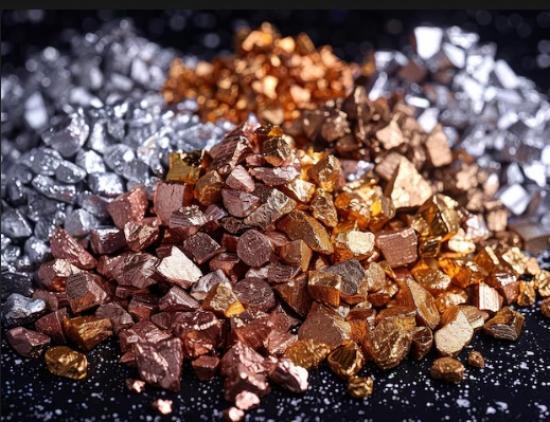
If you've glanced at financial news lately, you may have noticed something unusual.
Gold has risen for 11 of the last 12 days, taking its gains in 2025 to over 70%, its best year since 1979.
Metals prices are soaring. From gold and silver to copper and industrial staples, 2025 has been a year of historic rallies and market excitement. But what's driving these jumps, and what does it mean for investors, industry, and everyday consumers? Let's break it down.
Gold: The Shimmering Safe Haven
Gold has been on a tear, climbing to over $4,400 per ounce — one of the strongest annual rallies in decades. Traditionally a "safe haven," gold attracts investors whenever markets feel shaky, and 2025 has had no shortage of uncertainty. Geopolitical tensions, concerns over central bank policy, and a weakening U.S. dollar have all driven demand.
For investors, gold isn't just shiny metal; it's insurance against economic turbulence. When stock markets waver or currencies weaken, gold typically holds or rises in value, making it a favorite among cautious portfolio managers.
Silver: The Industrial and Precious Metal Hybrid
While gold shines as a safe haven, silver has been the star of the show, surging more than 120% year-to-date to around $69 per ounce. What’s behind this meteoric rise? Silver occupies a unique space: it’s both a precious metal for investors and a key industrial material, used in solar panels, electronics, and electric vehicles.
This dual role means silver benefits from both fear-driven buying and real-world industrial demand, a combination that has propelled it to all-time highs in 2025.
Copper: The Red Metal of Infrastructure
Copper, often dubbed "Doctor Copper" for its ability to signal economic health, has also seen impressive gains, with prices nearing $12,000 per ton. The primary driver is industrial demand. With global electrification, renewable energy projects, and infrastructure initiatives on the rise, copper is in high demand for power grids, EVs, and green technologies.
At the same time, supply constraints — including limited mining expansion and trade policies such as U.S. tariffs — have tightened the market, pushing prices even higher.
Other Metals: The Supporting Cast
Platinum, palladium, aluminium, and zinc have all seen elevated prices, though with more variation. Supply challenges, investor interest in commodities as an inflation hedge, and industrial demand are the main factors behind their movements.
What’s Driving the Metals Boom?
Several interlinked factors are fuelling this rally:
Monetary Policy: Investors expect central banks, particularly the U.S. Federal Reserve, to cut interest rates in 2026. Lower rates make non-yielding assets like gold and silver more attractive.
Safe-Haven Demand: Geopolitical instability keeps precious metals in high demand. Investors flock to gold and silver when the world feels unpredictable.
Industrial Demand: Copper and silver are critical for renewable energy, electrification, and industrial growth, making their demand more structural than speculative.
Supply Constraints: Mining limitations and trade policy interventions have tightened markets, particularly for copper, amplifying price gains.
Currency Effects: A weaker U.S. dollar makes dollar-denominated metals cheaper for international buyers, stimulating further demand.
Why This Matters
For investors, the metals rally represents both opportunity and caution. Precious metals ETFs and mining stocks have performed strongly, but some analysts warn of potential volatility if economic conditions shift.
For industry, metals prices affect costs for construction, electronics, and green technology projects. Rising copper and silver prices can increase production costs, but they also reflect high demand and economic growth.
For consumers, there’s an indirect effect: rising metals costs can filter into the prices of electronics, vehicles, and even renewable energy infrastructure. However, these metals are also critical for clean energy, which may help reduce energy costs and environmental impact over the long term.
2025 is shaping up to be a historic year for metals. Gold and silver are riding a wave of safe-haven and industrial demand, copper is climbing with electrification and infrastructure, and other metals are following suit. For investors, industry, and policy watchers, metals aren’t just commodities — they’re signals of global economic trends and technological shifts.
Whether you’re looking to invest, build, or just stay informed, the metals market in 2025 is impossible to ignore.
Here are the latest widely reported prices for major metals as of late December 2025, based on market data and reporting from commodity exchanges (quoted in U.S. dollars unless stated otherwise):
Precious Metals (Spot / Futures)
Gold: $4,480-$4,490 per troy ounce — near historic highs.
Silver: $69.5-$69.9 per troy ounce — also at elevated levels.
Platinum: Around $2,180-$2,200 per troy ounce — strong compared with historical averages.
Palladium: Around $1,780-$1,880 per troy ounce.
Monex Precious Metals
(Spot prices can vary slightly between exchanges and over the trading day.)
Industrial Metals
Copper: About $11,900–$12,000 per metric ton, reflecting robust demand and tight markets.
markets.businessinsider.com
Aluminium: $2,950–$2,960 per ton.
Nickel: $14,880–$14,900 per ton.
Zinc: $3,030 per ton.
Tin: $42,676 per ton.
What This Means
Gold and silver are trading near record levels driven by safe‑haven demand, expectations of central bank rate cuts, and currency dynamics.
Copper — essential for infrastructure, electrification, and clean energy — remains very strong, near historic highs due to high industrial demand and supply limits.
Base metals like nickel and aluminium are also elevated, reflecting broader commodity market strength.
In the closing months of 2025, the global commodities markets have been dominated by extraordinary moves in gold, silver, and copper. Each of these metals has surged to record levels, but the forces behind their rallies are not identical. Instead, they reflect a complex interplay of monetary policy, geopolitical uncertainty, industrial demand, and structural supply constraints. Taken together, these dynamics illustrate how financial and real‑world factors converge to shape the trajectory of critical resources.
Gold’s ascent has been the most emblematic of the current environment. As the Federal Reserve signals a shift toward rate cuts, investors have flocked to gold, which thrives when interest rates fall and the opportunity cost of holding a non‑yielding asset diminishes. At the same time, geopolitical tensions have heightened the appeal of gold as a safe haven. Central banks, particularly in emerging markets, have added to the momentum by aggressively increasing their reserves, reinforcing the perception of gold as a bulwark against instability. Currency fluctuations, especially a weakening U.S. dollar, have further amplified demand, while mining challenges have constrained supply. The result is a market where gold’s traditional role as a store of value has been magnified by contemporary pressures.
Silver’s rally has been even more dramatic, with prices more than doubling over the year. While silver shares many of the same macroeconomic drivers as gold — rate cut expectations, a weaker dollar, and geopolitical risk — its industrial dimension sets it apart. Demand from solar panel production and electric vehicle manufacturing has created a structural deficit that has persisted for several years. Futures markets have reflected this tightness, with backwardation signaling immediate scarcity. Investors, recognizing silver’s dual identity as both a precious and industrial metal, have poured capital into the market, creating a feedback loop of rising prices and heightened interest. Silver’s performance underscores how the energy transition is reshaping commodity markets in ways that extend beyond traditional financial cycles.
Copper, meanwhile, has emerged as the quintessential industrial story of 2025. Prices have surged on the back of unprecedented demand from artificial intelligence infrastructure, renewable energy grids, and electric vehicles. Copper’s role as the backbone of electrification has never been more apparent. Yet supply has struggled to keep pace. Disruptions in Chile, the world’s largest producer, and smelter cutbacks in China have tightened global availability. Trade policy uncertainties, including tariff threats and inventory shifts, have added volatility to an already strained market. Analysts warn of a looming structural deficit, with projections of a 30 percent shortfall in global supply. Copper’s trajectory highlights the tension between technological progress and resource limitations, a theme likely to define the coming decade.
Despite their differences, the rallies in gold, silver, and copper share a common thread: they are all being shaped by the intersection of macroeconomic policy and structural change. Gold reflects the anxieties of investors navigating monetary easing and geopolitical instability.
Silver embodies the fusion of financial speculation with industrial transformation. Copper represents the material foundation of a world increasingly powered by electricity and data. Together, they tell a story of markets in flux, where traditional safe‑haven dynamics coexist with the demands of a rapidly evolving global economy.