UK Drone Laws - Major Changes Coming 1 January 2026 - What You Need to Know
29th December 2025
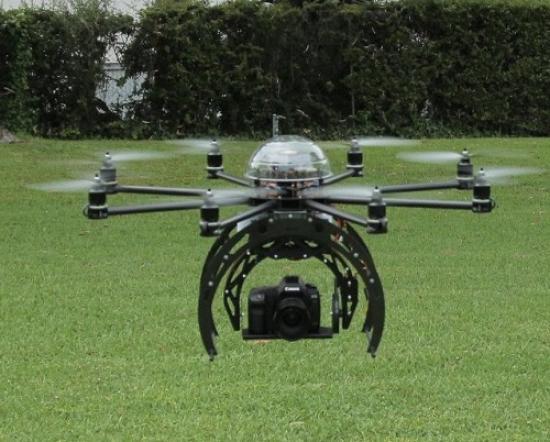
From 1 January 2026, the UK will introduce some of the biggest revisions to drone regulation in years, affecting both hobbyists and commercial operators.
These changes are designed to improve safety, encourage responsible flying, and bring the UK's regulatory framework up-to-date with advances in drone technology.
Whether you're unpacking a Christmas drone gift, flying for fun, or operating commercially, this guide explains the new rules clearly and helps you prepare.
1. UK Class Marking System: New Labels, New Expectations
One of the headline changes is the introduction of a UK class-marking system for drones and model aircraft. Starting 1 January 2026, every new drone placed on the UK market must display a UK class mark — a label that tells you what category it belongs to and what operational restrictions apply.
The class marks range from UK0 to UK6, and each mark aligns with certain weights and flying categories:
UK0 - Small drones (< 250 g) that can fly over people (A1).
UK1 - Light drones (< 900 g) with enhanced safety features, also A1.
UK2 - Mid-weight drones (< 4 kg) that can fly near people (A2) or far from people (A3).
UK3 / UK4 – Heavier drones (< 25 kg) mainly A3.
UK5 / UK6 – Drones requiring specific authorization (more complex operations).
If you own a drone purchased before 1 January 2026 that doesn't have a class mark, you can still fly it under the existing weight-based rules. Drones with the older European "C-class" marks (C0–C4) can continue to be treated as their UK equivalent (e.g., C1 = UK1) until 31 December 2027.
2. Flyer ID: Safety Knowledge Starts at 100 g
One of the most impactful changes for drone pilots is the requirement for a Flyer ID. This demonstrates that you’ve passed the official UK Civil Aviation Authority (CAA) theory test and understand the basics of safe drone operation.
What’s new from 1 January 2026:
Any drone or model aircraft weighing 100 g or more — regardless of camera presence — now requires a valid Flyer ID before you fly outdoors.
Previously, the Flyer ID was only mandatory for aircraft weighing 250 g or more. The shift to a lower weight threshold acknowledges that even small drones can pose risks if misused.
The theory test is free, available online, and covers essential topics like air law, safety guidelines, and responsible flying. It’s designed for beginners and seasoned pilots alike — and for many, it’s the first step toward flying legally in the UK.
3. Operator ID: Registering Your Responsibility
In addition to the Flyer ID (which is about competence), the CAA requires drone operators to hold an Operator ID — essentially a registration number that links a person to the drone they’re responsible for.
From 1 January 2026:
You must hold an Operator ID if:
Your drone weighs 250 g or more, OR
Your drone weighs 100–249 g and has a camera.
You can use a single Operator ID for multiple drones that you own, but that ID must be clearly marked on each aircraft (e.g., on the frame or battery compartment).
For very small drones (under 100 g) — especially those without cameras — Operator ID is not mandatory but still recommended.
4. Remote ID: A Digital "Licence Plate" in the Sky
Another major shift in UK drone regulation is the introduction of Remote ID — a technology that allows a flying drone to broadcast key information such as its identity, location, height, and operator details.
From 1 January 2026, the following drones must broadcast Remote ID whenever they fly:
All UK class-marked drones in categories UK1, UK2, UK3, UK5 and UK6.
This requirement is designed to help regulators and law enforcement quickly identify drones in the sky, improving public safety and accountability. Remote ID does not require an internet connection — the signal can be picked up directly by nearby devices via Wi-Fi or Bluetooth.
Phase two, effective 1 January 2028, will extend Remote ID requirements to:
UK0 drones with a camera (≥ 100 g),
Legacy drones without class marks with a camera (≥ 100 g),
Privately built drones with a camera (≥ 100 g),
Certain model aircraft.
This staggered approach gives pilots and manufacturers time to adapt.
5. How to Get Your Flyer ID and Operator ID (Step-by-Step)
If you’re preparing to fly in 2026, here’s how to comply:
Step 1: Get a Flyer ID
Visit the CAA’s online theory test portal.
Study the Drone Code — the official guide covering rules, safety guidelines, and responsibilities.
Take the test and pass — once you succeed, you receive a Flyer ID number you can use indefinitely.
Step 2: Register for an Operator ID
Register with the UK Drone & Model Aircraft Registration Service.
Provide your details and drone information.
Receive an Operator ID — this must be displayed on each drone you operate.
Step 3: Ensure Remote ID is Enabled
On drones that require it from 2026, activate Remote ID before flight — check the drone settings or firmware.
If your drone isn’t Remote ID capable, you may need a compatible module or upgrade to a compliant model.
6. Why These Changes Matter
These reforms are part of a broader global trend toward safer, more accountable drone operations. With drones becoming increasingly common — in recreation, photography, deliveries, and business — regulators want to ensure:
Pilots understand the rules and safety principles (Flyer ID),
Operators take responsibility for their aircraft (Operator ID),
Drones can be identified while flying (Remote ID), and
The airspace remains safe and predictable for all users.
By adopting these changes early, you can avoid fines or legal trouble, protect people and property, and contribute to a culture of responsible drone flying.
Finally
If you fly drones in the UK — or are thinking about buying one in 2026 — preparation is the key to compliance.
Start now by:
Studying for your Flyer ID theory test,
Registering for your Operator ID,
Checking whether your drone has a UK class mark, and
Ensuring Remote ID is enabled where required.
With these steps, you’ll be ready to fly safely and legally under the new UK drone regime.
PHOTO
https://commons.wikimedia.org/wiki/File:Drone_Flying_Eye.jpg