One Extra Hour - Should UK Workers Chip In for Growth?
29th December 2025
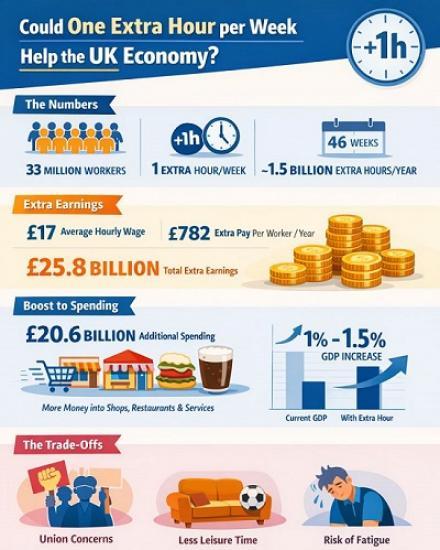
Imagine if every employee in the UK worked just one extra hour a week. On paper, it's a simple way to give the economy a nudge.
With roughly 33 million employees, that extra hour could generate over £25 billion in additional earnings, much of which would likely be spent in shops, restaurants, and services, injecting a noticeable boost into GDP.
But the reality is far more complicated. Unions would almost certainly push back, framing the proposal as an attack on work-life balance and fair pay. After years of debate over flexible hours, stress, and rising living costs, asking workers to "do their bit" for national growth risks being perceived as symbolic coercion rather than a meaningful economic policy.
Even the economic logic has limits. Not all hours are created equal. In some sectors, like retail or manufacturing, an extra hour might translate directly into higher output. In others — healthcare, education, professional services — fatigue or stress could actually reduce productivity, offsetting the potential gains. One extra hour might slightly boost GDP, but it cannot replace innovation, investment, or productivity improvements as the real drivers of long-term growth.
The proposal also raises questions of fairness. Would salaried employees shoulder the burden while some workers already put in long hours? Could voluntary incentives like overtime pay or tax relief make the plan acceptable, or would uptake remain uneven, benefiting some sectors more than others?
Ultimately, this isn't just about GDP. It’s about societal values. Is economic growth worth extending the working week, even slightly? How do we balance national prosperity with individual well-being? The "one extra hour" debate isn’t just a numbers game — it’s a reflection of what society values: time, health, leisure, and the limits of work in a modern economy.
As tempting as the idea is for policymakers looking for a quick stimulus, the answer may be clear: growth cannot come at the expense of the workforce itself. One extra hour might help the economy in theory, but in practice, it would spark debates about fairness, fatigue, and who really pays the price for growth.