From Waste to Wattage - The Surprising Future of Spent Nuclear Fuel
29th December 2025
When a nuclear reactor's fuel has served its purpose, it is labelled "spent" — a term that conjures images of radioactive waste piling up in storage pools. Yet, spent nuclear fuel is far from useless.
Containing a mixture of uranium, plutonium, and other radioactive isotopes, it retains substantial energy potential, and with modern technology, it can be reprocessed for new uses, offering both opportunities and challenges for the nuclear industry.
Reprocessing: Breathing New Life into Spent Fuel
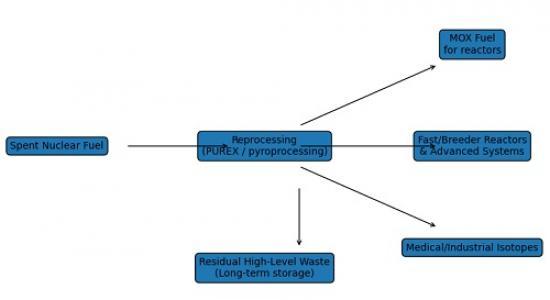
Reprocessing involves chemically separating valuable elements from spent fuel. The most common method, PUREX (Plutonium Uranium Redox EXtraction), isolates uranium and plutonium, which can then be reused as fuel. More advanced techniques, such as pyroprocessing, are emerging to treat fuel for fast reactors while reducing proliferation risks.
New Uses for Reprocessed Fuel
One of the most immediate applications of reprocessed material is the creation of Mixed Oxide (MOX) fuel. MOX combines recovered plutonium with uranium, allowing conventional light-water reactors to generate electricity once more from previously "spent" fuel. In countries with advanced nuclear infrastructure, MOX fuel contributes significantly to energy production, stretching the lifespan of existing uranium resources.
Beyond conventional reactors, fast or breeder reactors can use reprocessed fuel more efficiently. These reactors not only generate energy but also "burn" long-lived radioactive isotopes, transforming them into shorter-lived forms and reducing the long-term radiotoxicity of nuclear waste. Additionally, certain fission products extracted during reprocessing, such as molybdenum-99, are invaluable for medical imaging and industrial applications, demonstrating that spent fuel can have uses far removed from electricity generation.
Looking further ahead, advanced reactor designs, including molten salt reactors and accelerator-driven systems, may rely heavily on reprocessed actinides as fuel, potentially making nuclear power even more sustainable and resource-efficient.
Potential Dangers and Challenges
Despite its promise, reprocessed fuel carries significant risks. Plutonium, if separated and unsecured, could be diverted for nuclear weapons, making strict security essential. The process itself is technically complex and expensive, often costing more than simply storing spent fuel in the short term. Even after reprocessing, high-level radioactive waste remains, requiring long-term storage solutions. Furthermore, not all reactors are equipped to use reprocessed fuel, and some may require costly modifications.
Balancing Promise with Risk
The story of spent nuclear fuel is one of paradox: what is considered waste by one generation may become a source of energy, medicine, and industrial material for the next. Reprocessing extends the life of uranium resources, reduces some aspects of nuclear waste, and provides a pathway for more advanced reactor technologies. Yet these benefits are inseparable from challenges related to safety, cost, and proliferation. Policymakers, engineers, and society at large must weigh the potential rewards against the inherent risks.
In the end, spent nuclear fuel is a reminder that energy systems are rarely static. What seems finished can often be reimagined, reused, and repurposed — provided we navigate the technical and ethical hurdles wisely.
Dounreay
There is documented evidence that nuclear material from Dounreay has been transferred for reuse and reprocessing, although the site itself no longer does reprocessing and is now being decommissioned.
Dounreay Material Has Been Used After Leaving the Site.
Dounreay operated research reactors and a reprocessing facility for decades. While commercial reprocessing at Dounreay ceased in the late 1990s, significant quantities of irradiated fuel and other nuclear material have been moved off site for further processing and reuse:
Breeder material and irradiated fuel from Dounreay's Fast Reactor programme has been removed and transported to Sellafield in Cumbria, where facilities exist to reprocess it or manage it as part of national fuel stocks. The first phases of this programme involved moving rods of natural uranium that had been irradiated and used to breed plutonium fuel. These materials are then available for treatment, including potential reprocessing for future use.
Dounreay’s inventory of spent fuel and breeder material has continued to be consolidated at Sellafield, which has the infrastructure for reprocessing or safe storage. Over the past decade, fuel previously stored at Dounreay has been reprocessed at Sellafield’s facilities to minimise the amount requiring long-term dry storage.
Historical Reprocessing at Dounreay
In its earlier years, Dounreay did reprocess certain types of fuel — especially research reactor (MTR) fuel and fast-reactor fuels — and recovered uranium and plutonium for reuse. This work was on a smaller scale compared with large commercial facilities.
Dounreay also did limited commercial reprocessing for overseas customers’ spent research fuel, with contracts requiring eventual return of waste to the originators.
What This Means in Practice
Rather than “using Dounreay fuel onsite today,” the relevant history is that spent fuel and breeder materials were moved off site to facilities equipped to process them:
Sellafield now holds much of the material and has performed reprocessing and consolidation, including dissolving and treating fuel that came from Dounreay.
Some material has actually been reprocessed, integrated into national inventories, and could be prepared for reuse in fuel fabrication or other purposes, consistent with UK nuclear cycle policy.
Current Status
Reprocessing at Dounreay itself ended long ago, and the site’s role now is decommissioning.
Most legacy material has been removed to Sellafield for management, reprocessing or safe storage.