Driverless Is No Longer Science Fiction - Robotaxis Are Coming to UK Roads
6th January 2026
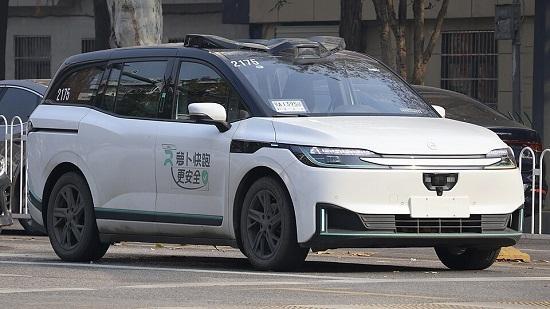
The age of the robotaxi is no longer a distant promise. In the UK, driverless taxis are poised to move from headlines into everyday life—quietly at first, then with growing confidence. Within the next two years, Britons will begin to see vehicles with no one behind the wheel navigating real streets, carrying real passengers, and reshaping how urban transport works.
The turning point comes in spring 2026, when the UK government will permit the first commercial robotaxi trials on public roads. These won't be closed-course experiments or heavily supervised demos. They will be live services, operating in defined areas—most notably London—and available to the public. For the first time, passengers will legally be able to hail a taxi that drives itself.
Major players are already lining up. Uber, partnering with UK AI firm Wayve, plans to run autonomous taxi trials in the capital. Waymo, Google's self-driving subsidiary and the world's most experienced robotaxi operator, has also signalled its intention to launch in London, marking its first major move outside the United States. Other global tech firms, including those backed by China's Baidu, are exploring UK operations as well. The message is clear: Britain is open for autonomous business.
Yet 2026 is only the beginning. These early robotaxis will operate under trial conditions—limited areas, strict oversight, and carefully defined use cases. The real expansion depends on law, not technology. That comes with the Automated Vehicles Act, expected to be fully in force by late 2027. Once implemented, it will provide the legal framework for large-scale commercial deployment, clarifying liability, safety standards, and operator responsibilities.
When that happens, robotaxis could spread rapidly. Proponents argue they will make transport safer, cheaper, and more accessible, particularly for people who cannot drive. Critics warn of unresolved safety concerns, job displacement for drivers, and public unease about trusting algorithms with human lives. Both sides are right to an extent—and the next few years will test whose arguments carry the most weight.
What is beyond doubt is this - the UK is on the brink of a transport shift as significant as the arrival of ride-hailing apps a decade ago. By 2026, driverless taxis will no longer be theoretical. By 2027 and beyond, they may be routine.
The future isn't just approaching. It's already signalling—and there's no driver in the seat.
History
On July 20, 2022, the first commercial pilot program for unmanned travel services in China was officially started in Beijing. The first batch of 25 BAIC Arcfox unmanned vehicles were officially approved to carry out regular paid travel services.
On July 21, 2022, Baidu and CCTV News jointly held the 2022 Baidu World Conference with the theme of "Deepening AI, Growing Everything". At the conference, Baidu released the sixth generation of mass-produced unmanned vehicle Apollo RT6. Apollo RT6 was expected to have the ability to drive autonomously on complex urban roads and cost only 250,000 yuan. According to the plan, Apollo RT6 was to be put into use in 2023.
On August 8, 2022, the governments of Chongqing and Wuhan took the lead in issuing a pilot policy for fully autonomous commercial vehicles and issued the first batch of national unmanned demonstration operation qualifications to Baidu, allowing autonomous vehicles without safety drivers to provide commercial services on public roads.
As of July 2024, the scope of the manned test service covered 11 cities, and was expected to carry out fully unmanned autonomous driving travel service tests in Beijing, Wuhan, Chongqing, Shenzhen, and Shanghai. It was expected to fully cover Wuhan by 2024, with plans to put 1,000 sixth-generation mass-produced unmanned vehicles into operation.
On November 29, 2024, the Hong Kong Transport Department stated that Apollo Go had obtained the first pilot license for autonomous vehicles, with the first phase of testing expected to begin before the end of 2024.
On 4 August 2025, Baidu had announced an agreement with Lyft to expand its car-sharing business into Europe. Under this agreement, Baidu will provide self-driving cars to Lyft. The cars will be manufactured by Jiangling Motors and are expected to operate in Germany and Britain starting in 2026.
PHOTO
Apollo RT6 @ Heping Avenue, Wuhan
https://commons.wikimedia.org/wiki/User:S5A-0043