When Money Dies - Iran's Rial and the Lessons of History
9th January 2026
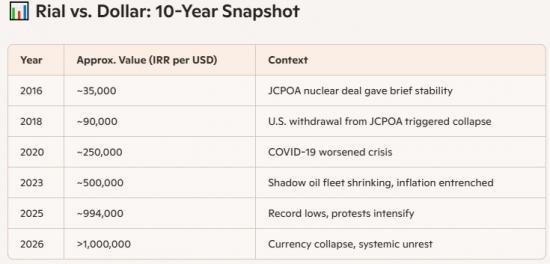
The Iranian rial has been sliding for years, but by 2026 it has collapsed past the symbolic threshold of 1,000,000 IRR per USD.
Families can no longer afford bread or medicine, protests have erupted across all provinces, and the regime faces its gravest legitimacy crisis in decades.
Lessons from History
Weimar Germany (1923): Hyperinflation saw wages paid twice daily, with workers rushing to spend before prices rose. The collapse paved the way for political extremism.
Zimbabwe (2000s): Currency devaluation forced citizens to carry banknotes worth trillions, while the economy reverted to barter and foreign currencies.
Iran (2026): The rial's collapse echoes these precedents — when money dies, the social contract unravels, and political systems falter.
Currencies are more than paper; they are promises. In Weimar, Zimbabwe, and now Iran, those promises dissolved into dust.
The rial's collapse has shredded the social fabric, leaving rulers with coins of authority that no longer buy trust.
When money dies, legitimacy follows — and history shows the consequences are never confined to economics alone.
Hyperinflation in the Weimar Republic
Hyperinflation in Zimbabwe[/url]
Hyperinflationin Venezuela