Poland's Economic Rise and Its Invitation to the G20
13th January 2026
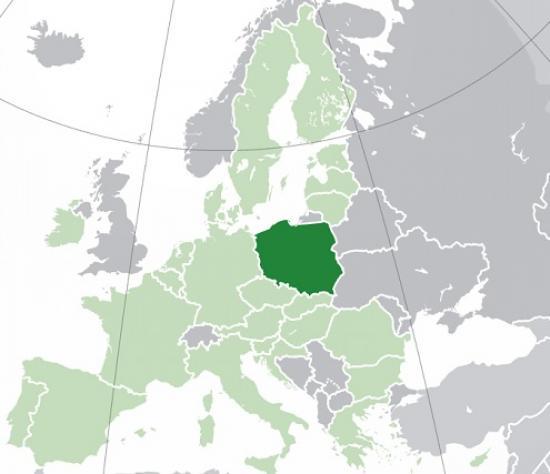
Over the past three decades, Poland has undergone a remarkable economic transformation, evolving from a post‑communist transition economy into one of Europe's most dynamic growth stories.
This progress has now culminated in a milestone achievement - in 2025, Poland's economy crossed the symbolic US $1 trillion threshold, making it one of the twenty largest national economies in the world.
This milestone has opened the door for Poland to be invited as an observer to the G20 summit, a forum traditionally reserved for the world's largest and most influential economies.
Poland's ascent has been driven by a combination of domestic demand, external investment, and structural economic reforms. Since joining the European Union in 2004, Poland has been one of the largest net beneficiaries of EU investment funds, which have supported infrastructure, innovation and regional development.
These funds, combined with sustained investment in education and technology, have helped Poland diversify its economy and modernise key sectors such as automotive manufacturing, electronics, food processing and business services.
A key pillar of Poland's success has been strong domestic demand. Rising real wages and a relatively young and active workforce have underpinned household consumption — a major driver of growth in recent years.
In addition, structural reforms and investor‑friendly institutions have earned consistent praise from global bodies such as the International Monetary Fund (IMF) and the Organisation for Economic Co‑operation and Development (OECD) for maintaining fiscal discipline and policy predictability, which have helped attract foreign capital.
While growth slowed notably in 2023, with GDP expanding by just 0.2 percent, the subsequent rebound has been robust. By 2025, Poland was growing at rates among the strongest in the EU, supported by resilient consumption and investment, with forecasts projecting continued expansion in the coming years.
Economic institutions have also highlighted the positive contribution of high absorption of EU recovery funds and structural investment to the near‑term growth outlook.
The result of these long‑term trends is now visible in international rankings: Poland’s gross domestic product now sits among the global top twenty by nominal size, overtaking several longstanding developed economies such as Switzerland. This realignment reflects not only Poland’s internal growth but also broader shifts in the global economic landscape, as emerging high‑income nations catch up with their Western counterparts.
Poland’s invitation to the G20 summit in 2026 — initially as an observer — is both a recognition of its economic weight and a reflection of evolving geopolitical dynamics.
Traditionally, the G20 consists of the world’s largest economies plus the European Union, but recent political developments, including tensions around South Africa’s participation, created an opening that Poland was well placed to fill. The United States, which holds the G20 presidency and will host the 2026 summit in Miami, explicitly supported Poland’s inclusion, citing its successful economic and democratic development since the end of the Cold War.
The invitation carries deeper significance. It marks the first time a Central or Eastern European nation has been invited to attend the leaders’ summit in its own right, rather than being represented indirectly through the EU’s collective seat. This reflects not only Poland’s new status as a major economy but also the changing geopolitical balance in Europe and beyond. Analysts argue that Poland’s experience combining economic convergence with stable institutions and a strong stance on regional security. This gives it a distinct voice that can contribute to global economic debates, particularly at a time of rising protectionism and geopolitical fragmentation.
Poland’s rise to the global top twenty economies is the product of long‑term reforms, strategic investments, strong domestic demand, and effective use of EU resources.
Its invitation to the G20 as an observer in 2026 is both a symbolic recognition of its economic achievement and a practical step in broadening global economic governance to reflect new realities. Whether this leads to full membership in the future remains an open question, but for now Poland’s presence at the G20 table signals a new chapter in its integration into the world’s economic leadership.
Poland’s Role in the Ukraine War: A Strategic Supporter
Since Russia’s full-scale invasion of Ukraine in February 2022, Poland has been one of the most important European supporters of Ukraine, both politically and materially.
1. Extensive Military and Defence Support
Poland has supplied Ukraine with large amounts of military aid, including weapons, ammunition and other equipment. Since the start of the war, the country has provided dozens of military aid packages, worth several billions of euros and including tanks, artillery, fighter jets and vehicles. It has also helped coordinate deliveries from other allies and served as a key logistics hub for Western weaponry entering Ukraine.
In July 2024, Poland and Ukraine signed a bilateral security cooperation agreement that commits Poland to long-term defence collaboration. This agreement includes cooperation across air defence, cyber, intelligence, defence industry links and the potential training of Ukrainian forces in Poland.
However, Polish leaders have been clear that Poland will not deploy its troops directly into Ukraine, even in the context of security guarantees or peacekeeping — instead focusing on logistics, training and regional defence support.
2. Political and Diplomatic Support
Poland has consistently backed Ukraine’s sovereignty and territorial integrity on the world stage. Warsaw has publicly supported Ukraine’s European Union accession, joining the Ukraine2EU support programme to help Kyiv align its laws and governance with EU standards.
In January 2025, Polish and Ukrainian leaders issued a joint strategic statement reaffirming their shared goal of resisting Russian aggression and working toward a just and lasting peace consistent with international law.
Poland also participates in international forums such as the Ukraine Defence Contact Group, helping coordinate military assistance with NATO and EU partners, and imposes sanctions on Russia alongside European allies.
3. Humanitarian and Economic Support
Poland has taken in a large number of Ukrainian refugees — more than most European countries both in absolute numbers and relative to its population — and provided shelter, services and integration support.
It also contributes financially to reconstruction and recovery efforts in Ukraine, such as by adding funds to the EU for Ukraine Fund to help rebuild critical infrastructure and support business resilience.
4. Poland’s Security Concerns and Strategy
Because of its proximity to Ukraine and historical experience with Russian aggression, Poland views the conflict as a matter of European and regional security, not just Ukrainian defence. It has increased its own defence spending and military readiness to protect NATO’s eastern flank and deter potential provocations.
Poland’s government, including under Prime Minister Donald Tusk, emphasises strong defence cooperation with NATO partners and Western allies but continues to rule out sending combat troops directly into Ukraine.
5. Domestic Public Opinion and Political Context
Support for Ukraine in Poland is broad but nuanced. While the government has maintained strong backing for Ukraine, public opinion appears to have softened somewhat over time, with less than half of Poles supporting continued military assistance in some surveys — reflecting war fatigue and domestic prioritisation of national defence.
Polish politics also feature voices with differing views: some conservative or nationalist figures call for negotiation or a negotiated peace, although these positions remain outside mainstream government policy.
6. Regional Security Environment
Poland has occasionally faced direct Russian hybrid threats — including cyberattacks on critical infrastructure that are widely attributed to Russian actors, demonstrating the broader security risks Warsaw perceives from the conflict.
About Poland