Thousands Of New Jobs In Wind Industry But Where Will All The Workers Come From
16th January 2026
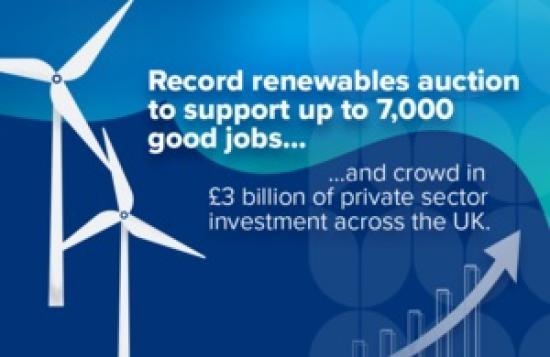
There is a real risk of a shortage of experienced workers in the UK to build all the planned new offshore and onshore wind farms, and it's already shaping industry discussions and government planning.
Current Workforce Growth - But Big Gaps Remain.
The UK wind industry has grown rapidly, with around 55,000 people employed across onshore and offshore wind as of 2025, including nearly 40,000 in offshore wind.
But this is just the starting point. To meet the government's 2030 clean power targets, industry reports project that the UK wind sector alone will need between 74,000 and 95,000 jobs in offshore wind by 2030, with more in onshore wind — taking the total wind workforce to well over 112,000 roles.
Skills Shortages in Key Roles
The challenge isn’t just numbers — it’s skills. Multiple sources highlight gaps in training and experienced personnel, particularly in:
Wind turbine technicians
High-voltage electrical engineers and technicians
Installation and cable specialists
Project engineers and senior management
Consenting, regulatory and planning professionals
These are not easily filled by general labour; they require specialised training, certification, and safety competencies — especially for offshore work where conditions are demanding and safety critical.
Competing Demand Across Sectors
The UK construction and broader energy transition workforce is strained more generally — construction industries are already facing shortages of experienced workers across engineering and technical trades, partly due to retirements and insufficient young entrants.
Additionally, there’s competition for trained professionals from related sectors such as oil and gas, marine construction, and electrification work, making recruitment more difficult.
Government Plans and Industry Responses
The government has recognised this as a national priority. Official plans to support the clean energy build-out include:
A Clean Energy Jobs Plan aiming to generate tens of thousands of new roles by 2030.
Support for training pathways, apprenticeships, and recruitment initiatives for veterans and diverse talent.
However, analysts and industry bodies warn that even with policy support, the pace of training and recruitment must accelerate significantly to match the scale of the upcoming pipeline.
What This Means in Practice
Job numbers will grow steeply — thousands of new workers needed annually.
Experienced workers are in short supply right now, not just new entrants.
Specialised skills are especially scarce, and without proactive training, filing those roles will be difficult.
Industry may need to recruit from related sectors and invest more in apprenticeships and vocational training.
There is a genuine risk of worker shortages if the UK does not significantly expand training, recruitment, and skills development. The industry and government are trying to address this, but the scale and speed of wind deployment may outpace the development of experienced workers unless action continues and accelerates.
1. Wind-Energy Job Categories Most at Risk of Shortage
The risk is not evenly spread. The biggest shortages are in experienced, safety-critical, and offshore-specific roles.
A. Offshore Wind Turbine Technicians
Risk level: Very high
These workers install, operate, and maintain turbines — often hundreds of feet above sea level.
Why the shortage exists
Long training and certification timelines (GWO, working at height, HV)
Physically demanding and safety-critical work
High turnover due to offshore conditions
Why they matter
No technicians = turbines can’t be commissioned or maintained
Bottlenecks here delay entire projects
B. High-Voltage (HV) Electrical Engineers & Cable Specialists
Risk level: Critical
This includes offshore substations, export cables, array cables, and grid connections.
Why the shortage exists
Skills overlap with nuclear, grid upgrades, EV charging, and data centres
Decades-long underinvestment in UK electrical engineering training
Experience cannot be "fast-tracked" safely
Why they matter
Grid connection delays are already one of the biggest threats to delivery
Offshore wind is becoming more electrically complex as turbines grow
C. Offshore Construction & Marine Specialists
Risk level: High
Includes:
Jack-up vessel crews
Heavy-lift crane operators
Offshore construction supervisors
Marine coordinators
Why the shortage exists
Finite global pool of experienced offshore workers
Competition from oil & gas decommissioning and offshore construction abroad
Limited UK vessel availability compounds the problem
Why they matter
Installation windows are weather-limited
Missing crews can delay projects by entire seasons
D. Project Managers & Senior Engineers
Risk level: High
These are the people who coordinate timelines, budgets, supply chains, and risk.
Why the shortage exists
UK offshore wind expanded faster than leadership pipelines
Many senior staff are close to retirement
Experience is global and highly mobile
Why they matter
Poor project management leads to cost overruns and investor risk
CfD projects rely on tight delivery schedules
E. Planning, Consenting & Environmental Specialists
Risk level: Medium-High
Includes planners, marine ecologists, and regulatory experts.
Why the shortage exists
Increasing regulatory complexity
Slow growth in public-sector planning capacity
High burnout and private-sector competition
Why they matter
Delays at this stage push projects years back
Scotland and England already face consenting backlogs
2. How the UK Can Realistically Close the Skills Gap
This is solvable — but only with coordinated action.
1. Large-Scale Reskilling from Adjacent Industries
Fastest win
Best feeder sectors:
Oil & gas (especially offshore maintenance and marine roles)
Naval and merchant marine sectors
Heavy engineering and power generation
What works
Short conversion courses (6–12 months)
Recognition of prior safety and offshore experience
Clear transition pathways, not “start from scratch” retraining
2. Expand Technical Colleges Near Wind Hubs
High impact, medium time horizon
Key regions:
East coast of England (Humber, Teesside, Norfolk)
Scotland (Aberdeen, Fife, Moray Firth)
North Wales and the Irish Sea coast
What’s needed
GWO-certified training centres
Employer-linked apprenticeships
Guaranteed job placements post-qualification
3. Accelerate Apprenticeships — With Industry Guarantees
Essential for long-term supply
Current problem:
Apprenticeships exist, but uptake is uneven
Young people lack visibility of offshore careers
What works
Employer-backed apprenticeship quotas tied to CfD awards
Paid placements offshore or on vessels
Clear salary progression to attract talent
4. Strategic Use of Skilled Migration
Necessary in the short term
The UK cannot train everyone fast enough domestically.
Best approach
Targeted visas for HV engineers, offshore supervisors, and technicians
Fast-track recognition of international certifications
Temporary migration linked to project build phases
This is already common in major offshore builds globally.
5. Retain Workers by Improving Conditions
Often overlooked
Problems today:
Long offshore rotations
Burnout and safety fatigue
Better offers overseas
Retention measures
Shorter rotations
Better mental-health support
Clear career progression onshore after offshore service
Keeping experienced workers is cheaper than replacing them.
Bottom Line
There is a real and growing risk of skilled-worker shortages slowing UK wind deployment.
The biggest bottlenecks are technicians, HV engineers, offshore construction crews, and senior project staff.
The UK can still meet its targets — but only if training, migration, and workforce planning move at the same pace as turbine deployment.