The Faithful, the Traitors, and the Curious Business of Modern Politics
17th January 2026
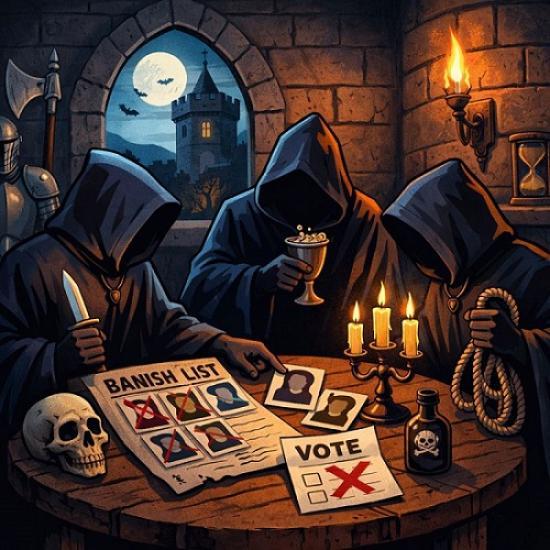
If one wished to understand modern politics, one could do worse than stop reading manifestos altogether and instead binge-watch The Traitors. The similarities are uncanny, though the television version has the advantage of being honest about what it is - a game where deception is expected, paranoia is rewarded, and confidence is inversely proportional to competence.
In the castle, contestants gather each morning to solemnly declare their commitment to truth, teamwork, and the common good, before immediately whispering in corners about who looks "a bit shifty." In politics, the setting is grander and the lighting less flattering, but the ritual is much the same. Public unity by day; frantic plotting by night.
The Faithful, bless them, are convinced that surely the Traitors will be exposed by logic, evidence, and good sense. They talk earnestly about transparency, fairness, and "what the group needs right now." They form committees. They take notes. They misinterpret every clue. Meanwhile, the Traitors smile warmly, agree enthusiastically, and quietly remove another Faithful before breakfast.
This, too, feels familiar.
One of the great lessons of The Traitors is that sincerity is not a defence. The most earnest players are often the first to be eliminated, usually after beginning a sentence with “I just want to say, from the bottom of my heart...” In politics, the same rule applies. Anyone insisting too loudly that they are “not playing games” almost certainly is — and is doing so badly.
Then there are the Round Tables. These are exercises in democratic theatre, where everyone speaks, no one listens, and decisions are made based on vibes, grudges, and who sighed at the wrong moment three episodes ago. Evidence is waved away as “interesting, but not decisive,” while gut feelings are treated as sacred texts.
Replace the oak table with a debating chamber and the chalice with a microphone, and the resemblance becomes uncomfortable.
Perhaps the most impressive feat is how confidently wrong people can be. A Faithful will announce, with absolute certainty, that they have “cracked it,” only to immediately vote out the one person who was actually helping them. This pattern repeats until viewers begin to shout at the screen — a reaction that mirrors the experience of reading the news.
And yet, the Traitors themselves are not exactly villains of genius. They overreach, contradict themselves, and occasionally panic. Their success relies less on brilliance than on the simple fact that chaos favours those who benefit from it. When everything is confusing, trust collapses — and when trust collapses, the liars don't need to be clever, just consistent.
Sound familiar?
What The Traitors really exposes is not that deception exists — we already knew that — but that systems built on performance rather than outcomes are exquisitely vulnerable to it. If you reward confidence, punish doubt, and mistake certainty for leadership, you will inevitably hand the keys to those most comfortable with pretending.
The final twist, of course, is that viewers always think they would do better. They wouldn't be fooled. They’d spot the Traitor immediately. This belief is essential to the format — and to politics. Democracy depends on the comforting idea that “ordinary people” are immune to manipulation, even as the evidence calmly votes otherwise.
In the end, The Traitors is not a warning about bad people. It is a warning about bad incentives. When survival depends on appearances, when cooperation is optional, and when admitting error is fatal, the most ruthless players will thrive — whether in a Scottish castle or a national parliament.
The only real difference is that, when the credits roll on the television show, the prize money is capped, the damage is contained, and everyone goes home.
In politics, the season never ends — and the Faithful keep wondering why breakfast feels quieter every day.
Are there more SECRET TRAITORS to come into the light in coming weeks?
More blood is sure to be on the carpet as we run up to the May elections in 2026.