Beef Prices Have Soared - Reasons And What You Can Do To Keep Costs Down And Stay Healthy
24th January 2026
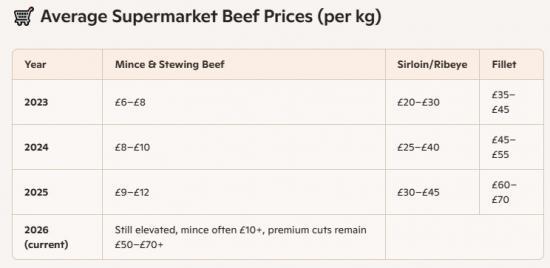
UK beef prices have been rising steadily over the past three years, and they remain elevated going into 2025. Supply constraints, higher feed costs, and strong demand have all contributed to this upward trend.
Current Situation (2025-2026 Outlook)
Supply: UK beef production is forecast to fall by about 4% in 2025, tightening availability.
Imports: Demand for imported beef rose ~6% compared to 2024, helping offset domestic shortages.
Retail Prices: Expected to stay high in supermarkets and restaurants, though consumer demand may soften due to affordability concerns.
Key Drivers of Price Rises
Feed & Energy Costs: Rising input costs for farmers.
Lower Slaughter Numbers: Fewer prime cattle and cows entering the market.
Global Trade: Strong export demand and limited supply worldwide.
Consumer Trends: Despite high prices, beef remains in demand, though households are beginning to cut back.
Beef prices in the UK have risen consistently from 2023 to 2025, hitting record highs.
Prices are still elevated in 2026, though growth may slow as imports increase and consumer demand weakens.
For shoppers, this means beef will likely remain expensive compared to three years ago, with only modest relief expected in the near term.
Price Evolution (2023-2025)
2023: Average supermarket beef cuts (mince, stewing beef) were typically £6-£8/kg, premium steaks around £20-£30/kg.
2024: Prices rose further, with ribeye and fillet often exceeding £35-£50/kg. Farmgate steer prices hit £5/kg in September 2024.
2025: Retail prices surged again, with premium cuts like fillet reaching £60-£70/kg. Farmgate prices peaked at £6/kg in February 2025.
2026 (current): Prices remain elevated, with everyday cuts still above 2023 levels. Imports have increased to offset supply shortages, but consumer demand is softening.
Why Prices Keep Rising
Supply constraints: UK beef production fell ~4% in 2025.
Higher input costs: Feed, energy, and transport remain expensive.
Global demand: Strong export markets and limited worldwide supply push prices up.
Consumer impact: Households are cutting back, but beef remains a staple.
Beef prices in UK supermarkets have risen sharply from 2023 to 2025, especially for premium cuts.
Prices are still high in 2026, though growth may slow as imports increase and demand weakens.
Everyday shoppers will continue to feel the squeeze, with mince and stewing beef costing more than three years ago, and luxury cuts now firmly in the premium bracket.
Other Meats
Chicken: Remains the most affordable meat option, even with moderate price increases.
Lamb: More expensive than beef per kg, but hasn't surged as dramatically as premium beef cuts.
Plant-based proteins: Prices have risen steadily, but they're still cheaper than premium beef and appeal to health-conscious or environmentally minded shoppers.
Beef vs Alternatives: Everyday beef cuts (mince/stewing) now cost £9-£12/kg, while chicken is nearly half that price.
Switching from beef to chicken or plant-based proteins can save households 30-50% per kg. Lamb is less of a budget option but offers variety.
Budget-Friendly Weekly Meal Plan
Day 1 - Monday
Lunch: Lentil & vegetable soup with wholemeal bread
Dinner: Roast chicken thighs with roasted root vegetables
Day 2 - Tuesday
Lunch: Chickpea salad with cucumber, tomato, and feta
Dinner: Beef mince chili (small portion of beef, bulked with beans)
Day 3 - Wednesday
Lunch: Grilled chicken wrap with salad and yogurt dressing
Dinner: Plant-based burger with sweet potato fries
Day 4 – Thursday
Lunch: Egg & spinach omelette with salad
Dinner: Lamb stew (small portion, lots of vegetables and barley)
Day 5 – Friday
Lunch: Quinoa salad with roasted peppers and chickpeas
Dinner: Chicken curry with rice (use drumsticks or thighs for affordability)
Day 6 – Saturday
Lunch: Plant-based mince pasta bolognese
Dinner: Sirloin steak (occasional treat, shared portion with lots of veg sides)
Day 7 – Sunday
Lunch: Vegetable stir-fry with tofu
Dinner: Roast chicken (whole bird, leftovers for sandwiches next week)
Tips to Stretch the Budget
Batch cook: Soups, stews, and curries can be made in large portions and frozen.
Mix proteins: Use beans, lentils, or tofu to reduce meat quantities without losing protein.
Smart cuts: Chicken thighs, drumsticks, and whole birds are cheaper than breasts.
Occasional luxury: Keep premium beef or lamb for one meal a week, not daily.
This plan keeps costs down by leaning on chicken and plant-based proteins, while still letting you enjoy beef and lamb in moderation.