The New Age of Metals - Gold Breaks $5,000 as Commodities Reshape the Global Economy
29th January 2026
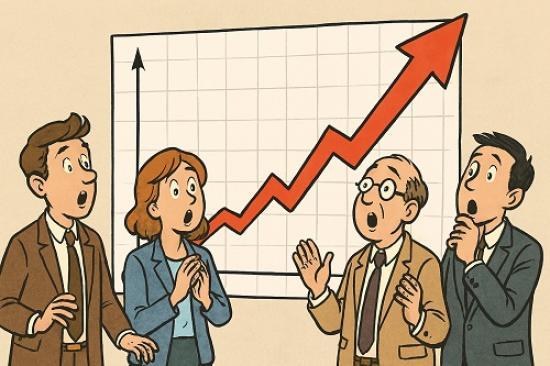
On January 29, 2026, gold crossed the $5,000 per ounce threshold for the first time in history, trading at $5,104. This moment is more than symbolic—it represents a profound shift in investor psychology and global economic trends.
In sterling terms, gold now sits between £3,833 and £3,848 per ounce, underscoring its universal appeal across currencies and continents.
Gold - Echoes of Past Booms
Gold's trajectory recalls earlier surges. In the 1970s, inflation and oil shocks propelled it from $35 to over $800 per ounce. In 2011, amid the fallout of the financial crisis, it peaked near $1,900.
Today's rally dwarfs those episodes, driven by central bank accumulation, geopolitical uncertainty, and a growing distrust of fiat currencies. Analysts note that gold's role has expanded beyond a hedge—it is increasingly seen as a parallel reserve asset, rivalling sovereign bonds.
Silver - The Industrial Precious Metal
Silver’s rise to $115.47 per ounce (around £83.19) reflects its dual identity. Unlike gold, silver straddles the line between investment and industry. Its conductivity makes it indispensable for solar panels, semiconductors, and electric vehicles.
Historically, silver has lagged gold, but during industrial booms—such as the post-WWII expansion—it often outperformed. Today, the green energy revolution is giving silver renewed prominence.
Platinum and Palladium - Metals of Transition
Platinum, at $2,742 per ounce (£1,954), and palladium, at $2,082 (£1,454), are tightly bound to industrial demand. Both are critical in catalytic converters, which reduce emissions in vehicles.
Palladium’s 3.5 percent jump today highlights its sensitivity to automotive trends. Historically, platinum commanded higher prices, but palladium overtook it in the 2010s as automakers shifted technologies. Experts suggest that as electric vehicles proliferate, demand for these metals may pivot toward hydrogen fuel cells and other clean technologies.
Copper - The Lifeblood of Electrification
Copper, priced at $5.93 per pound (£9.68 per kilogram), is the backbone of modern infrastructure. Its importance lies not in rarity but in necessity. Electrical grids, renewable energy projects, and electric vehicles all depend on copper.
Historically, copper prices have mirrored industrial cycles, booming during expansions and faltering in recessions. Today, its steady climb reflects the global commitment to electrification and sustainable infrastructure.
Market strategists argue that this metals rally is unique because it blends financial caution with technological transformation. "We are witnessing a dual driver," says one commodities analyst. "On one hand, investors are hedging against inflation and geopolitical risk. On the other, industries are demanding more metals to power the green revolution. This convergence is unprecedented."
Historical Perspective
Charts of gold’s price trajectory since the 1970s show a steady upward march punctuated by sharp surges during crises. Silver’s volatility is more pronounced, with dramatic swings tied to industrial demand.
Copper’s long-term chart mirrors global growth, rising in tandem with industrialization in China and now with electrification worldwide. Platinum and palladium, meanwhile, show the shifting fortunes of automotive technology.
Looking Ahead
The future of metals is uncertain but promising. Central bank policies, supply chain disruptions, and geopolitical tensions could all reshape trajectories.
Yet the underlying trend is clear: metals are no longer just stores of value or industrial inputs—they are the foundation of a new economic era. Gold’s symbolic crossing of $5,000 may mark the beginning of a broader revaluation of commodities in the global economy.