Lewis Set to Ride the Floating Wind Revolution
1st February 2026
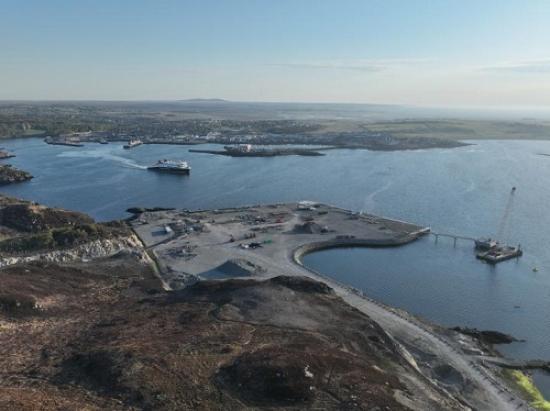
The Isle of Lewis, long celebrated for its rugged landscapes and cultural heritage, is now preparing to step onto the global stage as a leader in renewable energy.
At the heart of this transformation lies Stornoway Port's Deep Water South expansion, a project designed to anchor floating offshore wind farms in the North Atlantic and turn Lewis into a strategic hub for clean energy.
The Vision
The Scottish Government has already committed £1.8 million to fund design and ground investigations for the port's expansion. This investment is more than just infrastructure—it's a statement of intent. Stornoway is being positioned alongside Aberdeen and Cromarty Firth as one of Scotland's most important offshore wind hubs, but with a unique focus: floating wind, the technology that unlocks deep-water sites far beyond the reach of traditional fixed turbines.
The Projects
Among the most significant developments is Spiorad na Mara, a ScotWind project led by Northland Power, located off the coast of Lewis. This floating wind farm is expected to be one of the first to harness the Atlantic’s vast energy potential, with Stornoway Port serving as its assembly and servicing base. In addition, multiple ScotWind leases west of Lewis—representing several gigawatts of capacity—are likely to rely on Stornoway’s deep-water facilities, cementing the island’s role in Scotland’s renewable energy expansion.
The Timeline
2024-2025: Early design and ground investigations, creating initial jobs in engineering and consultancy.
2026-2028: Construction of Deep Water South, bringing hundreds of temporary roles in civil engineering, logistics, and marine services.
2028-2030: Assembly and installation of floating turbines, with skilled jobs in offshore logistics, turbine assembly, and vessel operations.
2030s onward: Long-term operations and maintenance, securing stable careers in renewable energy for decades to come.
The Benefits
For the people of Lewis, the floating wind revolution promises more than just clean energy. It offers:
Jobs and Training: From apprenticeships in marine engineering to long-term careers in turbine maintenance, the project will open pathways for local workers.
Economic Growth: Increased demand for accommodation, transport, and local services will ripple through the community.
Global Recognition: Lewis will stand as a symbol of Scotland’s leadership in floating wind technology, attracting further investment in renewables such as hydrogen.
The Challenges
Of course, the journey is not without hurdles. Large-scale investment will be required to move from design to construction, and environmental assessments must balance renewable energy ambitions with protection of marine ecosystems. Yet the momentum is undeniable, and the Outer Hebrides are firmly on the map as a renewable energy frontier.
The Lewis wind farm project is more than a local development—it’s a bold leap into the future of energy. With Stornoway Port at its core, the island is set to ride the crest of the floating wind revolution, bringing jobs, investment, and global recognition to a community ready to harness the power of the Atlantic.
"From the edge of the Atlantic, Lewis will power the world."
Stornoway Port