Farewell to the Penny - Scotland's Changing Relationship with Small Change
2nd February 2026
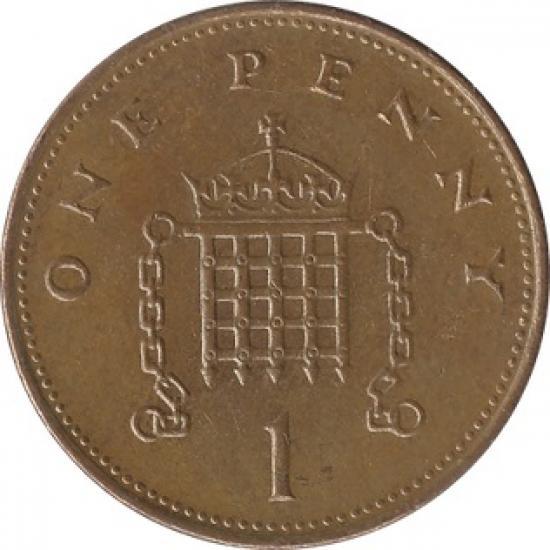
For 232 years, the one pence coin was a fixture of British life. Introduced in 1797 under King George III, it became the nation's longest‑circulating coin. But in 2022, the Royal Mint quietly stopped producing new pennies, and by late 2025 the withdrawal was confirmed.
The reasons were practical: cash use is declining, minting costs outweigh the coin's value, and retailers already round transactions to the nearest 5p. Yet the penny's disappearance is more than a financial adjustment. It's a cultural shift.
Voices from Scotland
In Aberdeen, shopkeeper Margaret Fraser recalls the penny's role in everyday life:
"We used to keep jars of pennies by the till for kids buying sweets. Now, everything rounds up. It feels like the end of something simple."
Meanwhile, in Glasgow, charity organiser David McLean sees opportunity in the change:
"We've moved from pennies in tins to pounds on cards. Contactless giving has made fundraising easier, even if the penny's gone."
And in Edinburgh, teacher Fiona Campbell reflects on school traditions:
"Our pupils used to bring pennies for charity drives. Now we run silver coin challenges — 5p and 10p pieces instead. The spirit is the same, just the coins are different."
Everyday Transactions
Supermarkets: Cash totals are rounded to the nearest 5p.
Banks: Pennies remain legal tender but are no longer issued in change.
Corner shops: Informal rounding has become the norm.
Example: A bottle of Irn‑Bru priced at £1.29 is rounded to £1.30 in cash, though card payments remain exact.
Charities Adapt
The penny's withdrawal has reshaped fundraising across Scotland:
Churches now feature tap‑to‑donate machines beside collection plates.
Schools encourage higher‑value coin drives.
Major charities like Shelter Scotland and the Scottish SPCA use supermarket round‑up schemes and QR‑code donations.
"Every penny counts" has become "every coin counts" — a slogan updated for the digital age.
Nostalgia and Legacy
Though pennies are fading from circulation, they remain in memory. Penny jars are being preserved in schools and community centres as nostalgic artifacts. Collectors are snapping up historic issues, and families still find old coins tucked away in drawers.
The penny's disappearance is symbolic: small contributions still matter, but they now flow through contactless taps and digital platforms rather than copper coins.
The penny's withdrawal may seem minor in practical terms, but in Scotland it touches everyday life, from corner shops to church halls. The coin may be gone, but its legacy endures in the evolving ways people give, spend, and remember.
Whatever happened to the farthing
The farthing was withdrawn from circulation and ceased to be legal tender in the UK on December 31, 1960.
Final Minting: Although withdrawn at the end of 1960, the last farthings were actually minted in 1956.
Reason for Withdrawal: Rising inflation meant the coin's value was too low to be practical for daily commerce.
Overseas Use: The coin continued to be used in some overseas territories until 1970.
Value: It was worth one-quarter of an old penny, or 1/960th of a pound sterling.
The silver farthing was a very small coin, and is rarely found as metal detectors cannot usually detect tiny metal items. For many years they were thought to have been minted for the first time in the reign of Edward I (1272-1307) but about two examples of this denomination from the reign of Henry III (1216-1272) have been found. No documentary evidence of this coin exists.
Before this farthings were created by cutting a penny into four, thus the id farthing (from fourthing)
The silver farthing was last produced in the reign of Edward VI (1547-1553), having gradually reduced in size until its use became impractical.
This led to a shortage of a denomination which the wealthy producers (the government) did not really need but which the general population did.
Copper Farthings
Due to a shortage of small coins, James I authorised John Harrington to issue tin coated bronze farthings in 1613, after a number of other proposals had been considered. The initial small issue (12.25 mm diameter), showing two sceptres through a crown on the obverse and a crowned harp on the reverse, was soon superseded by a slightly larger token (15mm diameter) without the tin wash.
Lord Harrington died in 1614, and the title to the patent eventually passed to the Duke of Lennox. The next issues became known as Lennox farthings. They can be distinguished from the Harrington farthings by the fact that in the legend IACO starts at the top (or in one case bottom) rather that just before. Their diameter remained at about 15 mm, although the last issue was oval in shape.
The Duke of Lennox became the Duke of Richmond, but died around 1624. His widow continued to hold the patent, and the first issues of Charles I became known as Richmond farthings. A second patent was issued to Lord Maltravers and others. Maltravers farthings have an inner circle on both sides.
These coins were produced by the interesting technique of rolling a strip of copper between two rollers with the designs set into them, and at the Fitzwilliam Museum in Cambridge there is a strip of several of these coins which had not been cut out of the strip.
The problem was that these coins were easy to forge, and before long the public lost trust in them. A new design was introduced with a rose instead of a harp on the reverse, and with a brass plug in the copper which was very difficult to forge. This is known as a Rose farthing.
During the period of the Commonwealth in 1644 issue of these coins was discontinued, and instead this denomination was effected by a large variety of tokens issued by traders or towns.
In the mid-1660's the Royal Mint began to investigate the manufacture of a larger copper farthing - a pattern is known dated 1665 with similarities to the issued coins.
The official copper farthing appeared in 1672, despite difficulties partly overcome by importing blanks from Sweden. It was produced annually until 1675 and again in 1679.
The Half Penny
The British decimal halfpenny coin was demonetised and withdrawn from circulation in December 1984 due to its diminished purchasing power. Although minted from 1971 alongside decimalisation, its production ceased in 1984, with the final coins featuring that year's date, though these were mainly produced for collector sets.
Key details regarding the discontinuation of the halfpenny:
Final Removal: The coin ceased to be legal tender in December 1984.
Minting End: While 1984 was the last date on coins, they were not issued for general circulation, only for sets.
Reason: Inflation made the coin costly to produce and impractical for use.
Background: It was introduced in 1971 as part of the UK's switch to decimal currency.
For even more about our coins go to https://www.coins-of-the-uk.co.uk/