Consumer price inflation UK February 2026 - 3% in Year to January
25th March 2026
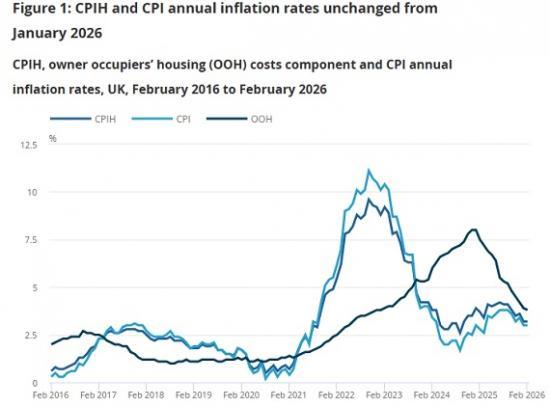
The Consumer Prices Index including owner occupiers' housing costs (CPIH) rose by 3.2% in the 12 months to February 2026, unchanged from the 12 months to January.
On a monthly basis, CPIH rose by 0.4% in February 2026, the same rate as in February 2025.
The Consumer Prices Index (CPI) rose by 3.0% in the 12 months to February 2026, unchanged from the 12 months to January.
On a monthly basis, CPI rose by 0.4% in February 2026, the same rate as in February 2025.
Clothing made the largest upward contribution to the monthly change in both CPIH and CPI annual rates; motor fuels made the largest, offsetting, downward contribution.
Core CPIH (CPIH excluding energy, food, alcohol and tobacco) rose by 3.4% in the 12 months to February 2026, up from 3.3% in the 12 months to January; the CPIH goods annual rate was unchanged at 1.6%, while the CPIH services annual rate eased slightly from 4.3% to 4.2%.
Core CPI (CPI excluding energy, food, alcohol and tobacco) rose by 3.2% in the 12 months to February 2026, up from 3.1% in the 12 months to January; the CPI goods annual rate was unchanged at 1.6%, while the CPI services annual rate eased slightly from 4.4% to 4.3%.
The Consumer Prices Index including owner occupiers' housing costs (CPIH) rose by 3.2% in the 12 months to February 2026, unchanged from the 12 months to January.
On a monthly basis, CPIH rose by 0.4% in February 2026, the same rate as in February 2025.
The Consumer Prices Index (CPI) rose by 3.0% in the 12 months to February 2026, unchanged from the 12 months to January.
On a monthly basis, CPI rose by 0.4% in February 2026, the same rate as in February 2025.
Clothing made the largest upward contribution to the monthly change in both CPIH and CPI annual rates; motor fuels made the largest, offsetting, downward contribution.
Core CPIH (CPIH excluding energy, food, alcohol and tobacco) rose by 3.4% in the 12 months to February 2026, up from 3.3% in the 12 months to January; the CPIH goods annual rate was unchanged at 1.6%, while the CPIH services annual rate eased slightly from 4.3% to 4.2%.
Core CPI (CPI excluding energy, food, alcohol and tobacco) rose by 3.2% in the 12 months to February 2026, up from 3.1% in the 12 months to January; the CPI goods annual rate was unchanged at 1.6%, while the CPI services annual rate eased slightly from 4.4% to 4.3%.
The Consumer Prices Index including owner occupiers' housing costs (CPIH) rose by 3.2% in the 12 months to February 2026, unchanged from the 12 months to January (Figure 1).
On a monthly basis, CPIH rose by 0.4% in February 2026, the same rate as in February 2025.
The Consumer Prices Index (CPI) rose by 3.0% in the 12 months to February 2026, unchanged from the 12 months to January.
On a monthly basis, CPI rose by 0.4% in February 2026, the same rate as in February 2025.
The main drivers of the annual inflation rate for CPIH and CPI are the same where they are common to both measures. However, the owner occupiers' housing (OOH) costs component accounts for approximately 18% of the CPIH and is the main driver for differences between the CPIH and CPI inflation rates. This makes CPIH our most comprehensive measure of inflation.
Clothing and footwear
Clothing and footwear prices rose by 0.9% in the 12 months to February 2026, compared with no change in the 12 months to January (Figure 3). The February figure was the highest recorded since March 2025, when the rate was 1.1%.
Alcohol and tobacco
Prices in the alcohol and tobacco division rose by 3.6% in the 12 months to February 2026, down from 4.6% in the 12 months to January. The February 2026 figure was the lowest recorded since February 2022, when the rate was also 3.6%. It was last lower in January 2022. On a monthly basis, prices fell by 0.1% in February 2026, compared with a rise of 1.0% a year ago.
The easing in the 12-month rate reflected a downward effect from alcohol, where prices fell by 1.5% in February this year, compared with a rise of 0.7% in February 2025. Price falls were seen across spirits, wines, and beers this year as a result of price discounting, compared with price rises a year ago.
Transport
Prices in the transport division rose overall by 2.4% in the 12 months to February 2026, down from 2.7% in the 12 months to January. On a monthly basis, prices rose by 0.5% in February 2026, compared with a rise of 0.8% a year ago.
The largest downward effect came from motor fuels, where the average price of petrol fell by 1.6 pence per litre between January and February 2026, compared with a rise of 2.0 pence per litre between January and February 2025. The average price stood at 131.6 pence per litre in February 2026, the lowest price since June 2021 when it was 129.7 pence per litre.
Similarly, diesel prices fell by 1.4 pence per litre in February 2026, compared with a rise of 2.3 pence per litre in February 2025. The average price stood at 141.1 pence per litre in February 2026, down from 146.4 pence per litre a year earlier.
These movements resulted in overall motor fuel prices falling by 4.6% in the 12 months to February 2026, compared with a fall of 2.2% in the 12 months to January. All prices were collected before the outbreak of war in the Middle East on 28 February 2026.
Within transport, this downward effect was partially offset by a small upward contribution from air fares. These rose by 9.2% between January and February 2026, compared with a smaller rise of 5.9% a year ago. The rise into February 2026 was the largest increase between January and February since 2013, when it was also 9.2%. The upward effect came from European routes.
Food and non-alcoholic beverages
Food and non-alcoholic beverages prices rose by 3.3% in the 12 months to February 2026, down from 3.6% in the 12 months to January (Figure 4). The rate in February was the lowest since March 2025, when it was 3.0%. On a monthly basis, food and non-alcoholic beverages prices were unchanged in February 2026, compared with a rise of 0.2% a year ago.
Read the full ONS report HERE