The Great Grocery Downgrade: How Switching to Unbranded Could Save Your Household Hundreds
26th March 2026
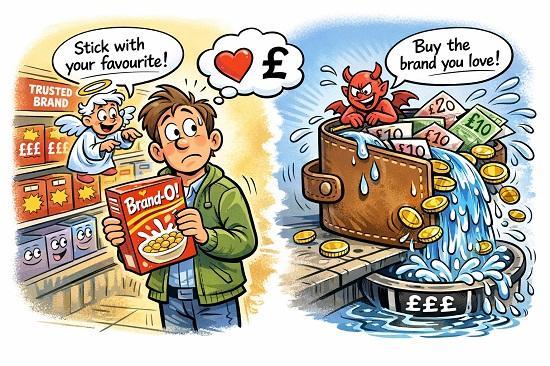
Households across the UK are being hit from all sides. Energy bills remain stubbornly high, fuel costs creep up with every fill, and the weekly shop has quietly become one of the biggest pressure points in the family budget. When every essential is taking a bigger bite out of the wallet, it's no surprise that people are asking the same question. Where can we claw back some control?
One of the simplest, least painful places to start is the supermarket aisle. More specifically the unbranded items.
Supermarkets don't shout about it, but the price gap between branded and own‑label goods has widened dramatically over the past two years. And here's the kicker. For many everyday items, the difference in quality is tiny, while the difference in price is enormous.
A typical trolley contains around 20-25 items where a downgrade is possible. Across a full shop, the weekly saving often lands between £12 and £20.
That’s £624 to £1,040 a year back in a household’s pocket without changing where you shop, what you cook, or how you live.
In a cost‑of‑living squeeze, that’s not small change. That’s the electricity bill. That’s the winter fuel top‑up. That’s the difference between sinking and staying afloat.
Why the Savings Are So Big
Supermarkets don’t manufacture most of their own‑label goods. They contract the same factories that produce the branded versions — often with the same ingredients, same processes, and sometimes even the same machinery.
What you’re paying for with branded goods is:
Advertising
Packaging
Shelf placement
Brand loyalty
A sense of "safety"
What you’re not paying for is a meaningful improvement in quality.
Of course, there are exceptions. Some branded items genuinely are better — ketchup, baked beans, and certain cereals often divide households. But the vast majority of products fall into the "good enough" category, and that’s where the savings stack up.
A Simple Rule - The Downshift Test
The easiest way to start is with the “Downshift Test”:
Swap one branded item for own‑label.
Try it for a week.
If nobody notices, keep it.
If someone notices but doesn’t mind, keep it.
If it’s truly awful, upgrade one level — not necessarily back to branded, but to the mid‑tier supermarket range.
Most families find they can downshift 60-70% of their basket without any real sacrifice.
Why This Matters Now
Households aren’t overspending because they’re careless. They’re overspending because the essentials have quietly become unaffordable. When energy, fuel, council tax, insurance, and rent all rise at once, the weekly shop becomes one of the few areas where people still have agency.
Switching to unbranded goods isn’t about penny‑pinching. It’s about reclaiming control in a system that has stripped it away.
And unlike cutting heating, skipping meals, or driving less, this is a saving that doesn’t hurt.
The Bottom Line
If households want a practical, low‑effort way to soften the blow of rising costs, the supermarket aisle is the easiest place to start. A quiet shift from branded to own‑label could save hundreds of pounds a year money that can be redirected to the bills that can’t be avoided.
In a year where every pound has to work harder, the Great Grocery Downgrade might be the simplest financial win available.