Pumped Storage: Scotland's Missing Link and the Tensions Holding It Back
27th March 2026
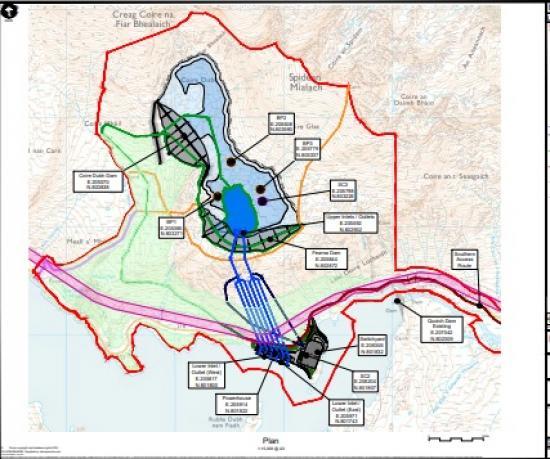
Scotland sits on the edge of an energy paradox. It produces far more renewable electricity than it can use, yet it lacks the storage needed to turn that abundance into security. The BBC's recent reporting on pumped‑storage hydro (PSH) captured this contradiction sharply. Billions of pounds of private investment are ready to flow into new long‑duration storage, but the UK Government has not yet created the market conditions that would allow construction to begin.
At the same time, local planning authorities particularly in the Highlands are wrestling with the environmental cost of building such schemes in some of the most sensitive landscapes in Europe. The proposed Fearna PSH project at Loch Quoich is the latest example, with Highland Council's South Planning Applications Committee recommending objection on environmental and landscape grounds.
Together, these two forces financial delay from Westminster and environmental constraint within Scotland reveal why pumped‑storage, despite being widely recognised as essential, remains stuck in limbo.
The Case for Pumped‑Storage: A Technology Whose Time Has Come
Pumped‑storage hydro is not new. Scotland has operated schemes like Cruachan and Foyers for decades. But the rise of wind power has transformed its importance. When turbines spin through the night and demand is low, PSH can pump water uphill, storing energy that can be released hours or days later. It is, in effect, a giant, long‑duration battery — one that lasts for half a century or more.
Developers argue that Scotland could become a European leader in this technology. Projects such as Coire Glas, Cruachan 2, and the proposed Fearna scheme could add gigawatts of storage, stabilising the grid and reducing reliance on gas during calm spells. Industry voices quoted by the BBC warn that without this storage, Scotland will continue to waste renewable energy through curtailment, paying wind farms not to generate while importing power from elsewhere.
The economic case is equally strong. Construction of large PSH schemes brings long‑term engineering jobs to rural areas, and once built, they anchor skilled employment for decades. For regions like the Great Glen, Argyll, and Lochaber, these projects represent some of the few major infrastructure opportunities available.
The Westminster Bottleneck: A Market Without a Mechanism
Despite broad political support, no new pumped‑storage scheme has been built in the UK since the 1980s. The reason is simple: the market does not reward long‑duration storage. PSH is expensive to build but cheap to operate. Investors need a stable revenue mechanism — similar to Contracts for Difference — to guarantee that the asset will earn enough over its lifetime to justify the upfront cost.
The UK Government has been consulting on such a mechanism for years, but developers say progress is painfully slow. Without a clear policy, projects like Coire Glas remain "shovel‑ready but stuck", as one industry figure put it. The BBC's reporting reflects growing frustration: companies are willing to invest billions, but cannot proceed without certainty.
This is the first half of Scotland's pumped‑storage dilemma.
The Highland Planning Bottleneck: Wild Land, Peat, and Environmental Risk
The second half is unfolding in the planning system. The proposed Fearna PSH scheme at Loch Quoich illustrates the challenge. Fearna PSH Ltd aims to repurpose a 1950s hydro scheme into a modern pumped‑storage facility. On paper, it seems ideal: existing infrastructure, a proven catchment, and a location close to other hydro assets.
But Loch Quoich sits within Wild Land Area 19 (Knoydart) — one of the most remote and visually sensitive landscapes in Scotland. Highland Council's South Planning Applications Committee has recommended objection for several reasons:
Landscape and visual impact
The development would introduce major new structures — an upper reservoir, embankments, access tracks, and a powerhouse — into an area valued for its untouched character. Under Scotland's strengthened planning framework (NPF4), wild land carries significant protection.
Incomplete environmental assessments
Officers identified gaps in the Environmental Impact Assessment, including:
Impacts on golden eagles and other protected species
Effects on peatland and carbon stores
Hydrological changes affecting the River Garry SAC
Insufficient detail on construction traffic and spoil management
When information is incomplete, councils are obliged to object.
Construction impacts in a remote area
The project would require heavy construction traffic on fragile single‑track roads, long construction periods, and significant temporary works. Officers judged that these impacts were not adequately mitigated.
Policy conflicts
The proposal was found to conflict with:
Highland‑wide Local Development Plan policies
NPF4's protections for wild land and peatland
National guidance on renewable energy in sensitive landscapes
In short, the environmental cost was judged too high for the information provided.
A System Pulling in Two Directions
The Fearna case highlights a deeper tension. Scotland needs pumped‑storage to stabilise its renewable‑heavy grid. Developers are ready to build it. But the best hydro sites are often in remote glens, deep corries, and wild land — precisely the landscapes that modern planning policy seeks to protect.
This creates a paradox:
The UK Government is slowing pumped‑storage financially, by failing to create a revenue mechanism.
Scotland is slowing pumped‑storage environmentally, by applying strict protections to the landscapes where PSH is most viable.
Neither barrier is unreasonable on its own. But together, they risk stalling a technology that almost everyone agrees is essential.
Where Does This Leave Scotland?
The BBC story shows that pumped‑storage is no longer a technical debate — it is a policy debate. The Highland Council's objection shows it is also a landscape debate. And the combination of the two explains why Scotland, despite its natural advantages, has not built a new PSH scheme in decades.
The path forward will require:
A UK‑wide revenue mechanism that unlocks investment
A Scottish planning approach that balances environmental protection with national energy needs
Better early‑stage engagement from developers to avoid EIA gaps
A clearer national strategy for where PSH should and should not go
Without these, Scotland risks missing a once‑in‑a‑generation opportunity to build the storage backbone of a renewable future.
The BBC Article
Read the full planning application to be debated at South Planning committee on 1st April 2026
Fearna Pumped Storage Hydro Scheme Planning Application
Pdf 160 Pages