Attacks On Oil - Russia's Oil Routes Explained And Why They Still Matter
29th March 2026
Russia's oil export system is often described as a network, but it is better understood as a geopolitical lifeline. One that connects fields in Siberia to consumers across Europe and Asia through a combination of pipelines and maritime routes.
Recent Ukrainian drone strikes on key Baltic Sea export infrastructure have drawn attention to how this system works, and more importantly, how resilient—or vulnerable it really is.
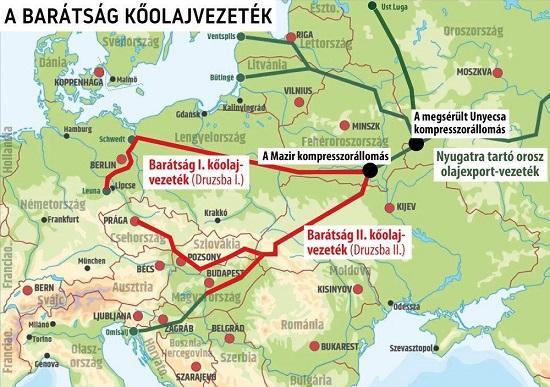
At the heart of the European side of this network lies the Druzhba pipeline, one of the longest oil pipelines in the world and a relic of Soviet-era energy integration. Unlike Russia's Baltic ports, which ship oil by tanker across the sea, Druzhba carries crude oil overland directly into Central Europe. It splits into northern and southern branches, with the southern line running through Ukraine and supplying countries such as Hungary and Slovakia. These two states, due to their geography and refinery configurations, have remained dependent on Russian crude and were granted exemptions from broader EU sanctions that banned seaborne imports.
This distinction between pipeline and maritime oil routes is critical. The recent attacks have focused on ports like Primorsk and Ust-Luga key nodes in Russia's Baltic export system. These facilities are responsible for loading millions of barrels of oil onto tankers bound historically for European markets. When such ports are disrupted, Russia's ability to export oil by sea is immediately constrained. However, this does not automatically halt flows through Druzhba. The pipeline operates independently of these ports, meaning that, at least in the short term, Hungary and Slovakia are unlikely to face a direct and immediate cutoff purely as a result of Baltic infrastructure damage.
Yet the system is more interconnected than it might first appear. Oil production, refining, storage, and transportation form a chain, and disruptions in one part can reverberate throughout. If port capacity is significantly reduced, Russia may be forced to curtail production or redirect flows elsewhere. In such a scenario, decisions would have to be made about which customers receive priority.
Increasingly, Russia has oriented its exports toward Asia, particularly via the Eastern Siberia-Pacific Ocean pipeline and associated Pacific ports. These routes, far removed from the conflict zone, offer a more stable outlet for Russian crude and are strategically aligned with growing demand from countries such as China and India.
This shift raises an important possibility even if Hungary and Slovakia are not physically cut off, they could experience indirect supply pressure. Russia, facing constrained export capacity in the west, might choose to allocate more oil eastward where geopolitical relationships are stronger and sanctions less restrictive. Alternatively, broader disruptions to infrastructure—whether through damage, insurance challenges, or logistical bottlenecks—could reduce overall export volumes, tightening supply across all routes, including Druzhba.
How Oil Prices Might Be Affected
For Europe, the implications are both immediate and long term. In the short term, any reduction in Russian exports contributes to upward pressure on global oil prices, particularly in markets that had previously relied on those supplies. Although most EU countries have already diversified away from Russian crude, the remaining flows still play a stabilizing role in certain regional markets. For Hungary and Slovakia, even a partial disruption could necessitate costly adjustments, such as importing non-Russian oil via the Adriatic Sea and adapting refineries designed specifically for Russian blends.
[b]Reducing Dependence On Russian Oil Has Consquences[/b[
Over the longer term, these developments reinforce a broader realignment already underway since 2022. Europe continues to reduce its dependence on Russian energy, investing in alternative suppliers and infrastructure. Russia, in turn, accelerates its pivot to Asia, reshaping global trade flows in the process. What emerges is a more fragmented energy landscape, where oil no longer moves along purely economic lines but is increasingly shaped by geopolitical pressures and security risks.
In this context, the recent strikes on Baltic infrastructure are not just isolated events but part of a larger transformation. They highlight the vulnerabilities of maritime export routes, the enduring importance of pipelines like Druzhba, and the complex interplay between geography, politics, and energy markets. While Hungary and Slovakia may not be immediately cut off from Russian oil, their position within this shifting system is becoming more precarious, illustrating how even indirect disruptions can carry significant consequences in an interconnected global energy network.
Map
A Barátság kőolajvezetek" translates to English as:
The Friendship Pipeline
It is one of the longest oil pipelines in the world, carrying oil from Russia to various parts of Central and Eastern Europe.