When the Bank of England Hesitates: How Rate Uncertainty Lands in Rural Scotland
9th April 2026
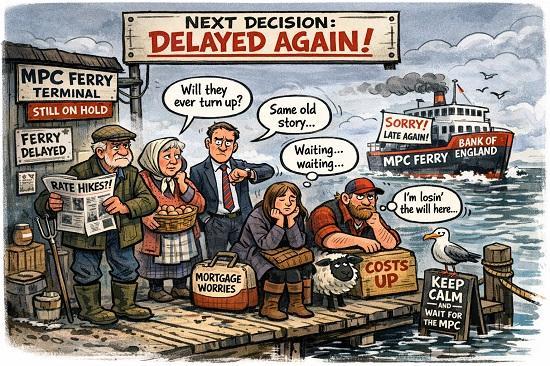
In London, interest‑rate decisions are discussed in the language of markets, gilt yields, and inflation expectations. In rural Scotland, the conversation sounds very different. It happens in the kitchen, at the mart, in the back office of a village shop, or in the cab of a lorry waiting for a delayed ferry.
For people here, the Bank of England's hesitation — the "will they, won’t they" over the next rate move isn’t an abstract economic puzzle. It’s a pressure that seeps into daily life.
Households
Living with the Long Shadow of the Mortgage Letter
For many rural households, the biggest fear isn’t a rate rise itself it’s the uncertainty.
Families who fixed their mortgages during the pandemic are now watching the calendar with a kind of quiet dread. They know the day is coming when the bank envelope drops through the letterbox, and whatever the Bank of England decides will decide their monthly budget for years.
In places where wages are lower, fuel costs are higher, and travel is unavoidable, even a small change in rates can feel like a tightening of the belt that never loosens again.
People talk about it in practical terms:
“If the rate goes up, that’s the heating budget gone.”
“If they hold, we might just manage the car repairs.”
“If they cut — well, that would be a miracle.”
But no one plans on miracles.
Small Businesses
Running on Thin Margins and Thinner Nerves
For rural businesses, uncertainty is worse than bad news.
A crofting family thinking about replacing a tractor can’t decide whether to borrow now or wait. A small hotel on the west coast wonders whether to invest in new rooms before the summer season. A haulier serving the islands is trying to work out if the cost of renewing a lorry will rise again before the Bank finally makes up its mind.
In rural Scotland, businesses don’t have the luxury of large cash reserves. They operate on margins that depend on:
ferry timetables that may or may not hold
fuel prices that jump with every Middle East headline
tourism seasons that can be wiped out by a wet July
Add interest‑rate uncertainty on top, and every decision becomes a gamble.
Island Communities
When Uncertainty Meets Fragility
On the islands, the effect is sharper still.
A shop in Tiree or Barra that wants to expand its storage space can’t risk taking out a loan if the Bank might raise rates next month. A seafood processor in Mull can’t plan for new equipment when borrowing costs could swing unpredictably.
And because everything absolutely everything costs more to transport, any increase in borrowing costs hits harder than it would on the mainland.
When the Bank of England hesitates, businesses hesitate too. And in fragile economies, hesitation is dangerous. It means delayed investment, postponed repairs, and opportunities that quietly slip away.
The Emotional Climate - A Weariness That Doesn’t Make Headlines
What you hear most in rural Scotland isn’t anger it’s weariness.
People are used to coping with distance, weather, and unreliable infrastructure. But interest‑rate uncertainty feels different. It’s not a storm you can see coming over the hills. It’s a fog: shapeless, lingering, impossible to plan around.
Households hold back on spending.
Businesses delay decisions.
Communities feel the drag of caution.
And all the while, the Bank of England debates whether to hold, hike, or wait.
The Quiet Truth
For rural Scotland, the biggest impact of rate uncertainty isn’t the number itself.
It’s the pause.
The hesitation.
The inability to plan.
In a place where resilience is a way of life, uncertainty is the one thing that makes even the most resilient communities feel exposed.