UK exposes covert Russian submarine operation in and around UK waters
9th April 2026
The British military has exposed a covert Russian submarine operation in and around UK waters, forcing the vessels to retreat back to Russia.
UK reveals Russian submarine operation in and around British waters.
British personnel, ships and aircraft deployed to send a message to President Putin and keep the UK and our allies secure.
Operation was part of a Russian bluff while other specialist vessels conducted nefarious activity near critical underwater infrastructure.
British aircraft and warships identified a Russian attack submarine entering international waters in the High North several weeks ago, and tracked its activity around the clock.
Service personnel quickly established that the submarine was deployed as a distraction and the UK worked closely with allies - including Norway - to identify and monitor other Russian undersea naval units from the Main Directorate of Deep Sea Research (known as GUGI) conducting nefarious activity over critical undersea infrastructure elsewhere.
Please see below a declassified image of surface and sub-surface GUGI-associated vessels based at Olenya Guba in Russia.
The UK and its allies began a campaign of overt action to ensure the Russian units knew that they were being monitored and were no longer covert as Putin had planned.
Both the GUGI units and the Akula class submarine have subsequently retreated home, having failed to complete their operation in secrecy.
Prime Minister Keir Starmer said:
I am determined to protect the British people from paying the price for Putin's aggression in their household bills.
That is why we will not shy away from taking action and exposing Russia's destabilising activity that seeks to test our resolve.
Our Armed Forces are among the best in the world, and the British public should be in no doubt that this government will do whatever it takes to defend our national and economic security, wherever in the world that is needed.
Defence Secretary John Healey MP said:
I want to pay tribute to the UK personnel who spent many days tracking these Russian submarines in extremely challenging and treacherous conditions. While the eyes of many - understandably - were on the Middle East, our British Armed Forces were simultaneously responding to rising Russian threats north of the UK.
As we act to defend our interests and Allies in the Middle East, we are tackling increasing threats to NATO in the High North, maintaining strong support for Ukraine and protecting our UK homeland.
To Putin, I say this: we see you, we see your activity over our underwater infrastructure. You should know that any attempt to damage it will not be tolerated and would have serious consequences.
Subsea fibre optic cables are essential for all digital communications, with over 99% of international data traffic, including voice calls and internet data, travelling through subsea cables. This underpins global banking, trade, and communications.
Conducted under the cover of events in the Middle East, the Russian attack submarine and multiple vessels from the Main Directorate of Deep Sea Research (known as GUGI) entered international waters in the High North.
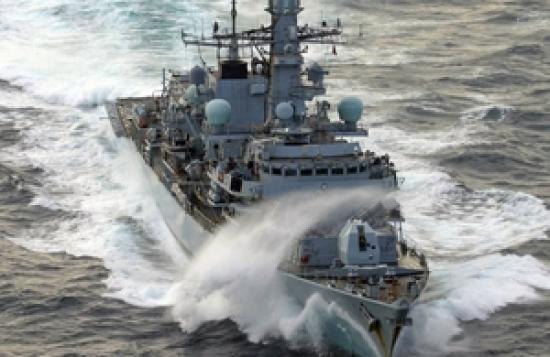
The Royal Navy deployed a Type 23 frigate HMS St Albans, RFA Tidespring and Merlin helicopters to track the attack submarine as it operated near British territorial waters.
Working alongside RAF P8 aircraft, the submarine was tracked 24/7 in an operation carried out with allies.
As part of the operation, which saw British ships cover thousands of miles, the RAF and Navy deployed sonobuoys to track the Russian vessels.
While the Russian attack submarine has now headed back towards Russia, the UK has kept both naval vessels and aircraft ready to respond should Russian vessels return.
GUGI is Russia's long-running military programme to develop capabilities to be deployed from specialist surface vessels and submarines, that are intended to survey underwater infrastructure during peacetime, but then damage or destroy infrastructure during a conflict.
British defences were previously tested by GUGI when the Russian spy ship Yantar sailed near UK waters last year. The ship was tracked by a Royal Navy frigate and RAF P8s, with lasers being directed at British pilots.
The Yantar is one the key vessels used by Russia to threaten the UK and our allies. Over the last two years, the UK has seen a 30% increase in Russian vessels threatening UK waters.
This comes as the Royal Navy completes ten days of intensive monitoring operations of Russian warships and a submarine which entered UK waters in the English Channel and North Sea. HMS Somerset and HMS Mersey, supported by tanker RFA Tideforce and Wildcat helicopters, tracked the movements of a Russian destroyer, frigate, landing ship, and Kilo-class submarine. The Royal Navy ships used their powerful array of radars and sensors to track the Russian vessels.
The UK is stepping up on its commitment to protect our critical underwater infrastructure. This includes an additional £100 million to support our vital P8 submarine hunting aircraft.
Delivering on the recommendations in the Strategic Defence Review, the Atlantic Bastion programme is transforming the Royal Navy's submarine hunting capabilities - combining autonomous systems and advanced sensors with the Royal Navy's fleet of warships. The project has already received millions in investment to develop and test innovative technology.
This comes as the government is overseeing the biggest uplift in defence spending since the Cold War, reaching of 2.6% of GDP from 2027, and with £270 billion investment in defence across this Parliament.
The UK continues to closely monitor the situation and is working closely with allies to track and deter any activity that threatens British interests.
Defence Secretary No9 speech - 09 April 2026
The Defence Secretary held a media briefing at No9 today to give an operational update on Russian activity in the Atlantic.
Today, I am revealing details of a recent military operation undertaken by Russia. And in doing so, I’m doing this to expose the continuing Russian activity that threatens the UK and to highlight our constant readiness to respond.
In the last few weeks, while the eyes of many, were trained on the Middle East, the UK - in partnership with Norway and other Allies – have responded to increased Russian activity in the Atlantic, north of the UK.
This operation involved a Russian Akula Class Submarine and a concurrent deployment of two Specialised Submarines from GUGI, that’s Russia’s Main Directorate for Deep-Sea Research. Last November, I outlined how GUGI units – including the Spy ship YANTAR – are vessels directed by President Putin to conduct hybrid warfare activities against the UK and its Allies, specifically around Critical Undersea Infrastructure.
And for the first time today we are releasing the images of the GUGI base and of these vessels.
They are designed to survey underwater infrastructure during peacetime, and sabotage it in conflict. In response to the Russian submarines, I can confirm that I deployed our Armed Forces to track and deter any malign activity by these vessels.
A Royal Navy warship and Royal Air Force P8 aircraft, alongside Allies’, ensured the Russian submarines were monitored 24/7. The Akula Submarine subsequently retreated home having been closely tracked throughout and we continued to monitor the two GUGI submarines, in and around wider UK waters.
Our Armed Forces left them with no doubt that they were being monitored that their movements were not covert as President Putin planned and that their attempted secret operations had been exposed.
Those GUGI submarines have now left UK waters and headed back north, and this operation – which lasted more than a month – has now concluded.
Our aircraft flew over 450 hours. Our frigate covered several thousand nautical miles. 500 British personnel were involved in the response.
I am making this statement to call out this Russian activity. And to President Putin, I say this: we see you, we see your activity over our cables and pipelines. And you should know that any attempt to damage them will not be tolerated, and will have serious consequences.
This also reminds us why the seabed matters, especially for Britain. We are an island nation. Connection is everything, for our economy and our security and beneath our waters lies a vast network of cables and pipelines on which our way of life depends.
Half of the gas that heats our homes. 99 per cent of international telecoms and data traffic. Trillions of pounds of global trade each day.
And for all the reasons the seabed matters so much to us, are the reasons that make it the prime target for our adversaries.
The UK’s undersea network is highly resilient. But the threats are increasing. And so, we are stepping up our action to defend it.
We’re providing an extra £100 million for our vital P8 submarine hunting aircraft. We’ve launched the Atlantic Bastion programme, to combine the latest autonomous technologies with the very best warships and aircraft to create a British-built hybrid naval force.
And we’re making the biggest sustained increase in defence spending since the end of the Cold War, putting an end to the hollowing out and underfunding under the previous government.
Our Strategic Defence Review confirms the UK faces and I quote ‘growing Russian aggression in all domains’.
And the High North is no less vital to our UK security today, than it was when the current conflict erupted in the Middle East
Putin’s covert operation failed because this Government is delivering our first duty, protecting Britain
Our resolve to track, expose and confront the Russian threat remains absolute. And that’s why, this year, we are deploying our carrier group where it is most needed – the High North – and why we’re leading NATO’s new mission, Arctic Sentry.
I also want to thank our Norwegian allies with whom we have cooperated closely throughout.
Our shared commitment to confront Russian aggression in the North Atlantic is at the heart of our Lunna House Agreement and together, we are now building a combined fleet of new submarine hunting frigates and new uncrewed systems.
Let me finish where I began with praise for the professionalism of our outstanding Armed Forces. They are truly the best of Britain.
And when a crisis erupts noisily and dangerously as it has done in the Middle East, I understand people questioning why all UK military assets and personnel have not been deployed to deal with it. But that is not in Britain’s national interest. The greatest threats are often unseen and silent. And as demands on defence rise, we must deploy our resources to best effect.
Those resources will rise in the coming years because of our government’s record defence investment.
And so, as we act to defend our interests and our Allies in the Middle East, we also step up to meet the increasing threats in the High North.
To strengthen NATO, to stand with Ukraine. and above all, we will always act on the first duty of any government. To protect our UK homeland and keep the British people safe.
Secure at home, and strong abroad.
Thank you.
PHOTO
HMS St Albans Type 23 Frigate on operations.