When Local Objection Meets National Policy: The Spittal Battery Storage Decision
21st April 2026
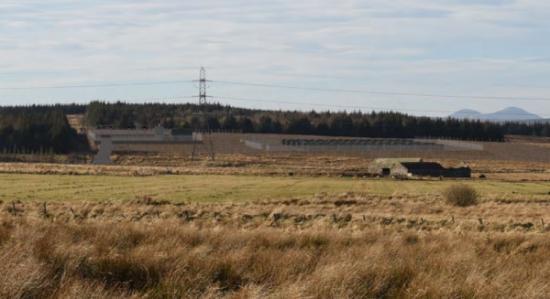
A familiar tension sits at the heart of many modern planning decisions: the clash between local opposition and national priorities. The proposed battery energy storage system near Spittal is a clear example of how that tension is resolved not in favour of unanimity, but in favour of policy.
Despite objections from the Halkirk community council, planning officers at Highland Council have recommended that no objection be raised to the scheme. At first glance, this may appear dismissive of local concerns. A closer reading of the report, however, reveals something more structured - a systematic balancing exercise in which those concerns are acknowledged, but ultimately outweighed.
One of the most prominent objections relates to landscape and visual impact. The community council argues that the development represents an industrial intrusion into a rural setting, compounded by the cumulative presence of other energy infrastructure.
The officer’s response does not deny this characterisation entirely. Instead, it reframes the context: the site is already influenced by existing infrastructure, particularly the nearby substation, and the additional impact while real is judged to be localised rather than far reaching. In planning terms, that distinction matters. Harm that is contained and limited rarely tips the balance on its own.
Closely tied to this is the concern about cumulative development. Residents see a steady layering of infrastructure and question whether their area is being disproportionately burdened. The report’s response is telling. Rather than resisting the idea of concentration, it embraces it as an expected outcome of national energy strategy. Infrastructure, the logic goes, should be located where it can connect efficiently to the grid. In that sense, what appears to communities as overdevelopment is interpreted by planners as strategic alignment.
Other objections such as noise, disturbance, and loss of rural character are handled in a more technical way. These are not dismissed, but translated into matters of control. Noise can be limited by condition; layout and distance can mitigate disturbance. Once a concern can be managed through conditions, it tends to lose its force as a reason for refusal. This is a recurring feature of planning reports - the transformation of objections into technical parameters.
Environmental concerns, including impacts on peat, habitats, and water, are treated with similar logic. The existence of risk is acknowledged, but the emphasis shifts to mitigation. With no objections from a long list of statutory consultees and no prediction of significant residual effects, these issues are effectively neutralised within the planning balance.
Perhaps the most fundamental disagreement lies in the question of fairness. The community council points out that the development primarily serves national energy needs, while its impacts are felt locally. The report does not dispute this. Instead, it places it within the broader framework of the planning system, where national policy carries substantial weight. Infrastructure of this kind is not judged solely on who benefits most directly, but on its contribution to wider strategic goals particularly the transition to a low-carbon energy system.
This is the crux of the decision. The harms identified landscape change, cumulative impact, local disturbance are all considered real but limited. The benefits, by contrast, are framed as national, strategic, and urgent. When these are set against each other, the outcome becomes almost inevitable.
What the Spittal case illustrates is not a failure to hear local voices, but the limits of their influence within a policy driven system. Community objections shape the analysis, but they do not necessarily determine the outcome. In a planning landscape increasingly dominated by climate and energy imperatives, that pattern is likely to become more common.
The recommendation to raise no objection is therefore less a judgement on the validity of local concerns, and more a reflection of how those concerns are weighted. It is a reminder that in the hierarchy of planning decisions, local impact matters—but national policy often matters more.
A Closer Look At the Community Council Objections
Objections vs Officer Responses
1. Landscape and visual impact
Community council concern:
The development would industrialise a rural landscape.
Cumulative impact with existing and proposed energy infrastructure is too great.
Officer response:
The site is already influenced by existing infrastructure (notably the nearby substation and energy developments).
While there is landscape impact, it is localised and not significant at a wider scale.
Cumulative effects were assessed and found to be acceptable in planning terms.
Conclusion: Harm acknowledged, but not severe enough to justify objection.
2. Cumulative development pressure
Community council concern:
The area is becoming saturated with energy developments.
Communities are bearing a disproportionate burden.
Officer response:
Cumulative impact is a valid consideration and was assessed.
However, national policy explicitly anticipates clusters of energy infrastructure where grid connections exist.
The location near Spittal substation is therefore strategically appropriate.
Conclusion: Clustering is expected and policy-supported.
3. Impact on local amenity (noise, disturbance, character)
Community council concern:
Noise and general disturbance could affect residents.
The development would erode rural character.
Officer response:
Noise impacts can be controlled through planning conditions.
Separation distances and design mitigation reduce effects on residents.
Changes to character are acknowledged but not considered unacceptable.
Conclusion: Impacts manageable through conditions.
4. Environmental concerns (peat, ecology, water)
Community council concern:
Potential damage to peatland, habitats, and hydrology.
Officer response:
Detailed assessments were carried out.
With mitigation measures, no significant residual effects are predicted.
Key consultees (e.g. environmental bodies) did not object.
Conclusion: Environmental risks are controlled and acceptable.
5. Scale and precedent
Community council concern:
The scale of the development is inappropriate.
Approval could set a precedent for further large-scale industrial projects.
Officer response:
Scale is justified by grid and energy system needs.
Each application is assessed on its own merits—precedent is not determinative.
National policy strongly supports infrastructure of this scale.
Conclusion: Scale aligns with strategic need.
6. Lack of local benefit vs national benefit
Community council concern:
The project serves national energy goals, but local communities bear the impacts.
Officer response:
This imbalance is acknowledged but is inherent in national infrastructure projects.
The planning system requires weighing local impacts against national benefits.
In this case, national need carries significant weight.
Conclusion: National interest outweighs localised harm.
Read the full report HERE
Pdf 90 Pages