The Scottish Fishing Industry Today: Fleet Size, Key Ports, and What Is Really Happening to Catches
27th April 2026
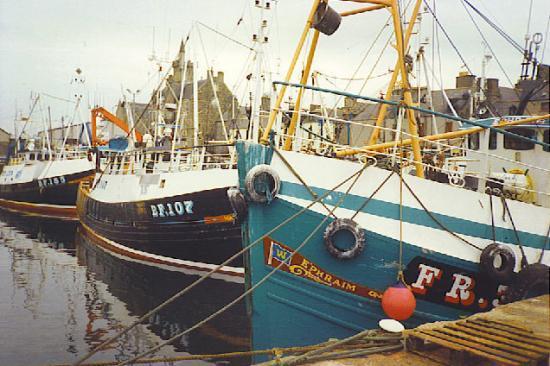
The Scottish fishing industry remains one of the most important sectors in the country’s rural and coastal economy, but it is also undergoing a long period of structural change.
While the industry still lands hundreds of thousands of tonnes of fish each year and generates significant export value, the composition of the fleet, the geography of activity, and the balance between different types of fishing are all shifting. Understanding these trends is essential to seeing what is really happening beneath the surface of Scotland’s historic fishing sector.
At present, Scotland has just under 2,000 active fishing vessels. This figure has remained relatively stable in recent years, but it masks a gradual long-term decline in fleet numbers, particularly among larger vessels. Over the past decade, the number of bigger boats has fallen, while the overall fleet has been maintained largely through the persistence of smaller inshore vessels. The result is a fleet that is numerically large but economically uneven, with a small number of large boats responsible for a disproportionate share of total landings.
One of the defining features of the Scottish fleet is its structure. Around three-quarters of vessels are under 10 metres in length, operating mainly in inshore waters. These boats are typically involved in shellfish fishing, including crab, lobster, and scallops, and they form the backbone of many coastal communities. However, the largest economic returns come from a relatively small number of large pelagic vessels, which operate offshore and target species such as mackerel and herring. This division between small-scale inshore fishing and large-scale industrial fishing is central to understanding the modern industry.
Geographically, the industry is heavily concentrated in a few key regions. The northeast of Scotland dominates in terms of volume and value, with Peterhead standing out as the largest fishing port in the United Kingdom, closely followed by Fraserburgh. These ports are central hubs for pelagic fishing and large-scale landings. In contrast, the Northern Isles particularly Shetland and Orkney—also play a major role, especially in pelagic fishing and high-quality shellfish production. On the west coast, ports such as Mallaig, Ullapool, and Oban support a smaller but important fleet focused largely on shellfish and inshore fishing. Smaller east coast ports such as Eyemouth and Pittenweem contribute to a more mixed but lower-volume sector.
Despite the stability in vessel numbers, there has been a gradual decline in the overall size of the fleet over time. This is partly due to the UK’s licensing system, which limits the number of vessels that can operate by tying capacity to existing licences rather than allowing unrestricted expansion. As a result, entry into the industry is constrained, and changes in fleet size tend to occur through consolidation rather than growth. Larger vessels have declined more noticeably in recent years, while smaller boats have remained relatively stable.
In terms of output, Scotland continues to land substantial quantities of fish and shellfish each year. Recent figures show total landings of just over half a million tonnes annually, with a total value in the region of £700 million. However, the composition of these catches is shifting. Pelagic species such as mackerel dominate both volume and value, accounting for the largest share of income in the industry. This reflects the importance of offshore fishing fleets operating in deeper waters.
Whitefish, including haddock and cod, remain important but have a smaller overall share than in previous decades. Meanwhile, shellfish has become increasingly significant, particularly for the inshore fleet. Species such as nephrops (langoustines), crab, and scallops are central to many coastal economies, especially along the west coast and in island communities. In many cases, shellfish now provides a more stable income stream for small-scale fishers than traditional whitefish catches.
One of the most important trends in recent years has been the increasing concentration of value in fewer vessels. While the number of boats has not dramatically changed, overall production is increasingly driven by larger, more efficient vessels operating in pelagic fisheries. At the same time, employment in the sector has declined gradually, reflecting both technological change and consolidation within the industry.
What is emerging is a fishing industry that is less about expansion and more about specialisation. Scotland’s waters remain highly productive, but the structure of the fleet and the nature of demand are evolving. Large-scale pelagic fishing continues to dominate export value, while smaller inshore fleets play a vital but more localised economic role. The result is an industry that is still globally significant but increasingly divided between industrial-scale offshore operations and traditional coastal fisheries.
In conclusion, the Scottish fishing industry today is best understood not in terms of decline or growth alone, but as a process of transformation. Fleet numbers are gradually decreasing at the margins, catches remain strong but unevenly distributed across species, and the geography of fishing continues to reflect long-standing regional strengths. While the industry faces challenges, it also remains deeply embedded in Scotland’s economy and identity, adapting to new economic realities while maintaining its historic role in coastal communities.
PHOTO
Colin Smith - Fishing Boats in Fraserburgh Harbour.