A Nation in Decline: Why Falling Healthy Life Expectancy Marks a Turning Point for the UK
28th April 2026
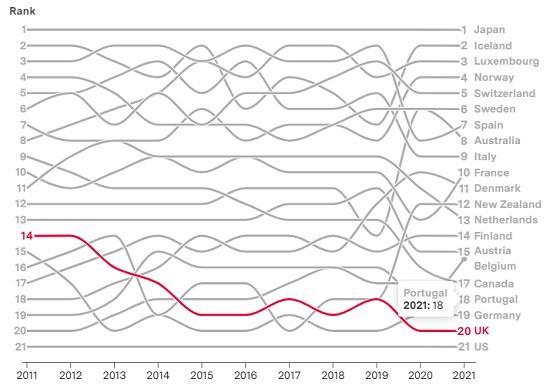
The latest analysis from the Health Foundation delivers a stark warning. The UK is no longer just struggling with poor health outcomes it is moving backwards.
What was once a gradual story of improvement has become a clear reversal, prompting the report to describe the moment as a “watershed” for the nation’s health.
At the heart of the analysis lies a crucial distinction: it is not simply how long people live that matters, but how long they live in good health. This measure—healthy life expectancy—captures the years people spend free from illness or disability. And by this metric, the UK is now in decline.
A Decade of Reversal
Over the past decade, healthy life expectancy in the UK has fallen by more than two years, dropping to just over 60 years for both men and women. This means that, on average, people are now spending a larger portion of their lives in poor health, despite overall life expectancy remaining relatively stable.
This divergence is striking. In most comparable high-income countries, healthy life expectancy has continued to rise, albeit slowly. The UK, by contrast, is one of only a handful of nations where it has declined—and one of the worst affected.
The implication is clear: improvements in medicine and longevity are no longer translating into better quality of life.
Ill Health Before Retirement
One of the most alarming findings is how early ill health now begins. In more than 90% of UK areas, healthy life expectancy falls below the state pension age of 66.
In practical terms, this means that most people can expect to experience years of ill health before they even retire. In the most deprived communities, healthy life expectancy drops below 55 years, pushing illness deep into working age.
This shift has profound consequences—not just for individuals, but for the economy. A growing number of people are unable to work due to long-term sickness, reducing productivity and increasing pressure on public services.
A Deepening Divide
The report also highlights widening health inequalities across the UK. The gap in healthy life expectancy between the richest and poorest areas now exceeds 19 years for men and 20 years for women.
This is not a marginal disparity—it is a structural divide. People in affluent areas enjoy decades more life in good health than those in deprived communities.
Such inequalities reflect broader social determinants: income, housing, education, and access to healthy environments. Health, in this sense, is not merely a medical issue but a social one.
What’s Driving the Decline?
The causes of this downturn are complex but interconnected. Rising levels of chronic illness—linked to obesity, poor diet, smoking, alcohol use, and mental health challenges—are key contributors.
At the same time, the UK has seen persistent socioeconomic inequalities and a lack of sustained public health investment. Preventable conditions, including many cancers and cardiovascular diseases, continue to place a heavy burden on the population.
The COVID-19 pandemic has also played a role, exacerbating existing health issues and disrupting care. However, the report makes clear that many of these trends predate the pandemic, pointing to deeper, long-term structural problems.
A “Watershed Moment”
The Health Foundation’s characterisation of this moment as a “watershed” is deliberate. It signals a turning point: a recognition that current approaches are failing to improve population health.
The report argues for a fundamental shift in policy—from treating illness to preventing it. This means addressing the root causes of poor health: unhealthy environments, economic inequality, and lifestyle risk factors.
Without such change, the UK risks entrenching a cycle of declining health, reduced economic participation, and growing strain on public services.
A Choice for the Future
The decline in healthy life expectancy is more than a troubling statistic—it is a reflection of how society is functioning. It reveals a country where longer lives are not necessarily better lives, and where opportunity for good health is unevenly distributed.
Yet the report also presents a choice. This “watershed moment” can either mark the beginning of continued decline, or the catalyst for a new approach—one that prioritises prevention, equity, and long-term wellbeing.
The direction the UK takes now will shape not only how long people live, but how well they live for decades to come.
Authors
Andrew Mooney Anne Alarilla Francesca Cavallaro
Read the full report HERE