The Slow Death of the Tumble Dryer: How High Energy Costs Are Reviving the Clothes Horse
2nd May 2026
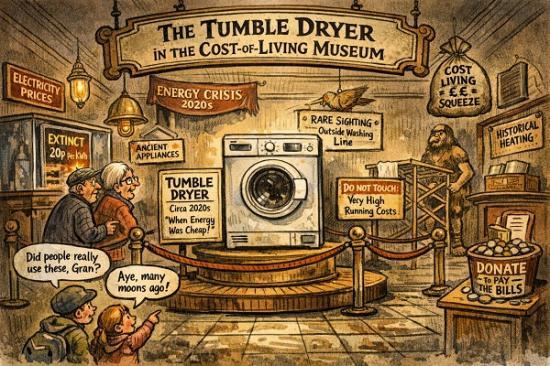
For decades, the tumble dryer symbolised convenience. It was the appliance that freed people from damp winters, endless laundry days, and the tyranny of the washing line. In the Highlands, where weather can turn in minutes and daylight disappears for half the year, the dryer became almost essential. But the energy crisis has rewritten the rules of domestic life, and the tumble dryer is now facing a quiet but unmistakable retreat.
Electricity prices may no longer be at their 2022 peak, but they remain stubbornly high especially in Scotland, where distribution costs push bills above the UK average. A single tumble‑dryer cycle can cost anywhere from 50p to £1.20, depending on the model and tariff. For households already squeezed by food inflation, fuel costs, and rising standing charges, that’s no small decision. The dryer, once a background hum in the home, has become a luxury appliance that people think twice about switching on.
The cultural shift is unmistakable. Clothes horses, once dismissed as old‑fashioned, are back in living rooms. Heated airers a the modern compromise sell out every winter. Ceiling pulleys, a staple of Highland cottages for generations, are being reinstalled in new‑build homes. And on rare dry days, washing lines across Caithness look like sails in the wind again.
This isn’t nostalgia it’s economics. Households are rediscovering the logic of their grandparents: use the free heat when you can, dry indoors when you must, and save the expensive appliance for emergencies. The tumble dryer hasn’t disappeared, but it has been demoted. It’s no longer the default it’s the backup.
There’s also a psychological shift. People feel more in control when they avoid using high‑energy appliances. In a world where bills arrive with a sense of dread, choosing the clothes horse over the dryer feels like a small act of defiance. It’s the same instinct that has revived slow cookers, air fryers, and batch cooking: a return to practical, low‑energy domestic habits that once defined rural life.
In the Highlands, the change is even more pronounced. Long winters, damp air, and limited indoor space make drying clothes a challenge, but the cost of running a dryer is simply too high for many households to ignore. Some families now plan laundry around weather windows; others use the heat from the stove or the oven on baking days. It’s a patchwork of old and new methods, stitched together by necessity.
Will the tumble dryer disappear entirely? Probably not. But its era as an everyday appliance is fading. High energy costs have forced a cultural reset, and the clothes horse humble, silent, and cheap has stepped back into the centre of domestic life. In a way, it’s a return to the rhythms of the past: slower, more deliberate, and shaped by the realities of the weather and the bill.
And in the Highlands, where resilience is a way of life, that shift feels less like a loss and more like a return to common sense.
Drying clothes the old fashioned way may take much longer but does it matter if it takes all day to dry towels in summer time. When you get the chance hang it all outside if you can. In winter perhaps time your washing to dry on sunny days as things will dry in the wind and you can finish them off with a short tumble.
Warning
Drying clothes indoors creates lots of moisture that may help create mould. When using clothes horse or other ways make sure plenty of air flow with open windows or doors.