Caithness Cost?of?Living Forecast 2026–27
12th May 2026
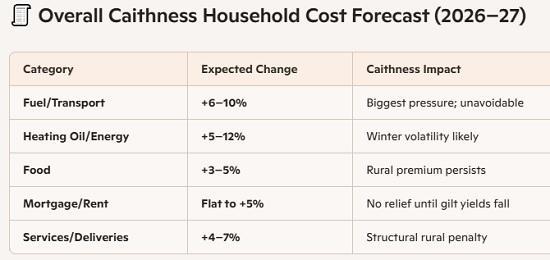
Caithness is heading into another 12–18 months of elevated living costs, driven by fuel, food, energy, and mortgage pressures that hit rural households harder than the Scottish average.
Even if UK inflation falls on paper, the Caithness lived reality will stay higher because distance, transport, and weak local competition amplify every national shock.
Caithness Cost‑of‑Living Forecast (2026–27)
Fuel & Transport Costs — the biggest pressure
Transport remains the defining cost driver for Caithness.
Expect petrol/diesel to stay in the £1.55–£1.75 range through 2026.
Global tensions + a weaker pound = imported fuel inflation.
Long commutes (Wick–Thurso, Wick–Inverness, Thurso–Dounreay) mean households feel every 5p rise.
Bus and rail services remain thin; car dependency is unavoidable.
Forecast:
Transport costs +6–10% over the next year.
For a two‑car household: £350–£600 extra annually.
Guided links:
fuel price outlook
impact of weak pound on fuel
Heating Oil & Energy — volatile and still high
Off‑gas‑grid homes dominate Caithness.
Heating oil likely to stay high per litre band. Today 12 May 2026 Boilerjuice.com showing 113 per litre
A weaker pound pushes oil up even if global prices stabilise.
Electricity standing charges remain disproportionately high in the north.
Forecast:
Annual heating‑oil spend for a typical Caithness home:
£1,800–£2,400, with winter spikes possible.
Guided links:
heating oil forecast
off‑grid energy costs
Food Prices — falling slowly nationally, not locally
Supermarket choice is limited; transport adds a rural premium.
National food inflation is easing, but Caithness prices lag by 6–12 weeks.
Fewer retailers = weaker price competition.
Fresh produce remains expensive due to haulage costs.
Forecast:
Food bills +3–5% over the next year.
Rural premium persists: £6–£12 extra per weekly shop compared to Inverness.
Guided links:
rural food inflation
Caithness retail contraction
Housing & Mortgages — no relief yet
Gilt yields rising and mortgage rates rising.
5‑year fixes likely to stay around 5–5.5%.
Remortgaging remains painful for households who locked in at 1–2%.
Rural incomes make affordability tighter.
Forecast:
Mortgage costs flat to slightly higher until late 2026.
Rent pressures continue due to limited supply.
Guided links:
mortgage rate outlook
gilt yields and mortgages
Delivery, Services & Rural Premium — structural, not cyclical
The “Highland surcharge” is not going away.
Courier surcharges remain common.
Tradespeople are scarce; call‑out fees rising.
NHS and council service pressures increase private costs (travel to Raigmore, childcare gaps, etc.).
Forecast:
General rural premium +4–7% across services.
Guided links:
Highland delivery surcharges
rural service access
Total household cost increase:
£1,200–£2,400 per year for a typical Caithness family. There is a wide variation depending on individual circumstances.
Why Caithness feels inflation more sharply[b]
Three structural reasons:
Distance multiplies every cost
Fuel, food, trades, deliveries — all distance‑priced.
Lack of competition
Fewer supermarkets, fewer lenders, fewer tradespeople.
Centralisation
More travel to Inverness for healthcare, services, and shopping.
This is why “UK inflation at 2%” never matches Caithness reality.
[b]What households can realistically do
A Highland‑specific resilience list:
Reduce fuel exposure: combine trips, car‑share, remote work days.
Bulk‑buy heating oil with neighbours to secure lower per‑litre rates.
Switch to fixed‑rate electricity if volatility returns.
Use local veg schemes to avoid supermarket haulage premiums.
Check mortgage portability if moving within Caithness.
Guided links:
Caithness household resilience tips
heating oil buying groups