Seeing the Problem Isn’t Enough: Why Britain Needs a New Approach to Fixing Its Public Services
14th May 2026
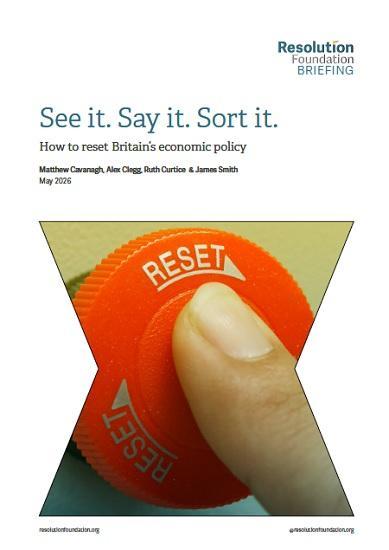
Britain’s public services are in a state that no one can ignore, yet the political system seems unable to confront the scale of the challenge. That is the central argument of the Resolution Foundation’s latest report, which sets out a stark but measured assessment of where the country stands in 2026.
The message is not that decline is inevitable, nor that the system is beyond repair, but that the gap between public expectations and political honesty has grown so wide that meaningful reform has become almost impossible. The report’s title — See It, Say It, Sort It — captures the sequence that Britain has repeatedly failed to follow.
The first step, seeing the problem, is no longer in dispute. Across the country, people experience the consequences of overstretched services every day: long NHS waiting lists, police forces struggling to investigate crime, councils cutting back on basic functions, and schools operating with budgets that barely cover the essentials.
The report argues that these pressures are not the result of a single shock or a temporary funding squeeze, but the cumulative effect of a decade of rising demand, stagnant investment and political reluctance to confront structural weaknesses. Britain has been running its public services on a model designed for a different era, and the cracks are now too large to ignore.
The second step — saying it — is where the system falters. The report highlights a persistent political habit: acknowledging problems in vague terms while avoiding the uncomfortable truths about what it would take to fix them. Parties promise improvements without explaining the trade‑offs, whether in taxation, spending, staffing or long‑term planning. The result is a political debate that treats public services as if they can be transformed through efficiency alone, even as evidence mounts that the challenges are deeper and more entrenched.
The reluctance to speak plainly has created a kind of national stalemate, where everyone knows the system is under strain but no one is willing to articulate the scale of the response required.
Sorting it — the final step — is therefore impossible without a shift in political culture. The report argues that Britain needs a new settlement for public services, one that recognises demographic change, rising health needs, technological transformation and the long‑term consequences of underinvestment. This does not mean simply spending more, though the authors are clear that money will be part of the solution.
It means designing services around the realities of the 2020s rather than the assumptions of the 1990s. It means investing in prevention rather than crisis response, modernising outdated systems, and rebuilding the workforce in sectors where recruitment and retention have become chronic problems.
One of the report’s most striking insights is that the public is more realistic than politicians assume. People understand that better services require resources, and they are increasingly aware that the current trajectory is unsustainable. What they lack is a political debate that treats them as adults. The report suggests that honesty about the scale of the challenge would not be punished by voters; indeed, it may be the only way to rebuild trust in a system that has been eroded by years of over‑promising and under‑delivering.
The implications for the rest of the decade are significant. Without a shift in approach, the pressures on public services will intensify. An ageing population will increase demand on health and social care. Local authorities will face further financial strain. Schools will struggle to maintain standards without investment in buildings, staff and support services. The police and courts will continue to grapple with backlogs and resource shortages. The longer these issues are left unaddressed, the harder and more expensive they will become to fix.
Yet the report is not pessimistic. It argues that Britain has the capacity to rebuild its public services if it can break the cycle of denial and drift. Other countries have faced similar challenges and responded with long‑term strategies that combine investment, reform and political candour. The UK could do the same — but only if it is willing to confront the reality of where it stands.
In the end, See It, Say It, Sort It is a call for political honesty as much as policy change. It asks leaders to acknowledge the scale of the challenge, to speak plainly about what is required, and to commit to a programme of renewal that matches the seriousness of the moment. Britain’s public services are not beyond repair, but they cannot be rebuilt on wishful thinking. The first step is to see the problem clearly. The second is to say it out loud. Only then can the country begin the work of sorting it.
Read the full Resolution Foundation report HERE
Pdf 34 Pages