Trading Standards - Holiday Booking Scams on Social Media
2nd July 2026
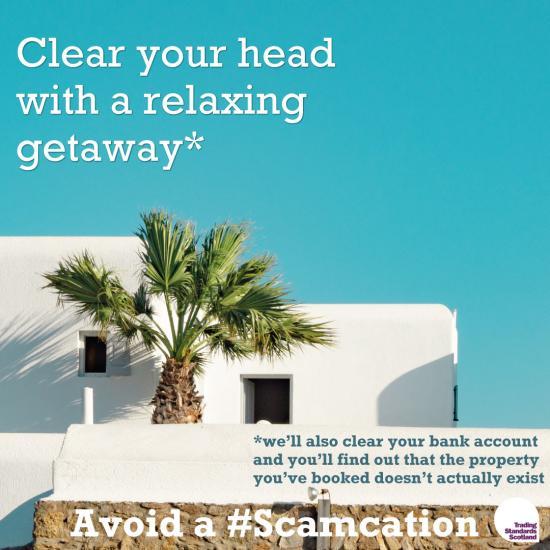
A recent survey by Opinium has found that 34% of holidaymakers have noticed an increase in potential scams on social media platforms over the past year.
Over 50% of holiday scams reported last year originated on social media, with many adverts fraudulently using logos from travel protection agencies such as ATOL, ABTA, or ABTOT to appear legitimate.
Common scams include fake accommodation listings, which often copy images from legitimate travel websites, adverts for non-existent flights or tours, links leading to scam websites and fake reviews.
This year there have been several reports of companies offering tours around Scotland who take bookings but then fail to turn up at the agreed location, leaving visitors stranded.
There have also been reports of social media adverts which led to a website listing holiday properties across Arran and Ayrshire. However, some of the properties had not given their permission to be featured on the site, meaning that any bookings made would not be honoured.
How to Avoid
Do plenty of research before booking a holiday online. Before booking a holiday you have seen on social media or in an unsolicited email, contact the company via their official website or publicly listed phone number to check that it is legitimately available at the price quoted and for the required dates. Where possible, book directly with the provider or through a reputable agent.
If you are unfamiliar with a company, check that they are a member of a recognised trade association or travel protection agency such as ABTA, ATOL or ABTOT or that they have been recognised by a national tourism organisation such as Visit Scotland. You can verify this via the following links:
Verify ABTA Membership: www.abta.com
Verify that the company holds an ATOL: www.atol.org/check-for-atol/
Verify ABTOT Membership: www.abtot.com/abtot-members-directory/
Avoid clicking on links in social media adverts as they could lead to copycat websites that look similar to genuine booking websites, with similar URLs.
Where possible, pay using a credit card rather than via bank transfer – this will offer you more protection if something goes wrong. Be suspicious if a provider will only give you the option to pay by cash or bank transfer.
Before making any payments, check the terms and conditions of the booking and the cancellation policy. Make sure you have contact details for the company or provider.
Scammers may also post fake accommodation listings to sites such as Airbnb and often ask for payment via bank transfer or outside the site’s payment system. Be wary if a listing asks you to contact the host outside the website’s mail system.
Find out More
TSS website: www.tsscot.co.uk/holiday-scams
ABTA Advice: www.abta.com/tips-and-advice/planning-and-booking-a-holiday/how-avoid-travel-related-fraud
Advice Direct Scotland: information about your consumer rights in relation to travel: consumeradvice.scot/knowledge-centre/#travel-and-transport
Original article: https://www.theguardian.com/money/2026/jun/29/holidaymakers-warned-over-social-media-scams-for-fake-accommodation