Why Are Scotland's Entertainment Venues Disappearing? Rising Costs, Changing Habits and Broken Promises
7th July 2026
Scotland has long punched above its weight when it comes to live entertainment.
From grassroots music venues and independent theatres to pubs hosting local bands and iconic nightclubs, these spaces have been central to the country's cultural life and local economies. They are where new artists find audiences, established acts return to smaller stages and communities come together.
Yet across Scotland, an increasing number of entertainment venues are closing, being sold or struggling to stay afloat.
The reasons are complex, but together they paint a worrying picture.
The financial squeeze
Like much of the hospitality industry, entertainment venues have been hit by a perfect storm of rising costs.
Energy bills remain far higher than before the pandemic. Insurance premiums have climbed, suppliers have increased prices and staffing costs have risen through increases to both the National Living Wage and employer National Insurance contributions.
At the same time, audiences are feeling the pressure of higher household bills. Many people are still going out, but often less frequently and spending less when they do.
For independent venues operating on tight margins, there is little room for error.
Nightlife has changed
The challenges are not purely financial.
Younger generations generally drink less alcohol than previous generations and socialise differently. Streaming services, gaming and social media compete for people's leisure time, while many people now think twice before spending £50 or £100 on a night out.
Nightclubs have been particularly affected by these changing habits, a trend reflected across the UK rather than Scotland alone.
Not every venue is struggling
It would be wrong to suggest Scotland's entertainment industry is in terminal decline.
There are still significant investments being made.
LiveHouse Dundee, for example, opened as a major new indoor entertainment venue, demonstrating that investors still believe there is demand for large-scale live events in the right locations.
Meanwhile, Glasgow's famous Garage nightclub recently made headlines after being put up for sale. Despite speculation, that does not mean it is closing. The long-time owner has simply decided to retire from the night-time economy, with the business continuing to trade while a buyer is sought.
The contrast is important.
Large venues with substantial backing are often better placed to weather difficult trading conditions, while independent venues are far more exposed to rising costs and financial uncertainty.
The Ironworks: when redevelopment goes wrong
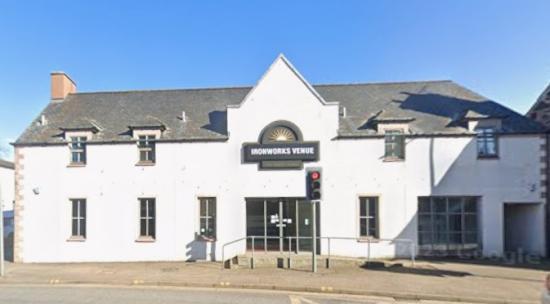
Perhaps no venue illustrates the risks better than Inverness's Ironworks.
For 15 years, it served as the Highlands' premier live music venue, attracting internationally recognised artists alongside emerging local talent. It was one of the few venues in northern Scotland capable of hosting medium-sized touring acts, giving audiences an alternative to travelling hundreds of miles to Glasgow or Edinburgh.
In 2023, the venue closed after planning permission was granted for a 155-room hotel. Supporters argued the development would create jobs, attract tourists and regenerate the area.
Many local residents accepted the loss because they believed something substantial would replace it.
Instead, the opposite happened.
The proposed developer never completed the purchase of the site. The development company later entered liquidation, the hotel plans were withdrawn and the building has remained empty while new proposals are considered.
The city lost one of its most important cultural assets without gaining the promised investment.
Why replacement isn't easy
When a music venue closes, another rarely appears in its place.
Purpose-built entertainment venues require specialist design, acoustic treatment, licensing, experienced operators and significant financial backing. Even if a suitable building exists, persuading investors to take the risk can be difficult.
That is why organisations representing live music venues continue to warn that Scotland is gradually losing the infrastructure that supports its creative industries.
Every closure reduces opportunities not only for audiences but also for musicians, comedians, technicians, security staff and the many local businesses that benefit from busy event nights.
More than just a night out
Entertainment venues are often viewed simply as places where people spend money.
In reality, they generate economic activity far beyond ticket sales.
People attending concerts or comedy shows eat in restaurants, visit pubs, book hotel rooms, use taxis and shop locally. Successful venues bring visitors into town centres and help sustain surrounding businesses.
They also make places more attractive to live in, work in and invest in.
A thriving cultural scene is increasingly recognised as part of a successful local economy rather than an optional extra.
A warning for Scotland
The story of Scotland's entertainment venues is not one of universal decline.
New venues are opening, established businesses continue to thrive and audiences still want live experiences.
But the pressure on independent venues is real.
When rising costs combine with changing consumer habits and redevelopment schemes that fail to deliver, communities can end up losing irreplaceable cultural assets with nothing to show for it.
The Ironworks is perhaps the clearest example.
It was demolished in the name of regeneration, yet years later there is still no replacement development and no equivalent venue for the Highlands.
That should serve as a warning.
If Scotland wants vibrant town and city centres, attracting investment cannot come at the expense of the very venues that make those places worth visiting in the first place.