Small Changes That Can Protect Your Household Budget When Prices Become Unpredictable
18th July 2026
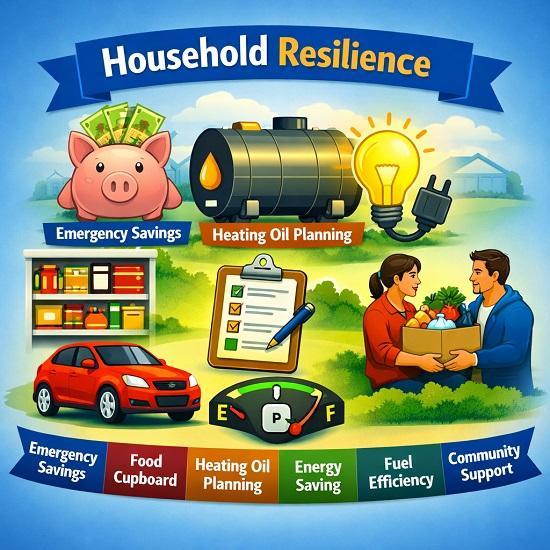
Over the past few years households have faced a series of financial shocks.
First came the surge in energy prices, followed by the highest inflation rates seen for decades, rising interest rates, higher food costs and continued uncertainty over global events.
The latest concerns over oil supplies, conflict in the Middle East and the possibility of renewed pressure on energy prices have once again highlighted a simple question:
What can households do themselves to become more financially resilient?
None of us can control the price of oil, interest rates set by the Bank of England, or events happening thousands of miles away.
But there are small steps that can reduce the impact when household budgets come under pressure.
The aim is not to predict a crisis. It is simply to make sure that an unexpected rise in costs does not immediately become a financial emergency.
Build an emergency fund if you can
One of the most valuable financial cushions is having some savings set aside for unexpected expenses.
A broken appliance, car repair, emergency journey or sudden increase in bills can quickly put pressure on a household budget.
Financial advisers often suggest several months of essential spending as an ideal target, but that is not realistic for everyone.
Even a small amount saved regularly can help.
The important thing is creating a habit of putting something aside when circumstances allow.
Review your general savings
Savings provide more than just interest income.
They provide choices.
A household with some money available has more flexibility when prices rise. It may allow you to buy essential items at the right time, deal with repairs without borrowing, or manage a temporary increase in bills.
Even small savings accounts can provide useful breathing space.
Keep a sensible food buffer
Many older generations remember the idea of a well-stocked cupboard.
That does not mean panic buying or filling every available space with supplies.
It simply means having enough everyday essentials that you are not forced to buy everything at the highest price.
Items that store well, such as dried foods, tinned goods and household necessities, can provide some protection against sudden price increases or supply disruptions.
Buying when products are on offer can also reduce costs over time.
Think ahead about heating costs
For households using heating oil, winter planning is particularly important.
Oil prices can move quickly because they are linked to international markets, currency movements and global events.
No one can perfectly predict whether prices will rise or fall, but having a completely empty tank during a period of high prices removes your flexibility.
For those who rely on oil heating, keeping an eye on prices and planning purchases when possible can help manage costs.
Reduce energy waste
Energy bills remain one of the biggest household expenses.
With electricity and gas prices expected to change again on 1 October, reducing unnecessary consumption can still make a difference.
Simple measures include:
turning off unused appliances rather than leaving them on standby;
using heating controls carefully;
avoiding heating empty rooms;
improving insulation where possible;
using hot water efficiently.
Small savings repeated every day can add up over a year.
Make every litre of fuel work harder
For households and businesses, fuel efficiency matters.
Keeping a vehicle properly maintained, checking tyre pressures, combining journeys where possible and avoiding unnecessary trips can all reduce fuel consumption.
This is especially important in rural areas where distances are often unavoidable.
In places like Caithness, transport is not a luxury. It is essential for work, shopping, healthcare and family commitments.
Review regular bills
Many households focus on the big bills but overlook smaller regular payments.
Insurance renewals, subscriptions, mobile phone contracts and other services are worth reviewing periodically.
A few pounds saved in several places can become a meaningful annual saving.
Be careful with expensive borrowing
When interest rates are higher, debt becomes more costly.
Credit cards, overdrafts and other forms of expensive borrowing can quickly increase financial pressure.
Where possible, reducing high-cost debt improves household resilience.
The value of community
There is also another form of resilience that is particularly important in rural communities.
Neighbours helping each other, sharing transport, exchanging practical skills and supporting vulnerable residents during difficult times all have real value.
Not every problem requires spending money.
Sometimes community support is one of the strongest resources available.
Preparation is not pessimism
No one knows exactly where energy prices, inflation or interest rates will go next.
Oil prices could fall. Inflation could continue easing. Economic conditions could improve.
But households that have some savings, manage their spending carefully and think ahead are usually better placed whatever happens.
Being financially prepared is not about expecting the worst.
It is about creating enough flexibility that unexpected events become manageable rather than overwhelming.
Small changes made today can provide valuable protection for tomorrow.