Could High Heating Oil Prices Leave Rural Households Facing a Chilly Winter?
21st July 2026
Thousands of households across rural Scotland depend on heating oil to keep warm. Unlike homes connected to the gas grid, they have little choice when oil prices rise sharply.
As summer continues, many families are delaying filling their oil tanks, hoping prices will fall before the colder months arrive. But what happens if they don't?
The Waiting Game
Heating oil prices have remained stubbornly high after months of global uncertainty. Conflicts affecting oil-producing regions, concerns over shipping routes, refinery disruptions and changing demand have all helped keep wholesale fuel prices elevated.
Many households are asking themselves the same question:
"Should I buy now, or wait and hope prices fall?"
The difficulty is that no one can predict where prices will be in October or November.
A Different Kind of Winter
The biggest risk may not be a shortage of heating oil but a shortage of affordable warmth.
If prices remain high, many households may:
delay switching the heating on;
heat fewer rooms;
lower the thermostat;
rely on electric heaters for short periods;
wear extra clothing indoors;
use blankets instead of turning up the heating.
These are choices many people have made before, but they can become increasingly difficult during long Highland winters.
Rural Homes Face Bigger Challenges
Many homes in the Highlands are older properties with solid walls, larger rooms and greater exposure to wind. They often require more energy simply to stay comfortable.
Unlike towns with gas networks, there is usually no cheaper alternative available.
Preparing Before Winter
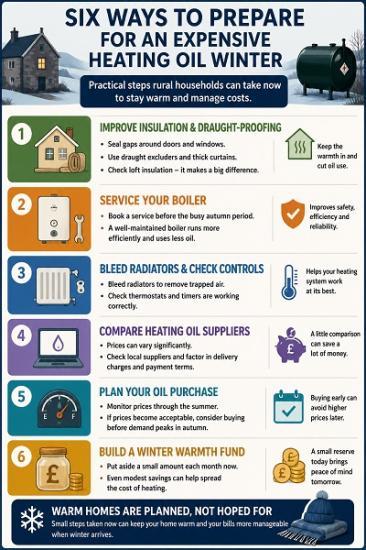
Even if oil prices remain high, there are practical steps households can take now:
Check insulation and draught-proofing.
Service the boiler before the busy autumn period.
Bleed radiators to improve efficiency.
Compare heating oil suppliers regularly.
Consider buying before demand peaks if prices become acceptable.
Build a small financial reserve during the summer if possible.
Small improvements made now can reduce fuel consumption throughout the winter.
Looking Beyond This Year
The recurring swings in heating oil prices raise a wider question for government.
Millions of households across rural Britain remain dependent on heating oil, yet much of the public discussion about energy bills focuses on gas and electricity.
Should there be more support for off-grid homes when global events send oil prices soaring?
As another winter approaches, that debate is likely to become increasingly important.
The Bottom Line
No one knows whether next winter will be especially cold.
What we do know is that if heating oil prices stay high, many households may decide they simply cannot afford to heat their homes as much as they would like.
For rural communities, the challenge may not be finding heating oil—it may be finding enough money to stay warm.