Cold Homes Don't Just Feel Uncomfortable – They Can Be Deadly
21st July 2026
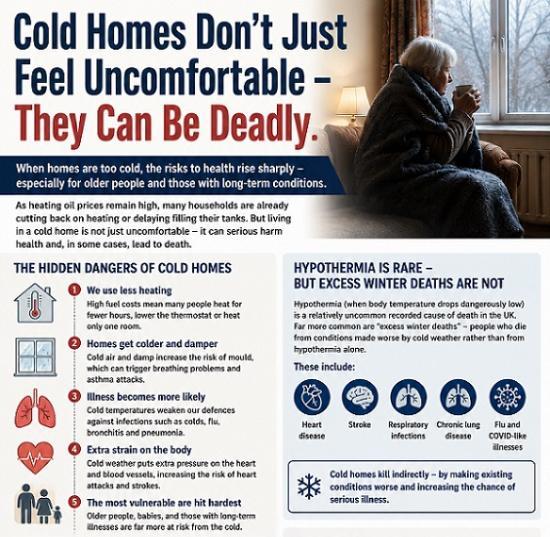
When many people cannot afford to heat their homes adequately, deaths and illness associated with cold weather tend to increase.
The chain of events looks like this:
Higher heating costs mean some households use less heating.
Homes stay colder and often become damper.
Cold indoor temperatures increase the risk of respiratory illnesses such as influenza and pneumonia.
Cold also puts extra strain on the heart and circulation, increasing the risk of heart attacks and strokes.
Older people, babies, and those with long-term illnesses are especially vulnerable.
More elderly people may end up in hospital due to being unable to heat their homes properly.
Hypothermia versus excess winter deaths
One important distinction is that hypothermia itself is a relatively uncommon recorded cause of death in the UK.
Far more common are "excess winter deaths"—people who die from conditions that are made worse by cold weather rather than from hypothermia alone. These include:
Heart disease
Stroke
Respiratory infections
Chronic lung disease
Complications from influenza and COVID-like illnesses
In other words, cold homes often contribute indirectly to deaths.
Why this coming winter could be difficult
Several factors could combine:
Heating oil remains expensive for off-grid homes.
Electricity prices are still historically high.
Many pensioners have seen changes to winter support schemes.
Food prices remain above where they were a few years ago, leaving less money for fuel.
Many households have already used much of their savings to cope with previous cost-of-living pressures.
If we also experience a prolonged cold spell, those pressures become greater.
Rural Scotland may face additional risks
Areas like Caithness and the Highlands have several extra challenges:
A high proportion of homes rely on heating oil.
Older stone-built houses often lose heat more quickly.
Longer travel distances can make it harder to access healthcare.
Older populations are more vulnerable to cold-related illness.
That does not mean there will necessarily be a sharp rise in deaths, but it does mean these communities may be more exposed if fuel remains expensive.