Eight Ways to Raise £21 Billion Without Raising Income Tax – Could These Be the Prime Minister's Next Moves?
23rd July 2026
The new Prime Minister has made tackling the cost of living and reducing the burden on businesses one of his priorities. That is easier said than done.
Helping households, supporting public services and reducing business costs all require one thing – money. Yet after years of high borrowing and growing demands on government spending, finding that money is becoming increasingly difficult.
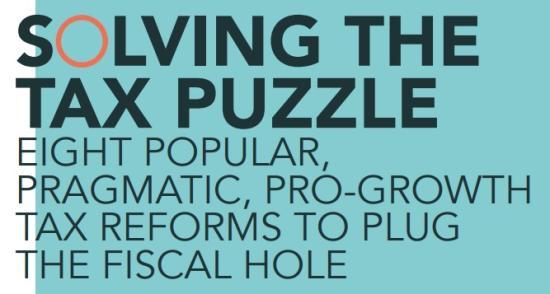
One report that has attracted attention in policy circles comes from the think tank Demos. Rather than recommending increases in the headline rates of Income Tax, VAT or National Insurance, it asks a different question:
Could the government raise billions by changing who pays tax rather than simply increasing tax rates?
The report identifies eight reforms that it estimates could together raise around £21 billion a year.
Whether or not these ideas are adopted, they provide an interesting glimpse into the kind of tax changes future governments may consider.
National Insurance on Rental Income
People who earn wages generally pay National Insurance. Landlords usually do not pay National Insurance on rental profits.
Demos argues this difference is increasingly difficult to justify and proposes extending National Insurance to rental income.
Current position: Not implemented.
Employer National Insurance for Professional Partnerships
Many large law firms, accountants and other professional partnerships are organised differently from companies, resulting in lower National Insurance liabilities.
The report recommends bringing partnerships closer into line with companies.
Current position: Not implemented.
Replace Council Tax and Stamp Duty
Perhaps the most radical proposal is replacing both Council Tax and Stamp Duty with a new proportional property tax based on current property values.
Supporters argue this would better reflect today's house prices, many of which have changed dramatically since Council Tax bands were created over thirty years ago.
Critics point out that owners of valuable homes but modest incomes could face significantly larger bills.
Current position: No government has adopted this proposal.
Higher Charges for Second Homes
The report recommends higher Council Tax charges for second homes owned by non-UK residents.
This proposal is particularly interesting because Scotland has already moved in a similar direction.
Since April 2024, Scottish councils have been able to charge up to double Council Tax (a 100% premium) on second homes if they choose. Some councils have also introduced substantial premiums on long-term empty properties.
Although Scotland's policy applies more widely than the Demos proposal, it shows that this type of tax reform is no longer just theoretical.
Current position: Scotland has already implemented a version of this approach.
Capital Gains Tax When Leaving the UK
Some countries impose an "exit tax" when wealthy individuals move overseas, ensuring gains built up while resident cannot simply escape taxation.
Demos suggests the UK should introduce a similar system.
Current position: Not implemented.
Higher Gambling Taxes
The report recommends increasing duties paid by gambling companies.
The aim would be to raise revenue while recognising the wider social costs associated with gambling.
Current position: Gambling duties have changed over time, but this specific proposal has not been adopted.
Reform Capital Gains Tax on Inherited Assets
Currently, inherited investments often receive what is known as a "tax-free uplift" in value.
The report recommends removing this rule so gains accumulated during someone's lifetime would eventually be taxed when the asset is sold.
Supporters say this would improve fairness.
Critics argue it could increase the tax burden on family businesses and inherited investments.
Current position: Not implemented.
Bring Capital Gains Tax Closer to Income Tax
Income from work is generally taxed more heavily than profits from selling investments.
Demos suggests narrowing this difference.
The argument is that people doing similar work should pay broadly similar tax regardless of whether income comes from salary or capital gains.
Current position: Capital Gains Tax has increased in recent years but still remains below Income Tax rates.
Scotland May Already Be Showing the Direction of Travel
One striking feature of the report is that some of its ideas are already appearing in Scotland.
Second-home Council Tax premiums are now a reality, and local authorities have greater freedom to increase charges on empty properties. While Scotland has not adopted the wider property tax reforms suggested by Demos, it has demonstrated a willingness to use property taxation to influence behaviour as well as raise revenue.
That raises an interesting question.
If governments are reluctant to increase the basic rates of Income Tax or VAT, will they instead continue to broaden the tax base by targeting wealth, property, investments and activities seen as creating wider social costs?
Many economists believe this approach is politically easier than announcing a rise in the basic rate of tax, even if the effect on taxpayers can be just as significant.
What Does This Mean for Businesses?
Businesses hoping for lower costs should remember that governments still have to balance the books.
If ministers are determined to reduce business rates, support investment or ease the cost-of-living crisis, they will almost certainly need to find revenue elsewhere.
Reports like this may not become government policy overnight, but they often influence the direction of debate. Today's think-tank proposal can become tomorrow's Budget announcement.
For homeowners, landlords, investors and second-home owners, it is therefore worth paying attention to ideas that only a few years ago might have seemed politically impossible.
Further reading
The full Demos report, Solving the Tax Puzzle, explores these proposals in greater detail.
Go HERE
Pdf 96 Pages
In the UK, Demos is officially classified as an independent, cross-party think tank. Rather than aligning strictly with the right or left, it works across the political spectrum.